An AI agent tool is software that lets you build or run autonomous AI systems that plan tasks, use external tools, and act on your behalf, rather than simply answering questions. The category split into two families in 2026: developer frameworks for custom architecture, and ready-made agent platforms for fast deployment, and this guide compares the best of each so you can pick the right starting point.
Quick Answer: Which AI Agent Tool Should You Use?
If you can write code, start with LangChain for orchestration or CrewAI for multi-agent teams; both are free and open source. If you cannot write code, or you want an agent working today, use Lindy for personal automation or Relevance AI for business workflows. The deciding factor is not which tool is more powerful, it is who will maintain the agent after it is built, because frameworks hand that responsibility to you while platforms carry it. A team that already ships software should bias toward frameworks, and a team that wants results this week should bias toward platforms, and either answer is defensible as long as you choose with the maintenance question in mind.
What Are Developer Frameworks and Why Do They Matter?
Developer frameworks are code-first toolkits for teams building custom agent architecture. They give you control over orchestration, memory, tool use, and deployment patterns, which is exactly what you need when an agent must fit inside an existing codebase, follow company rules, or handle unusual inputs. The trade-off is responsibility: as Deloitte put it in its 2026 agentic landscape analysis, the question is not whether these frameworks are powerful, it is whether the organization can supply the operating model around them, including identity, auditability, release management, observability, and security review.
The most widely adopted framework is LangChain. It connects language models to tools and memory, and it powers a large share of production LLM applications, with strong documentation and a large ecosystem of integrations, maintained at LangChain. CrewAI is the best choice when you want multiple role-based agents that collaborate: you define agents with roles and goals, and they hand work to each other until a task finishes. Microsoft AutoGen is designed for multi-agent conversations, where agents talk to each other to solve problems, and it is open source under MIT. The OpenAI Agents SDK is the official toolkit from OpenAI for building agents on top of GPT models, with built-in tracing and tool definitions.
Which Ready-Made AI Agent Platforms Are Worth Using in 2026?
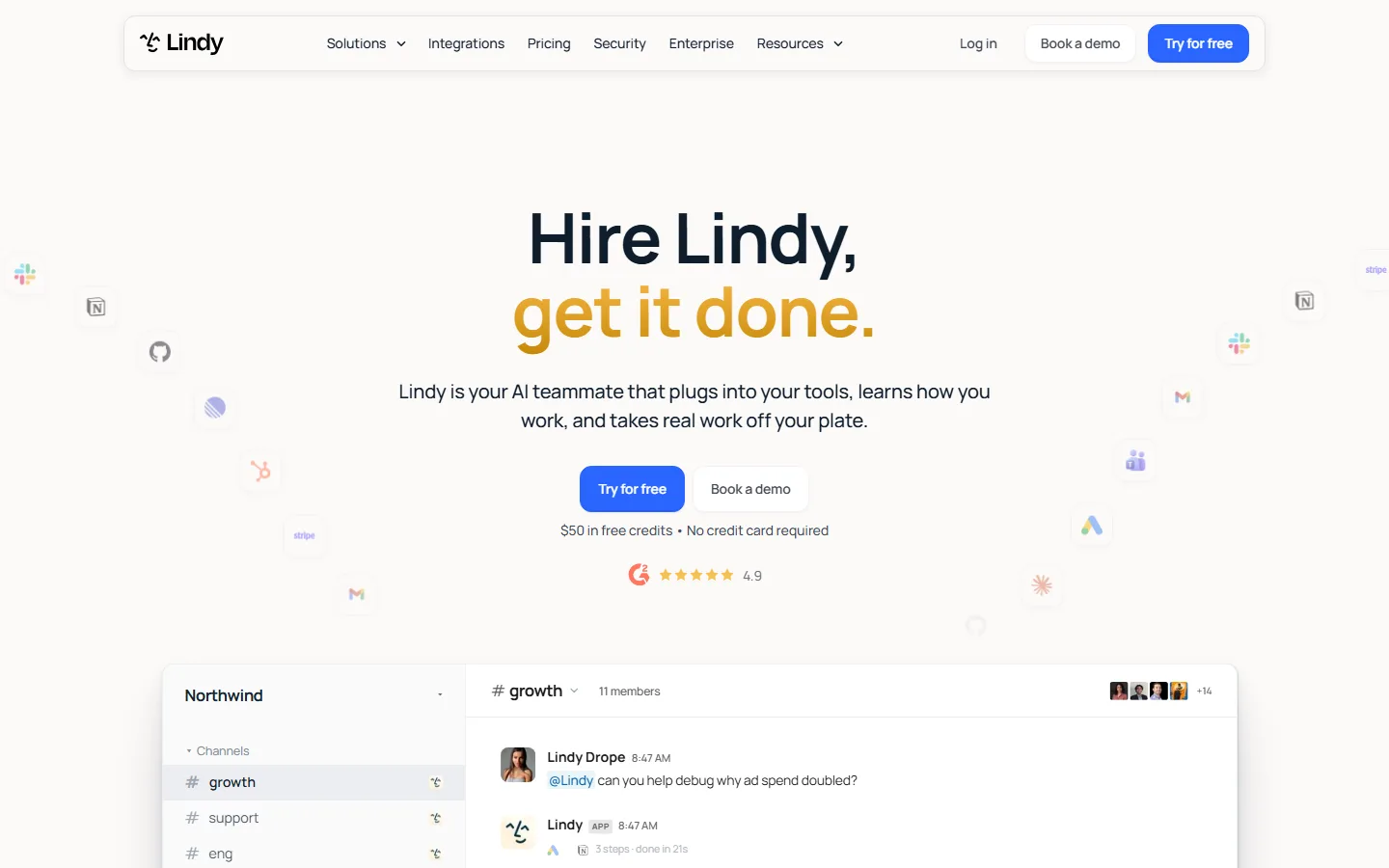
Ready-made platforms remove the code step. Lindy is the standout for personal automation: it connects to your email, calendar, and hundreds of apps, and you set up an agent by describing what you want in plain language. It handles scheduling, inbox triage, and research tasks, and it is aimed squarely at people who would never open a framework repository.
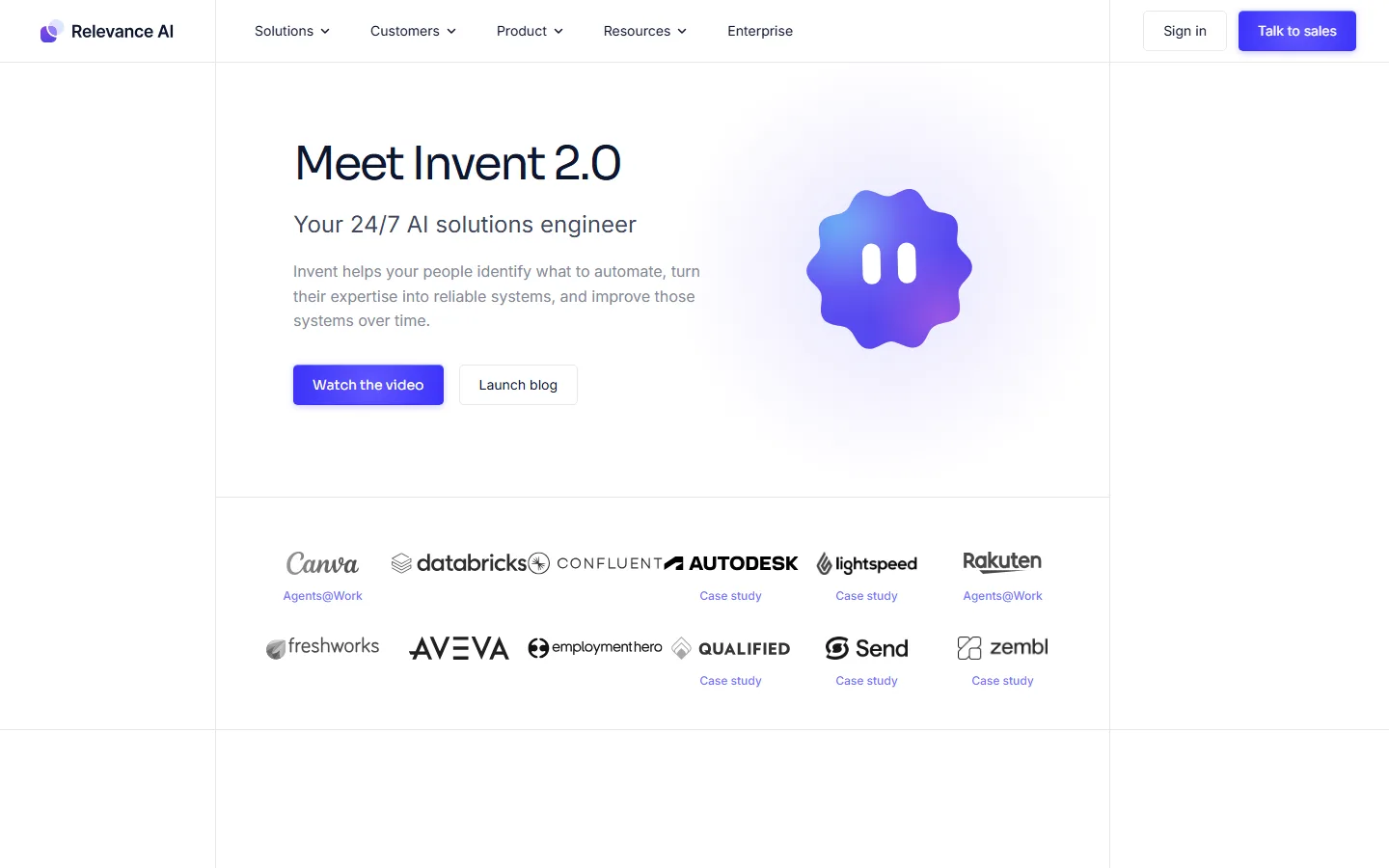
Relevance AI targets business teams with a visual workflow builder. You build agents that research, draft, and post content, or you chain agents into workflows that run on a schedule, and the platform handles hosting, memory, and integrations.
 Manus is a multi-purpose cloud agent that executes complex tasks end to end in a browser environment, useful for jobs such as collecting data from many sites and assembling it into a report. For customer service, Sierra and Decagon sell agent platforms built for support desks, and for sales development, tools such as 11x and Artisan deploy outbound SDR agents that write and send sequences.
How Do I Choose Between a Framework and a Platform?
Use the maintenance test. If you have a developer who will own the agent, a framework like LangChain or CrewAI gives you the most control at the lowest ongoing cost, because there is no per-seat subscription. If no one will maintain code, a platform such as Lindy or Relevance AI is cheaper in the long run even though it costs a monthly fee, because the vendor handles the model calls, retries, memory, and uptime.
Compare what you give up. Frameworks leave more responsibility with you, and they require engineering resources for even simple agents. Platforms constrain you to the actions and integrations they support, and heavy custom logic can force you back to code. DataCamp's 2026 comparison of the best AI agents makes the same point with pricing: Devin AI, an engineering agent, runs from $20 to $500 per month and is limited to coding tasks, so you would not buy it for general automation, just as you would not buy LangChain if you need a ready-made scheduling agent.
Which Agent Tools Handle Usage Limits and Support Best?
Usage limits and support are the two failure points users report most, and they map cleanly onto the framework-platform split. Frameworks are free and open source, so they have no usage caps at all; you pay your model provider, and support comes from the community and documentation. Platforms charge subscriptions and apply usage limits, and this is where complaints concentrate. Across AI tools, users report that "usage limits and token caps that break momentum mid-task come up again and again," and one Slashdot review of a competing tool described the classic failure: "after you have bought it there's no one to answer your queries, couldn't find any customer support."
For agent platforms specifically, check three things before subscribing: what happens when you hit the monthly task limit, whether the free tier includes production-grade model access, and whether support responds within a business day. Open-source frameworks sidestep all three, which is why they remain the default recommendation for anyone with engineering skills.
What Can a Beginner Actually Build with These Tools?
Start with one narrow task. With CrewAI, a common first project is a research crew: one agent gathers sources, a second summarizes them, and a third writes a draft report. With Lindy, a first agent might be "when a calendar invite is accepted, draft a prep email with the attendee's recent LinkedIn posts." With Relevance AI, a beginner workflow is: agent A researches the top 10 competitors for a keyword, and agent B turns the findings into a social post.
Keep the first agent small, and measure it by whether it saves you time on a real weekly chore. If the task takes you 10 minutes and the agent completes it in 2 minutes reliably, the tool earned its place. If you spend more time fixing the agent than doing the task, that is a sign the workflow was too ambitious, not that agents do not work.
How Much Does Building an Agent Actually Cost?
Cost is where beginners misread the market. A framework like LangChain is free, but the real cost is the model tokens your agent burns: every tool call, every retry, and every long memory conversation adds up. A simple research agent that runs 50 tool calls a day with a mid-tier model can cost $15 to $60 per month in tokens depending on model pricing, which is roughly the same as a platform subscription before you count your own engineering time. Platform pricing is simpler to budget, with Lindy and Relevance AI selling per-seat plans that include the model calls, and enterprise agent platforms pricing higher because they add identity, auditing, and compliance.
The hidden cost for frameworks is maintenance. Agents break when the tools they call change their APIs, when the model changes its behavior, or when the task drifts from what you first described. Each fix is engineering time. If you do not have an engineer on the project, a platform is almost always cheaper in real terms, because the vendor absorbs retries, model upgrades, and uptime. Deloitte's 2026 analysis of the agentic landscape makes this point directly: the frameworks are powerful, but the enterprise must supply the operating model around them, and that operating model is exactly the cost most small teams forget to price.
What Are the Common Agent Failure Modes?
Agents fail in predictable ways, and knowing them saves you a week of debugging. The first is tool misuse: the agent calls the right tool with the wrong arguments, or loops retrying a failed call, which burns tokens and time. The fix is to constrain tool schemas tightly and log every call, which both LangChain and the OpenAI Agents SDK make easy with tracing. The second is over-permission: an agent with access to email, calendar, and a database can take actions you did not intend, so scope credentials to the minimum the task needs and add a human approval step for anything irreversible.
The third failure mode is cost blowups: a long-running agent that loops can quietly spend your monthly budget in hours, which is why production users set hard token caps and kill switches. The fourth is drift: over weeks, the agent starts answering in ways that no longer match the task, usually because the underlying model updated or the data it reads changed. Scheduling a monthly re-test of the original task catches this early. None of these failures mean agents are fragile; they mean agent systems need monitoring, exactly like any other production software, and the platforms that build in logs, tracing, and alerting, which includes both Lindy and Relevance AI on the hosted side, reduce the damage when a failure does occur.
Frequently Asked Questions
What is the best AI agent tool for beginners in 2026?
For non-coders, Lindy is the fastest to set up because you configure agents in plain language. For developers, CrewAI is the friendliest framework, with role-based agents you can run locally. Both have free tiers.
What is the difference between an AI agent framework and a platform?
A framework is a code library such as LangChain or CrewAI that you use to build custom agents. A platform such as Lindy or Relevance AI is a hosted product where you configure agents without writing code. Frameworks give more control, platforms give faster deployment.
Is LangChain still the best AI agent framework in 2026?
LangChain remains the most widely adopted framework for LLM applications and agents, with the largest integration ecosystem. CrewAI and Microsoft AutoGen are strong alternatives, and the OpenAI Agents SDK is the best choice if you are already building on OpenAI models.
How much do AI agent tools cost in 2026?
Frameworks are free and open source; you only pay your model provider for tokens. Platforms range from free tiers with limited tasks to $20-$100+ per month for business plans. Devin AI, an engineering agent, costs $20-$500 per month depending on usage.
Can I build an AI agent without coding?
Yes. Platforms such as Lindy and Relevance AI let you create agents with plain-language setup and visual workflows, no code required. You trade flexibility for speed, and you may hit limits on custom behavior that would need a framework.
Conclusion
The best AI agent tool in 2026 depends on who will own the agent. Developers should start with LangChain or CrewAI, because they are free, flexible, and have no usage caps, and they integrate with everything else you build. Non-coders should start with Lindy or Relevance AI, because a working agent today beats a flexible framework you never finish configuring. Whatever you choose, begin with one narrow task and measure whether it saves real time. To understand the underlying concepts, read our explainer on what is an AI agent and how to build an AI agent. For comparisons, see AI agent vs chatbot, our ranking of best AI agents, and the roundup of AI automation agents.
Next step: pick one tool from the list above, build one agent that does a task you currently do by hand, and time yourself against it for a week.