AI Agent vs Chatbot: What is the Difference in 2026? | AIToolCrux
Author: AIToolCrux Editorial Team
Category: AI Agents
Date: 2026-10-10
Word count: ~2049
Status: [DRAFT]
AI Agent vs Chatbot: What's the Difference in 2026?
Quick Answer (bottom line): An AI agent is a system that pursues a goal across multiple steps by choosing its own actions and using tools, while a chatbot is a system designed to hold conversations and answer questions. The practical test in 2026 is autonomy — who decides the sequence of steps, you or the system. If it can only reply to your messages, it's a chatbot; if it can plan, call tools, and complete an end-to-end task on its own, it's an agent. Both terms are heavily overloaded in marketing, so the distinction matters more than ever when you're buying.
Key Takeaways
- Chatbots are conversation-first; agents are outcome-first. A chatbot optimizes for the next message; an agent optimizes for the final result.
- The dividing line is autonomy, not model intelligence. A smarter LLM inside a chat window is still a chatbot if it can't act. Tool access + multi-step planning is what makes an agent.
- Modern agents often communicate through chat, which is why the two get conflated — ChatGPT Agent looks like a chat window but executes bookings, research, and forms end to end.
- Architecturally, agents add three things chatbots lack: tool calling (dynamic), planning/memory loops, and the ability to trigger actions in external systems.
- 2026 buying advice: If you need answers → a chatbot (or search tool) is cheaper and sufficient. If you need tasks done across systems → pay for an agent. Don't buy an "agent" subscription when a chatbot would do.
What Is a Chatbot?
A chatbot is a program that holds a conversation with a user — answering questions, providing information, or guiding through a scripted flow. Traditional chatbots (rule-based) follow predefined decision trees: they can only respond to questions they were explicitly programmed for. Modern AI chatbots use an LLM to generate fluent, context-aware replies, but the core contract is unchanged: user asks, bot answers.
Examples in 2026: a website support widget that answers product questions, an LLM chat interface like the free ChatGPT tier for single questions, or a FAQ bot on Discord.
What Is an AI Agent?
An AI agent is a system designed to accomplish a goal rather than hold a conversation. It plans a sequence of steps, decides which tools to use, executes actions in external systems, and keeps working toward the outcome — often autonomously and sometimes over time (scheduled or event-triggered).
Examples in 2026: an agent that monitors a feed, filters for relevant items, and posts a summary to Slack; an agent that researches a company, qualifies the lead, updates the CRM, and books a meeting; ChatGPT Agent executing "book the meeting and email the agenda."
The 7 Differences That Actually Matter in 2026
| Dimension | Chatbot | AI Agent |
|---|---|---|
| Primary goal | Answer questions, generate text | Complete end-to-end tasks |
| Interaction style | Reactive — responds to explicit input | Proactive — acts on triggers, schedules, objectives |
| Decision-making | Follows a flow or answers each message | Plans multi-step sequences toward a goal |
| Tool use | Limited or hardcoded integrations | Dynamic tool selection from a registry |
| Memory | Conversation context only | Task context + often long-term memory/stores |
| Failure handling | Re-prompts or apologizes | Retries, escalates, or routes around failures |
| Cost model | Cheap per message | Pricier per completed task (multi-call) |
Where the Line Gets Blurry (2026 Reality)
The marketing problem: every chatbot vendor now calls their product an "AI agent," and every agent vendor ships a chat interface. Three blur zones to know:
- Chatbot + tools = looks agentic. A support bot that can look up order status via API is tool-assisted, but if a human still decides the sequence, it's a chatbot with integrations. The test: give it a goal with 3 steps — does it plan them itself?
- Agents communicate through chat. ChatGPT Agent, Claude, and Gemini all look like chat windows. The difference is invisible: underneath, the system plans, calls tools, and acts.
- Assistant → workflow → agent is a spectrum. Not binary. Most products sit between pure conversation and full autonomy. Buy for the level you actually need.
Real-World Examples: Same Company, Different Capability
To make the difference concrete, here is how chatbot vs agent plays out in four real departments in 2026 (synthesized from the sources listed below and from our own tool tests):
Sales
- Chatbot: answers "What does your product cost?" and "Do you have a free trial?"
- Agent: qualifies the lead, researches the company on the web, scores fit, updates the CRM, drafts a personalized follow-up email, and schedules a meeting.
Marketing
- Chatbot: explains what services the agency offers.
- Agent: researches competitors, collects market data, prepares a campaign brief, generates content, and organizes campaign assets into a shared drive.
Customer support
- Chatbot: resolves "Where is my order?" from a scripted flow.
- Agent: opens a ticket, searches the knowledge base AND the web, drafts a fix or workaround, updates the ticket status, and escalates with full context when it cannot resolve the issue — even overnight.
Software development
- Chatbot: explains a programming error and suggests a fix.
- Agent: reproduces the bug, searches the codebase and issue tracker, proposes a patch, opens a pull request, and runs the CI checks.
The pattern is the same everywhere: chatbot informs, agent acts. If a tool vendor tells you their "agent" only answers questions, it is a chatbot wearing an agent costume. (Source: TechShark agent-vs-chatbot comparison, Aug 2026.)
"I Keep Hearing Agents Are Just Chatbots — Why Do People Say That?"
This is the most common question in our reader comments, and it is half right. The confusion is justified for three reasons:
- Vendor marketing collapsed the terms. By 2025, "AI agent" became the buzzword every chatbot vendor adopted for the same chat widget. A 2026 scan of agent-vs-chatbot coverage (Heeya, CodeGenes, Optas AI, ChatbotScape) shows the entire category is still fighting over the same vocabulary — which is why you should evaluate capability, not labels.
- The underlying technology is shared. Both use LLMs, both handle dialogue, both got better at the same pace. A user who only sees the chat window cannot tell the difference — and for many tasks, they don't need to.
- The line is a spectrum, not a wall. Chatbots with a few hardcoded integrations ("tool-assisted chatbots") genuinely blur into simple agents. TechShark's Aug 2026 comparison puts it bluntly: the industry moved from asking "chatbot or agent?" to asking "how much autonomy does this system actually have?"
So: are agents just chatbots? No — but many products sold as agents are. The reliable way to tell is the autonomy test: give the system a multi-step goal and see whether it plans and executes the sequence itself, or waits for you to drive every step. That test, not the marketing copy, is what decides which side of the line a product sits on.
Which Should You Use in 2026?
Use a chatbot when:
- You need information, explanations, or first-line support.
- The task is single-step and conversational.
- Cost is a constraint — chatbots are cheap per interaction.
Use an AI agent when:
- The task spans multiple systems (CRM → email → calendar).
- You want outcomes, not answers — "file the expense report" not "how do I file an expense report."
- You need scheduled or event-driven work without a human in the loop.
Real-world example (sales):
- Chatbot: answers "What does your product cost?"
- Agent: qualifies the lead, researches the company, updates the CRM, prepares a follow-up email, and schedules a meeting. (Source: TechShark, Aug 2026 comparison.)
Which Tools to Start With
- Chatbot-first (cheap, sufficient for Q&A): free ChatGPT tier, Perplexity (see our Perplexity AI Review 2026), website support widgets.
- Agent-first (task completion): ChatGPT Agent on Plus, Claude with tools, Gemini Agents — all ~$20/mo.
- Build your own agents (no code): n8n (see our n8n Review 2026), Dify, Zapier Agents. For a complete walkthrough, read How to Build an AI Agent: Step-by-Step Guide.
- Frameworks (code): Claude Agent SDK, LangGraph, CrewAI — covered in Best AI Agents 2026: 15 Tools That Actually Work.
Frequently Asked Questions
Are AI agents just more advanced chatbots?
No. They share underlying LLM technology but differ in purpose. Chatbots are designed for conversation; agents are designed for autonomy and action — planning steps, calling tools, and completing tasks. A chatbot with tool access starts to look agentic, but the dividing line is who decides the sequence of steps.
What is the difference between conversational AI and agentic AI?
Conversational AI is the discipline of building systems that hold useful dialogue — chatbots are its main artifact. Agentic AI is the discipline of building systems that pursue goals autonomously across tools and time — agents are its main artifact. Conversational AI optimizes for the next message; agentic AI optimizes for the final outcome.
Can a chatbot become an AI agent?
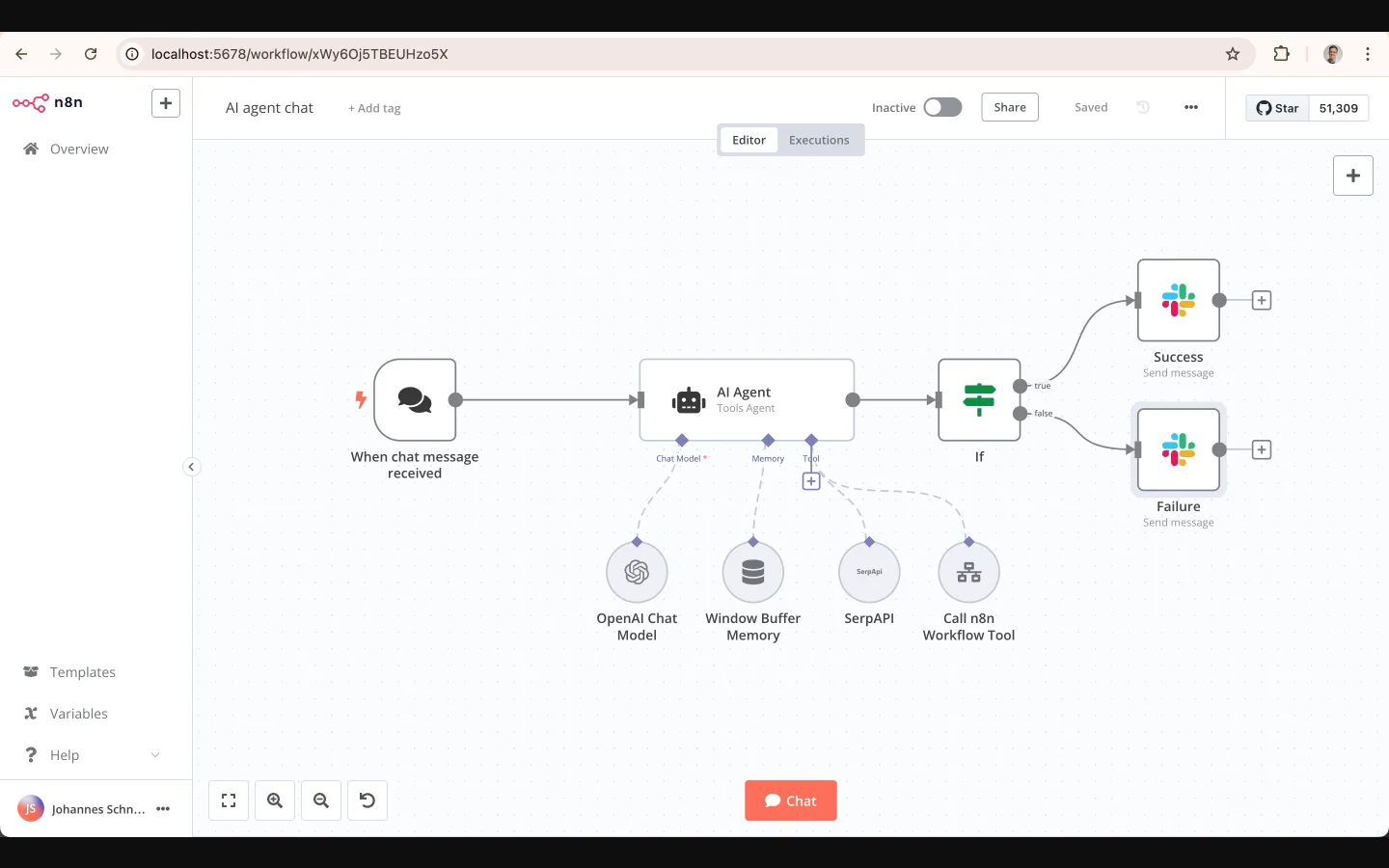
Yes, if you add (1) dynamic tool calling, (2) multi-step planning with memory, and (3) the ability to act in external systems. Many platforms — n8n, Dify, Zapier — let you upgrade a chat flow into a tool-using agent on a visual canvas without writing code.
How much does an AI agent cost vs a chatbot?
Chatbots are effectively free to cheap per interaction (free tiers exist everywhere). Agents cost more per completed task because they make many LLM calls and integrate systems: consumer agent subscriptions are ~$20/mo (ChatGPT Plus, Claude Pro), and self-hosted frameworks like n8n cost only server hosting. If you only need Q&A, paying for an agent is overkill — a common regret we see in user communities.
Is ChatGPT an agent or a chatbot in 2026?
Both. The free ChatGPT tier is effectively a chatbot (conversation-first). ChatGPT Plus with the ChatGPT Agent (GPT-6 Astra) is an agent — it plans and executes multi-step tasks like bookings, research, and spreadsheets. Same interface, different capability tier underneath.
What is the cheapest way to try an agent in 2026?
If you already pay for a $20 consumer subscription, start there: ChatGPT Plus (ChatGPT Agent), Claude Pro (Claude Code), or Gemini's agent features all include agent capability with no extra cost. If you want to build your own, n8n Community is $0 and Dify's Community Edition is free — both run agent workflows without per-agent fees (see our n8n Review 2026 and the Dify vs Coze comparison for cost details).
What is an example of an AI agent in daily work?
A lead-qualification agent: it researches the prospect's company, scores the fit, updates the CRM record, drafts a personalized follow-up email, and schedules a call — all from a single instruction. Or a research agent: monitor sources → filter → summarize → deliver to Slack on a schedule. These are multi-step, tool-using, outcome-driven — none of which a chatbot does.
Final Verdict
The chatbot vs agent question isn't a technology contest — it's a scoping exercise. If your need is answers, a chatbot is the honest, cheap choice. If your need is tasks done across systems, an agent is worth the premium. In 2026, the safest buying rule: read the vendor's capability claim against the autonomy test — "does it decide the sequence of steps itself?" — and buy only what your workflow actually needs. For a deeper comparison of the platforms, see our AI tools comparison guide and Best AI Comparison Tools 2026.
Data sources: OpenAI ChatGPT pricing and OpenAI Agents documentation (verified Oct 2026), Anthropic Claude pricing (verified Oct 2026), n8n AI Agent docs (verified Oct 2026), Heeya (Apr 2026), CodeGenes (May 2026), Optas AI (May 2026), ChatbotScape (May 2026), TechShark (Aug 2026) agent-vs-chatbot comparisons. Definitions and examples synthesized from these sources; verify vendor capability claims before purchase.