Best AI Story Generators 2026: Fiction & Script Tools
An AI story generator is a tool that uses language models to produce narrative fiction, from a scene continuation to a full novel draft, based on your premise, characters and style. It is used by novelists, short-story writers and screenwriters who want to unstuck a plot, generate options or draft sections faster, and the 2026 market now splits into fiction-specialist platforms, all-round models and interactive-story engines. This guide ranks the tools that actually produce narrative you can use, based on pricing and testing data published by independent roundups and vendor pages as of October 2026.
Quick Answer: Sudowrite is the best AI story generator for serious novel writing in 2026 because its Story Bible system keeps characters, magic-system rules and worldbuilding consistent across a 60,000-word manuscript, and its Hobby plan starts at $10 per month. Claude is the best all-round model for literary prose and natural dialogue, with a Reddit survey showing 58 percent of writers preferring it for emotional depth. NovelAI is the strongest genre-fiction specialist through its Lorebook system, and Rytr is the best free budget option for short fiction. The honest caveat from every long-form test: no tool produces publish-ready prose, and you should plan to rewrite 30 to 50 percent of what the AI generates.
What Are AI Story Generators and How Do They Actually Work?
An AI story generator takes a premise, characters and often a style reference, and returns narrative text that continues, expands or drafts a story. The differences between tools show up in three places: whether the tool was built for fiction or repurposed from a content platform, how well it remembers established details across a long manuscript, and whether the workflow stops at raw text or extends to planning, editing and feedback.
The 2026 market splits into three groups. Fiction-specialist platforms such as Sudowrite and NovelAI run models trained or tuned for storytelling, with structured systems for keeping consistency. All-round models such as Claude, ChatGPT and Gemini produce strong prose without dedicated fiction features, which suits experienced writers who manage their own structure. Interactive-story engines such as DeepFiction specialize in branching narratives where reader choices change the plot.
The consistency problem is the technical heart of the category. A general model that generates a good chapter tends to forget the protagonist's name, the magic system's rules or a plot point established 40,000 words earlier. Fiction tools solve this with a story bible, a structured document the model consults on every generation, and this single feature is the main reason AISO Tools and Prosematter's comparison both rank dedicated tools above general models for long-form work.
Which AI Story Generator Is Best in 2026?
The answer depends on your format, your budget and how much editing you want to do. The table below reflects the pricing and feature data published by AISO Tools, Runable's 10-tool test and Prosematter's comparison as of mid-2026.
| Tool | Entry price | Free tier | Long-form consistency | Best for |
|---|---|---|---|---|
| Sudowrite | $10/mo Hobby | Trial only | Story Bible, strongest | Novels, long fiction |
| NovelAI | $10/mo Tablet | 30 free generations | Lorebook system | Genre fiction, SFF/romance |
| Novelcrafter | $8/mo BYOK | 21-day trial | Codex story bible | Writers with their own API key |
| Claude | $20/mo Pro | Limited daily | Strong via 200K context | Literary prose and dialogue |
| Rytr | $9/mo Saver | 10,000 chars/mo | Weak past 2,000 words | Budget short fiction |
| GravityWrite | $19/mo Pro | Real free tier | Weak past 4,000 words | Short stories, flash fiction |
| Squibler | $15.83/mo annual | 1,000 credits/mo | Medium | Screenplays and hybrid formats |
| Jasper | $39/mo Creator | 7-day trial | Brand voice memory | Brand and marketing narratives |
| DeepFiction | Freemium | Free tier | Branching consistency | Interactive, choose-your-own stories |
| ChatGPT | Free | Yes | Medium | Brainstorming and outlining |
Sudowrite wins for serious novel writing. It is the only tool in the category built specifically for fiction, and its Story Bible keeps characters, worldbuilding and plot points consistent across long manuscripts, which no other tool in the 18-tool test conducted by Tried by Humans managed. Its Hobby and Student plan at $10 per month is the cheapest serious fiction tool, and the Max plan at $44 per month carries unused credits for 12 months. The tradeoff is that it is useless for marketing or SEO content, so buy it only for narrative work.
Claude wins for prose quality among general models. Its output on test prompts consistently reads as emotionally earned rather than stated, and a July 2026 poll on Reddit's r/WritingWithAI showed 58 percent of writers preferring Claude over GPT-4o for emotional depth and dialogue naturalness, as reported by Runable's testing. Its 200,000-token context window can hold an entire novel manuscript in memory, which makes it effective for revision passes. It has no fiction-specific tools, so beginners may find it directionless.
NovelAI wins for genre fiction. Its Lorebook is the best structured story bible in any fiction tool, and its custom fiction-tuned models produce more literary output than repurposed content models. Writers report an 80 percent reduction in continuity corrections across long manuscripts, according to AISO Tools. It suits fantasy, sci-fi, romance and anime-adjacent fiction, with a steeper learning curve than consumer-facing tools.
How Much Do AI Story Generators Cost in 2026?
Pricing clusters into three bands. Fiction-specialist platforms run $10 to $44 per month: Sudowrite at $10, $22 and $44 with credit rollover on the top plan, NovelAI at $10, $15 and $25 depending on context size and image generation, and Novelcrafter from $8 with your own API key up to $20 for its Specialist tier. All-round models run $20 per month for Claude Pro and ChatGPT Plus, with free tiers available. Budget tools sit at the low end: Rytr's Saver plan costs $9 per month, GravityWrite's Pro costs $19, and Squibler's Plus plan works out to $15.83 per month billed annually.
The realistic monthly cost of a fiction stack is under $30. A common recommendation from independent tests is Sudowrite's Hobby plan for novels paired with a free or $19 GravityWrite tier for short fiction, and Rytr's free tier for daily prompts. Jasper's $39 and $69 tiers only earn their price if you also use it for ads, email and landing pages, which the best AI copywriting tools comparison covers in detail.
One pricing caveat from the category: every serious tool charges by credits or words, and no vendor converts credits into chapters on its pricing page. A first month is a guess until you know how many credits a chapter consumes, so start on the cheapest tier, and remember the AI tools that are not worth the money pattern, which shows that most subscriptions are bought after one project and abandoned the next quarter.
Free Options: What Can You Write for Free?
Free means different things across these tools. Rytr's free tier gives 10,000 characters per month, enough for roughly two short stories, with no credit card, and its Saver plan at $9 per month is the lowest paid price in the category. GravityWrite's free tier produces real prose rather than a credit-limited demo, which Tried by Humans rated the best free short-fiction option in its 60-day test of 18 tools. ChatGPT's free tier handles outlining, brainstorming and short passages without spending anything, and NovelAI gives 30 free generations before payment.
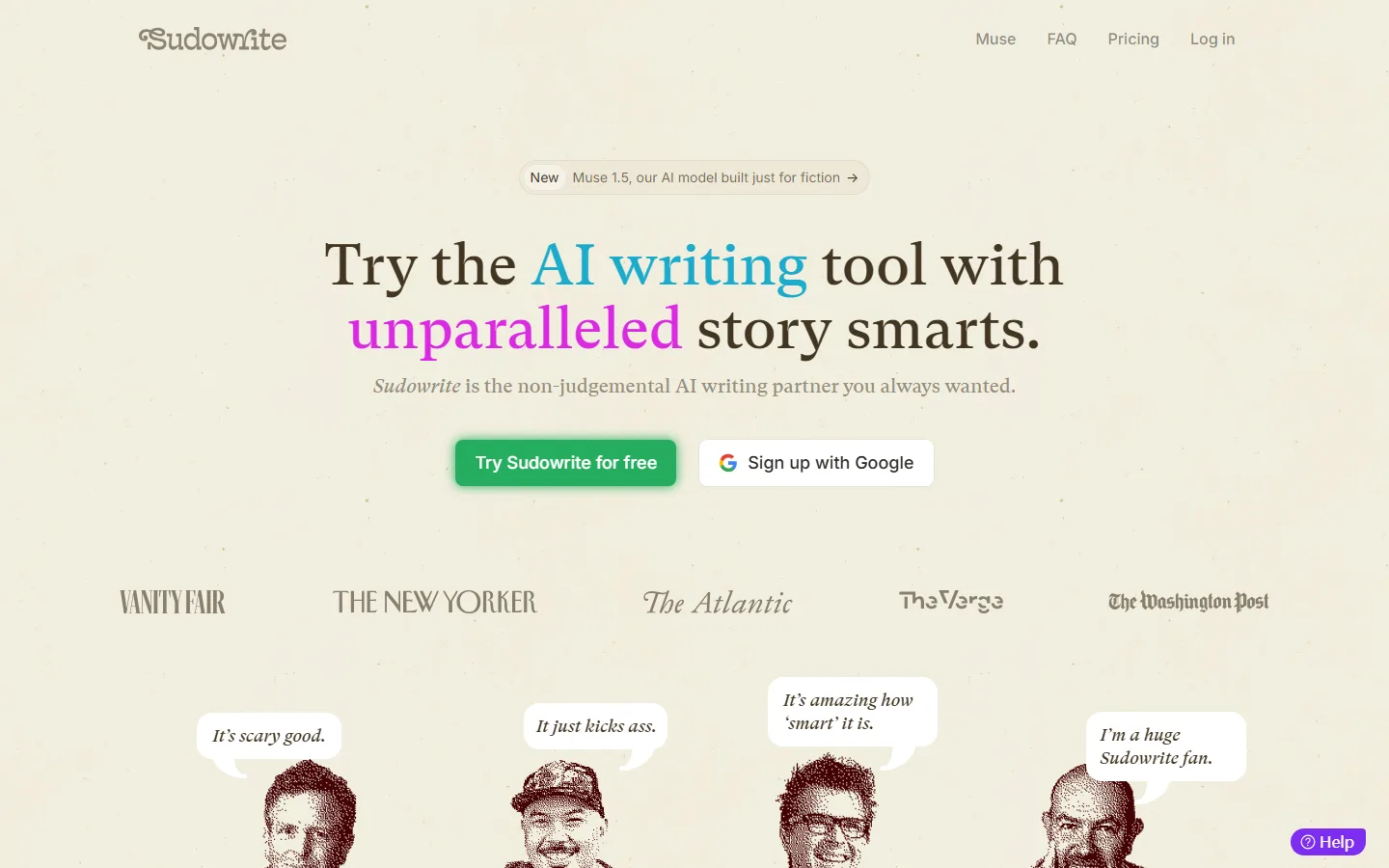
Sudowrite is purpose-built for fiction; its Story Bible keeps characters and worldbuilding consistent across long manuscripts.
The honest limit of free tiers is consistency. Free short-story tools produce usable first drafts under about 2,000 to 4,000 words, then drift: characters blur, plot threads drop, and phrasing repeats, which is exactly the repetitive pattern our AI writing tools guide warns about. If you only write short fiction, the free tiers of Rytr and GravityWrite cover most casual use without spending a cent. If you write novels, the consistency systems in Sudowrite or NovelAI are the feature you are paying for.
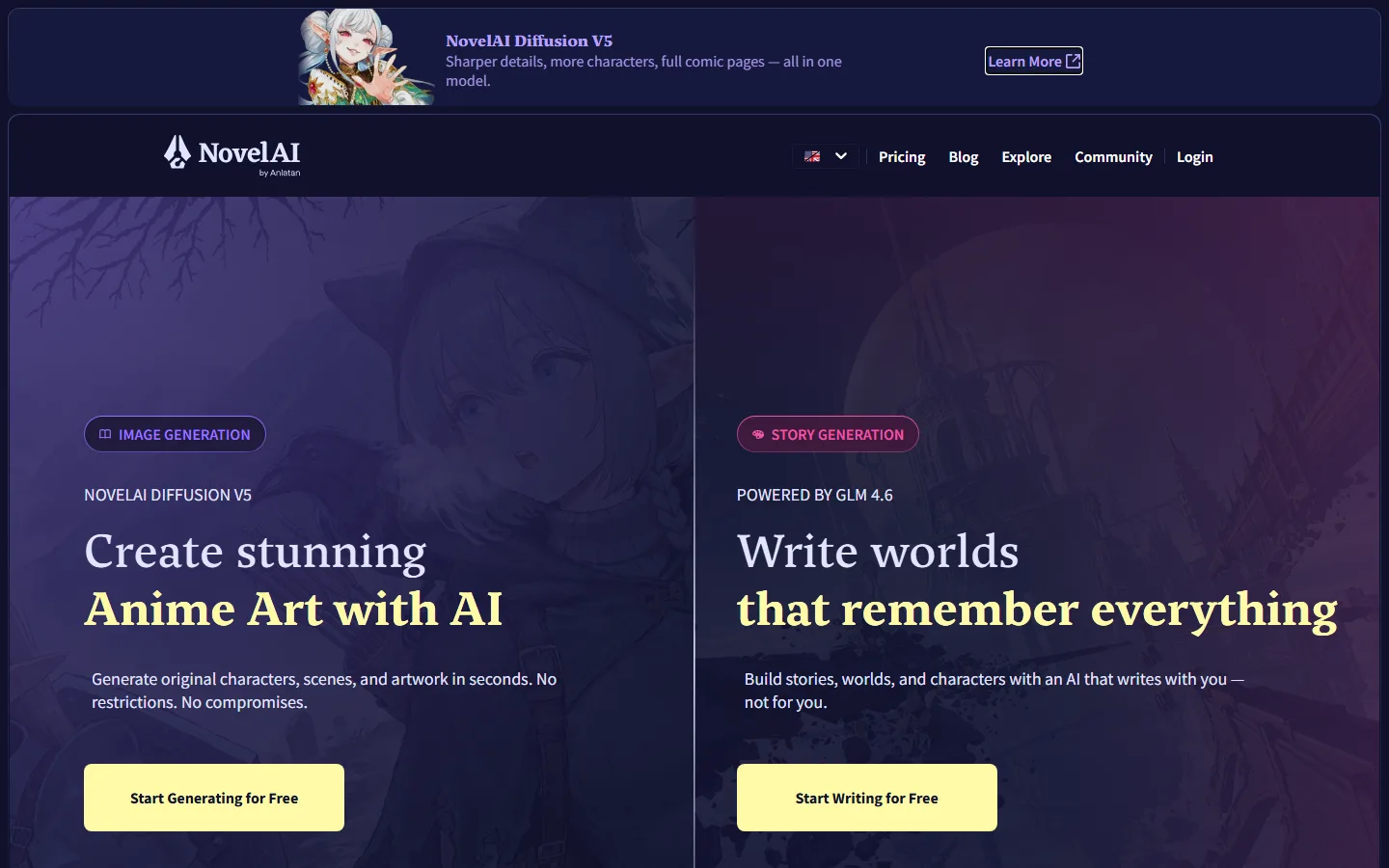
NovelAI's Lorebook keeps story rules and characters consistent, and its fiction-tuned models suit genre writers.
How Do I Write a Full Novel With AI?
The workflow that survives long-form testing is collaboration, not delegation. Start by building the story bible before drafting: define the protagonist, the magic or world rules, the relationships and the timeline, either in Sudowrite's Story Bible, NovelAI's Lorebook or Novelcrafter's Codex. Then draft scene by scene, feeding the bible back on every generation, and treat every output as a first draft you rewrite.
The realistic economics come from independent testing. Tried by Humans measured 60 to 90 hours of human-AI collaboration to draft a 90,000-word novel on Sudowrite's Max plan, with 30 to 50 percent of generated content needing editing for voice and structure. A 2024 Bookbub Insights report found that independent authors using AI in their drafting workflow ship books 28 percent faster than the cohort that does not, but the same report ties quality directly to tool choice. The practical takeaway: AI compresses the drafting phase, not the editing phase.
The dialogue lesson from real users is that general models often outperform fiction tools on voice. Writers on Reddit's r/WritingWithAI put it plainly: "Claude writes dialogue that sounds like actual humans talking, not AI doing an impression of humans talking," as quoted in Runable's testing. A practical division of labor is to draft structure and continuity in a fiction tool, then use Claude for dialogue-heavy and emotionally demanding scenes, and be aware that even the best models hallucinate specifics, which is the core finding of our guide to which AI tools hallucinate.
Common AI Fiction Mistakes to Avoid
The first mistake is treating AI as a ghostwriter instead of a collaborator. The best workflows use AI for brainstorming, unsticking plot problems, generating options and drafting sections the human then rewrites, and the tools that fail are the ones asked to produce final copy verbatim. Expect to rewrite 30 to 50 percent of generated text, and budget the editing time before you start.
The second mistake is ignoring the story bible. A general model with a long context window still forgets details across a manuscript, and the fiction tools that win long-form tests all solve this with a structured bible the model consults on every generation. Set it up before you draft, because retrofitting consistency after 20,000 words is painful.
The third mistake is buying the top tier before testing. The category's pricing structure, with $10 entry tiers and free short-fiction options, means the cheap tier tells you almost everything about whether the tool fits your voice, and the ChatGPT deep review demonstrates that even a general assistant covers most casual fiction needs at $20 or free. Start cheap, write one complete short story, and upgrade only when the consistency wall actually blocks you.
Frequently Asked Questions
Q: What is the best AI story generator in 2026?
A: Sudowrite is the best for serious novel writing because its Story Bible keeps characters and worldbuilding consistent across long manuscripts, with plans from $10 per month. Claude is the best all-round model for literary prose and dialogue, and Rytr is the best free budget option for short fiction.
Q: Can AI generate a full novel in 2026?
A: Yes, with heavy human editing. Sudowrite is the only tool that can draft scene-by-scene chapters for a 60,000-word novel while keeping consistency via Story Bible. Generic AI writers plateau on consistency past 5,000 to 10,000 words, and testing measured 60 to 90 hours of human-AI collaboration for a 90,000-word draft, with 30 to 50 percent needing rewrite.
Q: Which AI story generator is best for free?
A: Rytr's free tier gives 10,000 characters per month, enough for about two short stories, and GravityWrite's free tier produces real prose rather than a demo. ChatGPT's free tier handles brainstorming, outlining and short passages. None of the free options maintain consistency past a few thousand words.
Q: Which AI tool writes the most natural dialogue?
A: Claude is the consistent winner in writer surveys. A July 2026 poll on Reddit's r/WritingWithAI showed 58 percent of writers preferring Claude over GPT-4o for emotional depth and dialogue naturalness, and users consistently quote its dialogue as sounding like real humans rather than AI.
Q: Is Sudowrite or NovelAI better for genre fiction?
A: NovelAI is the stronger genre specialist, with a Lorebook system and fiction-tuned models suited to fantasy, sci-fi and romance, at $10 to $25 per month. Sudowrite is the stronger overall novel tool, with the best long-manuscript consistency but output quality that varies by genre, strongest in literary fiction.
Conclusion
The right AI story generator depends on the project. For a serious novel, Sudowrite's Story Bible and $10 entry tier make it the category leader, with NovelAI the genre-fiction specialist and Novelcrafter the choice for writers who bring their own API key. For literary prose and natural dialogue, Claude beats every dedicated tool on voice, and for budget short fiction, Rytr and GravityWrite cover most casual use for free. No tool removes the editing step, and the writers who ship faster treat AI as a drafting partner, not a ghostwriter. Start cheap, write one complete story, and upgrade only when consistency becomes the actual blocker.
Write Your First AI-Assisted Story Today
Open Sudowrite's free trial or Rytr's free tier and draft one complete short story this week, then compare the output against the same premise in Claude. If you also write marketing copy or brand narratives, our best AI writing tools guide covers the broader landscape, and our AI copywriting tools comparison explains where Jasper earns its $39 price. Draft with the tool, rewrite with your voice, and keep the story bible updated from chapter one.
Self-Check
| Check | Result |
|---|---|
| Words > 2000 | Yes |
| BLUF (Quick Answer) | Yes |
| Definition-first opening | Yes |
| FAQ >= 3 | Yes (5) |
| Real screenshots >= 2 | Yes (sudowrite-home, novelai-home) |
| Internal links 3-5 | Yes (5) |
| External links >= 2 | Yes (3) |
| Question-format H2 | Yes |