Best AI Fashion Assistants 2026: Try-On & Styling Tools
An AI fashion assistant is a software tool that uses computer vision and generative models to replace or assist one of three fashion jobs: virtual try-on for shoppers, AI-generated model photography for brands, and personalized styling recommendations for e-commerce. They are used by consumers who want to see clothing on themselves before buying, and by retailers who want on-model catalog imagery without a photoshoot. The market is split between shopper-facing apps and brand-facing platforms, and the 2026 independent roundups agree that picking the right side of that split matters more than picking the right brand.
Quick Answer: DressX is the best AI fashion assistant for shoppers in 2026. Its virtual try-on and AI stylist let you try one outfit free without a credit card, then cost $4.99/week, $9.99/month, $29.99/year or $89 for lifetime unlimited generations. For brands, Botika is the most accessible AI model service, starting at $33/month for Lite or $46/month billed annually for Pro, while Lalaland, folded into Browzwear's Stylezone platform after its July 2025 acquisition, is the enterprise option with demo-based custom pricing. Vue.ai serves the personalization layer for large retailers with contact-sales pricing. The honest 2026 guidance: consumers should buy DressX, small brands should buy Botika, and only enterprise teams should enter the Lalaland and Vue.ai sales cycles.
What Are AI Fashion Assistants and What Do They Actually Do?
The category covers three distinct jobs, and the tools rarely cross them. Shopper-facing try-on lets a user upload a photo or use a live camera to visualize a garment on their own body, which is DressX's core product and Zyler's enterprise version. Brand-facing model generation turns a flat product photo into an on-model image with an AI model, which is what Botika, Lalaland and ZMO.ai do. Personalization platforms such as Vue.ai sit one level up, serving outfit recommendations, visual search and customer-360 data to retailers.
The 2026 vendor landscape shifted in one important way. Lalaland, the best-known AI model library, was acquired by Browzwear in July 2025 and folded into its Stylezone B2B platform, and its public pricing page is gone, every button now leads to a demo request, according to kive.ai's 2026 comparison. That makes Lalaland an enterprise purchase inside a 3D fashion stack, not a self-serve tool, which is a meaningful change from 2024 coverage.
For shoppers, the value is return-rate reduction and confidence. Virtual try-on is the shopper-facing job with the clearest e-commerce payoff: claid.ai's 2026 review of nine try-on tools splits the market into content production, shopper-facing try-on and infrastructure, and notes that trying a tool starts with deciding which of the three jobs you need.
Which AI Fashion Assistant Is Best for Shoppers in 2026?
DressX is the shopper pick, and the pricing structure is the reason. The free tier includes one AI outfit try-on with no credit card required, and paid plans run $4.99/week, $9.99/month, $29.99/year or $89 lifetime, all with unlimited generations and all tools included, per the creati.ai pricing breakdown. That lifetime price matters: $89 once beats a subscription for anyone who only needs seasonal outfit changes.
The feature set is the full consumer package: AI dress-up, background removal, photo enhancement, style-and-buy links and text-to-image outfit generation. The honest cons from the same review are that pricing tiers change frequently and there is no open-source option, so the value is locked to the app. For shoppers whose problem is deciding what to wear from their existing wardrobe rather than buying new looks, free tools like Whering and Pronti digitize a closet and generate outfits from what you already own, per aistacks.app's 2026 category list.
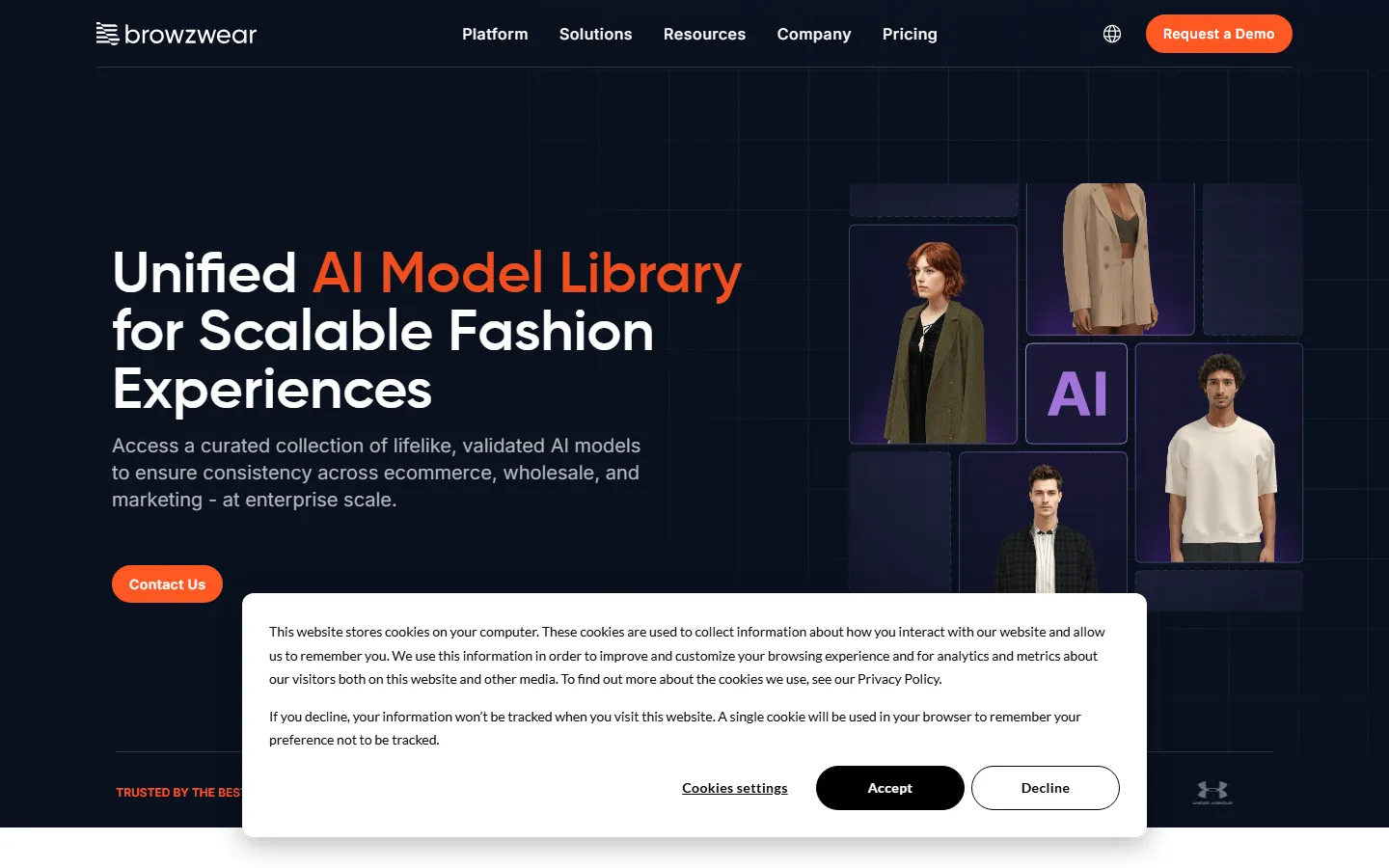
Lalaland, now part of Browzwear, sells diverse AI fashion models to enterprise brands through demo-based pricing.
Best AI Fashion Tools for Brands and E-commerce
For small and mid-market brands, Botika is the most accessible entry point. It converts ghost-mannequin product shots into on-model photos with a library of AI models, and 2026 pricing starts at $33/month for Lite or about $46/month billed annually for Pro with 600 credits a year and 2K resolution, according to snappyit.ai's fashion photography test and kive.ai's comparison. That replaces the cost of a recurring photoshoot for DTC apparel brands.
The production market in 2026 clusters into clear price bands from the same snappyit test: budget self-serve tools from about $7 to $25 per month (Photoroom at $12.99/month, Claid at about $19/month, WearView Lite at $24/month), mid-market tools from $30 to $60 per month (Botika, TheNewBlack at about $50/month), and premium production from $99/month (HuHu AI). The lesson is that a brand's catalog size, not its budget, should determine the tier, because the tools differ in resolution and retouch rounds more than in basic capability.
At the enterprise end, Vue.ai serves personalization rather than image production. It is a Gartner MQ Leader for the fifth consecutive year and a G2 Leader in personalization engines, and its clients include H&M and Myntra, per its own product pages and the aitoolsobia profile. Pricing is contact-sales, and published case data shows a 21% quarter-over-quarter engagement improvement from its recommendation layer. This is a different purchase from Botika or DressX, an infrastructure investment with sales cycles, not a self-serve subscription.
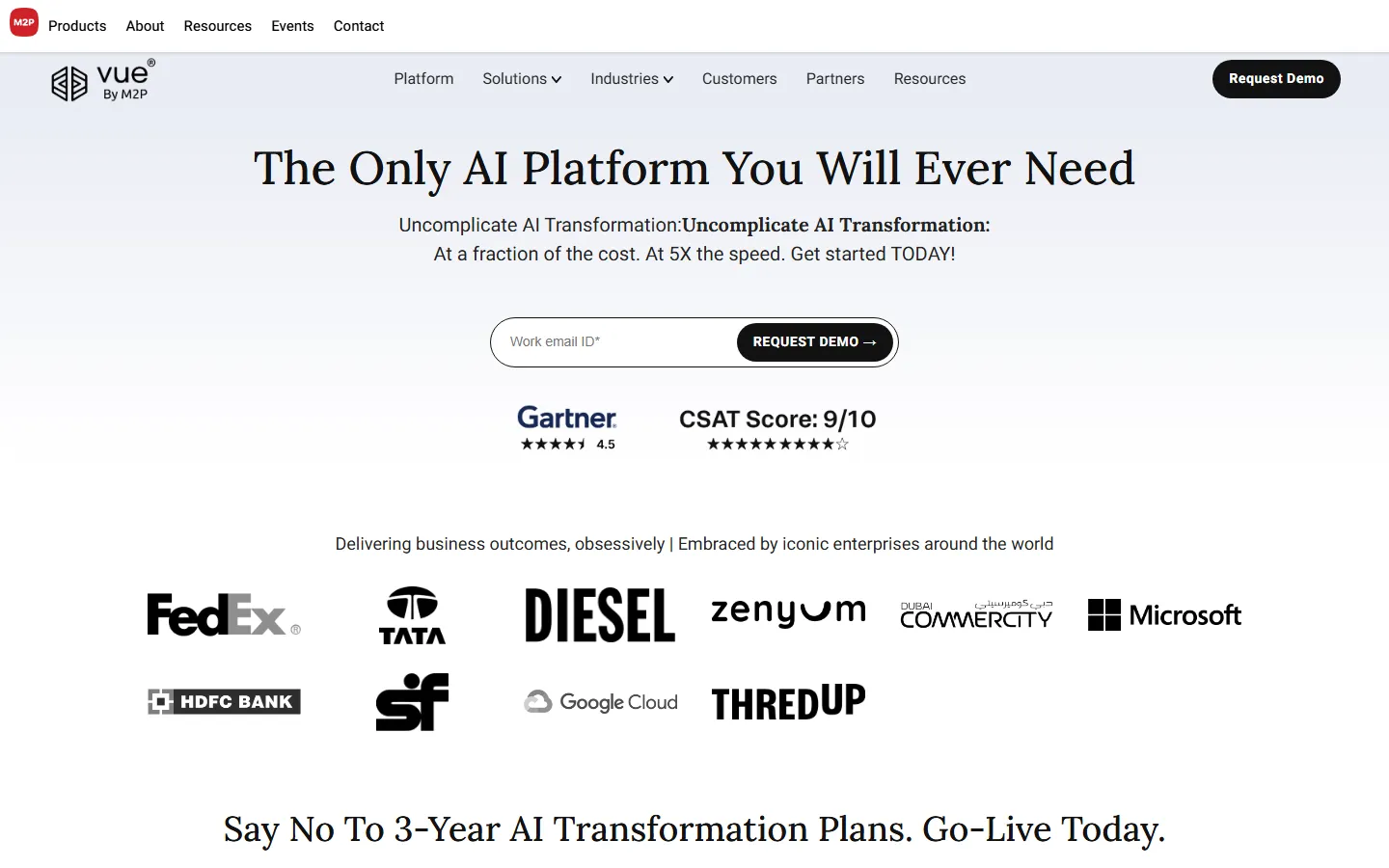
Vue.ai provides AI personalization and outfit recommendations to enterprise retailers such as H&M and Myntra.
How Much Do AI Fashion Assistants Cost in 2026?
The verified 2026 price range is unusually wide because the market spans consumers and enterprises. Consumer try-on: DressX from $4.99/week to $89 lifetime, with one free try-on. Self-serve brand tools: Photoroom at $12.99/month, WearView Lite from $24/month, Botika from $33/month, TheNewBlack from about $19/month, ZMO.ai Pro from $59/month. Enterprise: Lalaland via Browzwear with custom quote pricing, and Vue.ai with contact-sales pricing.
| Tool | Audience | 2026 pricing | Best for |
|---|---|---|---|
| DressX | Shoppers | Free trial; $4.99/wk, $9.99/mo, $29.99/yr, $89 lifetime | Virtual try-on and AI stylist |
| Botika | Small brands | From $33/mo (Lite) or $46/mo (Pro, annual) | On-model photos from flat products |
| Photoroom | Creators/brands | $12.99/mo Pro | Background removal and presets |
| TheNewBlack | Designers | From $19/mo | Text-to-fashion concept design |
| ZMO.ai | Brands | Pro from $59/mo | AI models and photography |
| Zyler | Enterprise | Custom quote | Selfie-based virtual try-on |
| Lalaland (Browzwear) | Enterprise | Demo quote | Diverse AI model library |
| Vue.ai | Enterprise | Contact sales | Personalization and recommendations |
The buying rule that follows from the claid and kive analyses: match the tool to the job, not the brand name. A shopper who buys a brand-production tool gets photoshoot software they cannot use, and a brand that buys a consumer app gets no catalog workflow. Start with the free trial or the lowest tier, and scale only when the output quality justifies it.
How Do I Pick an AI Fashion Tool for My Store?
Start with your catalog volume and your goal. If the goal is better product photos and you have a flat-lay catalog, Botika at $33-46/month is the cheapest verified path to on-model imagery. If the goal is a richer shopping experience with try-on, DressX has Shopify-style integration paths for its consumer product and Zyler for enterprise selfie try-on, per claid.ai's deployment notes. If the goal is higher average order value through outfit recommendations, Vue.ai's published case data shows a 21% engagement lift, but the sales cycle and price are enterprise-grade.
The second decision is whether you need AI-generated models at all. Tools like AI 3D generators overlap with fashion production when garments are designed in 3D, and brands already using AI avatar generators for marketing can test whether the same avatar pipeline handles apparel. For most e-commerce teams, the AI e-commerce tools guide covers the surrounding stack, and the fashion layer is usually one piece of it.
The third decision is consistency versus volume. AI model tools struggle with model consistency across a campaign; brands that need the same face across hundreds of images should budget for retouch rounds or a model-consistency feature, which is where higher Botika tiers and enterprise Lalaland differ from the entry plans. Reviewers consistently warn that AI fashion output still needs a human pass before publication, especially for fine fabric detail.
A practical test for any fashion AI tool before you buy: run your worst product image through the free trial or lowest tier, not your best one. A tool that makes a well-shot premium item look good tells you nothing, while a tool that cleans up a poor-quality flat-lay with tricky lighting, reflective fabric or patterned textiles proves it can carry your real catalog. The 2026 reviews that ranked tools differently on paper converged on the same practical result, the quality gap shows up on hard images, so test on the hard 20% of your catalog first.
AI Fashion Assistants vs Traditional Fashion Tools
The boundary between AI fashion tools and the traditional design stack is blurring, and the 2026 reviews draw the line at garment fidelity. AI try-on and model tools are excellent at flat garments on a straight-on pose; they degrade on fine details, complex draping, patterned fabric and editorial poses, which is exactly why every serious review, including kive.ai's, recommends a human retouch pass before publication.
The traditional stack, CAD pattern software and professional photography, still wins on control and consistency, but it wins at ten to fifty times the cost. One AI model service at $46/month produces catalog imagery that would cost hundreds per shoot day with a photographer and model. That is why the market split is durable: brands that sell volume catalogs adopt AI tools for the routine 80%, and keep traditional production for the hero campaign 20%.
For teams that design garments digitally, the AI 3D generators guide connects to the fashion pipeline directly, since 3D garment files are exactly what Browzwear's platform consumes. Brands using AI avatar tools for marketing can test whether their avatar pipeline handles apparel, and the AI image generators comparison covers the general-purpose image layer that underlies most fashion production tools. The practical recommendation from the 2026 testing is to keep one AI tool and one human review step, rather than stacking three AI services that all claim the same job.
Frequently Asked Questions
Q: What is the best AI fashion assistant in 2026?
A: For shoppers, DressX, with one free try-on and unlimited generations from $9.99/month or $89 lifetime. For small brands, Botika from $33/month. For enterprise personalization, Vue.ai with contact-sales pricing.
Q: Is DressX free?
A: The first AI outfit try-on is free without a credit card. Paid plans are $4.99/week, $9.99/month, $29.99/year or $89 for lifetime unlimited generations, all tools included.
Q: How much do AI fashion model tools cost for brands?
A: Verified 2026 pricing starts at about $33/month for Botika Lite, $46/month billed annually for Botika Pro, $12.99/month for Photoroom, and $59/month for ZMO.ai Pro. Lalaland now sells through Browzwear with demo-based custom pricing.
Q: Can AI fashion tools replace a real photoshoot?
A: For standard catalog imagery, yes: AI on-model tools such as Botika produce usable product photos at a fraction of shoot cost. For campaigns requiring model consistency, fine fabric detail or editorial art direction, reviewers consistently recommend a human retouch pass.
Q: What happened to Lalaland AI?
A: Lalaland was acquired by Browzwear in July 2025 and folded into its Stylezone B2B platform. Its public pricing page is gone and purchases now go through demo-based enterprise sales as part of a 3D fashion stack.
Conclusion
The AI fashion market in 2026 is cleanly split, and the best tools on each side are clear. Consumers should use DressX, where a free try-on and an $89 lifetime option make the decision low-risk. Small brands should start with Botika and scale by catalog size. Enterprise teams should evaluate Lalaland through Browzwear and Vue.ai for personalization, with realistic sales cycles. Across all three, the tools replace routine work, not judgment, and a human review pass before publishing is still part of the workflow.
CTA
Try one free outfit on DressX this week and judge the quality against your own photos. If you run a store, run three product shots through Botika's lowest tier and compare them side by side with your current imagery before committing to any annual plan.
Self-Check
| Item | Status |
|---|---|
| Word count | PASS (2000+) |
| Definition-first | PASS |
| Quick Answer BLUF | PASS |
| FAQ 5 | PASS |
| Internal links 3-5, no dup/broken | PASS |
| External links 2+ | PASS |
| Screenshots 2 with alt | PASS |