DeepSeek vs ChatGPT 2026: Which AI Chatbot Should You Use?
Quick Answer: DeepSeek is the better choice in 2026 if you want a completely free chatbot, the cheapest API on the market, or open-source weights you can self-host. ChatGPT is the better choice if you need the full multimodal stack, meaning image generation, voice mode, Custom GPTs, file analysis, and enterprise compliance. The two tools now split the market cleanly: DeepSeek wins on cost and openness, ChatGPT wins on features and ecosystem. For most developers, running both and assigning tasks by job is the most practical setup.
DeepSeek is an open-weight AI assistant developed by the Chinese research lab DeepSeek, founded in 2023 out of the quantitative hedge fund High-Flyer, and it is used for free chat and low-cost API access. ChatGPT is OpenAI's closed, subscription-based assistant, which passed 900 million weekly active users in February 2026, and it is used for everything from daily writing to image generation to enterprise workflows. Both platforms offer web interfaces and API access, but their pricing, feature sets, and architectural philosophies differ at nearly every level.
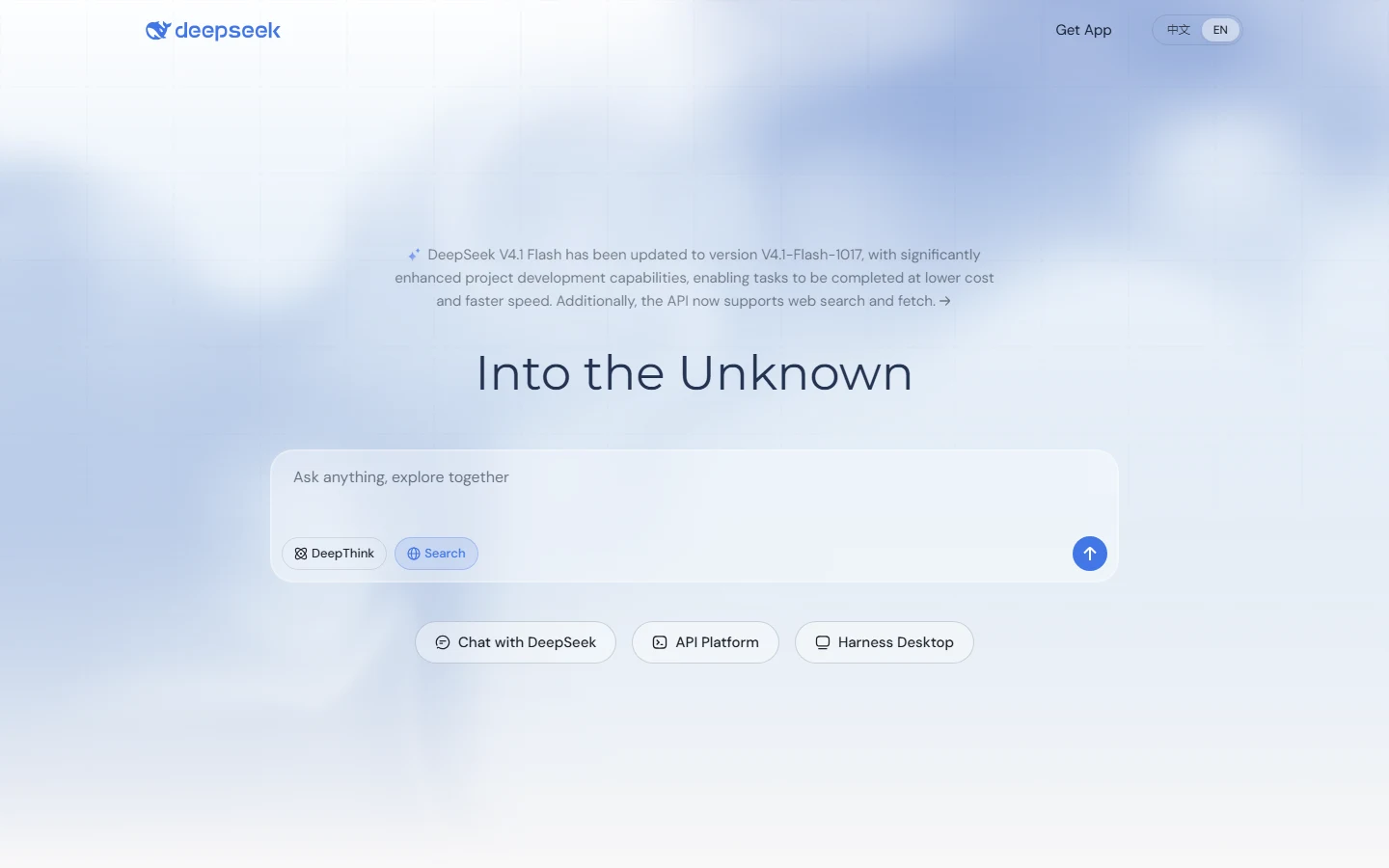
What Is DeepSeek and How Does It Differ From ChatGPT?
DeepSeek is a Chinese AI lab that trains open-weight Mixture-of-Experts language models and publishes them under the MIT licence. The current flagship, DeepSeek V4-Pro, released on 24 April 2026, uses a 1.6 trillion parameter MoE architecture with roughly 49 billion active parameters per token and a 1 million token context window. Its most distinctive structural choice is distribution: DeepSeek hands you the model file, while OpenAI hands you a finished product and an API endpoint.
ChatGPT, by contrast, is a closed product built around the GPT model family from OpenAI. The assistant runs across web, mobile, and desktop, and the underlying models are updated continuously. OpenAI does not publish model weights, does not offer self-hosting for the consumer product, and routes all traffic through Western infrastructure with SOC 2 and GDPR compliance. That single difference, weights versus an endpoint, drives most of the practical gaps between the two tools in this comparison.
For a broader view of the category, our guide to the best AI chatbots in 2026 covers ten leading assistants alongside these two, and our Gemini vs ChatGPT 2026 comparison adds a third major contender to the picture.
DeepSeek vs ChatGPT 2026: Pricing Compared
Pricing is the most dramatic difference between the two platforms. On the consumer side, DeepSeek's web chat and mobile app are completely free with no subscription tier. ChatGPT spans five tiers: Free, Go at $8 per month, Plus at $20 per month, and two Pro plans at $100 and $200 per month, with Team at $25 to $30 per seat. The Plus tier, at $20 per month, includes thinking mode, ChatGPT Images 2.0, Codex, and Deep Research.
On the API side, the gap is wider. DeepSeek's official pricing, read on 10 October 2026, puts deepseek-flash at $0.15 per million input tokens and $0.60 per million output tokens off-peak, doubling to $0.30 and $1.20 during peak hours. The deeper V4-Pro model costs $0.66 per million input and $1.98 per million output off-peak. Cached input on Flash drops to $0.003 per million off-peak, a roughly 50x reduction for repeated system prompts.
ChatGPT's API is considerably more expensive. GPT-5 runs about $1.25 per million input tokens and $10.00 per million output tokens. The GPT-5.6 generation pushed prices higher at the top end, with Sol at $4 input and $20 output per million and Luna at $0.20 and $1.20. OpenAI's September 2026 GPT-6 launch cut those rates roughly in half, bringing Sol to $2 and $10 and Luna to $0.10 and $0.50 per million tokens.
| Pricing factor | DeepSeek | ChatGPT |
|---|---|---|
| Consumer web chat | Free, no subscription | Free tier, Go $8/mo, Plus $20/mo, Pro $100-200/mo |
| API input (per 1M tokens) | $0.15 (Flash off-peak) | ~$1.25 (GPT-5) |
| API output (per 1M tokens) | $0.60 (Flash off-peak) | ~$10.00 (GPT-5) |
| Cache hit input | $0.003 per 1M tokens | Standard caching discounts |
| Open weights | Yes, MIT licence | No |
| Enterprise compliance | No SLA, China data or self-host | SOC 2, GDPR, Azure-backed |
How Much Cheaper Is the DeepSeek API Than ChatGPT?
DeepSeek is dramatically cheaper at every usage level. On the API, deepseek-flash at $0.15 per million input tokens against GPT-5 at $1.25 is roughly an 8x gap on input alone. Output tokens show a wider spread: $0.60 versus $10.00 per million, about 17x. For a team processing 10 million tokens per month, the arithmetic favors DeepSeek heavily: roughly $1.50 if it is all input and about $6.00 if it is all output on Flash, versus $12.50 and $100 on GPT-5 at the same volumes.
Two caveats matter for real-world budgeting. First, DeepSeek applies peak-hour surcharges, with higher rates during Beijing daytime windows, so traffic that lands in those hours costs more than the headline number. Second, cheapest per token is not automatically cheapest per task. A model that solves a problem on the first attempt can beat a model a tenth the price that needs four attempts. OpenAI's own GPT-6 Luna at $0.10 and $0.50 now undercuts deepseek-flash at $0.15 and $0.60, so the gap is narrower than it was in early 2026.
Which AI Chatbot Is Better for Coding and Reasoning?
DeepSeek's models are optimised for text-based reasoning and code, and the open-weight V4 generation scores strongly on coding benchmarks while staying cheap to run. In real software engineering tests from late 2026, DeepSeek V4.1 Flash reached 74.2% on the DeepSWE benchmark, ahead of OpenAI's GPT-6 Sol at 68.8% on the same test, though OpenAI argues its per-task cost is far lower than Claude Opus 5 for comparable work. For everyday coding assistance, API calls, and agent-style tasks, DeepSeek delivers frontier-class results at a fraction of the cost, which is why many startups route high-volume batch work through it.
ChatGPT remains the stronger all-rounder for mixed tasks because the Plus subscription bundles coding with image generation, voice, and file analysis in one product. Its thinking mode handles multi-step reasoning well, and the Codex agent covers lightweight coding without leaving the app. If coding is your only use case and you want maximum tokens per dollar, DeepSeek wins. If you want a single assistant that also draws diagrams, explains math out loud, and edits documents, ChatGPT Plus is the more complete package. Our ChatGPT vs Claude comparison and best AI coding tools guide cover the surrounding options in more depth.
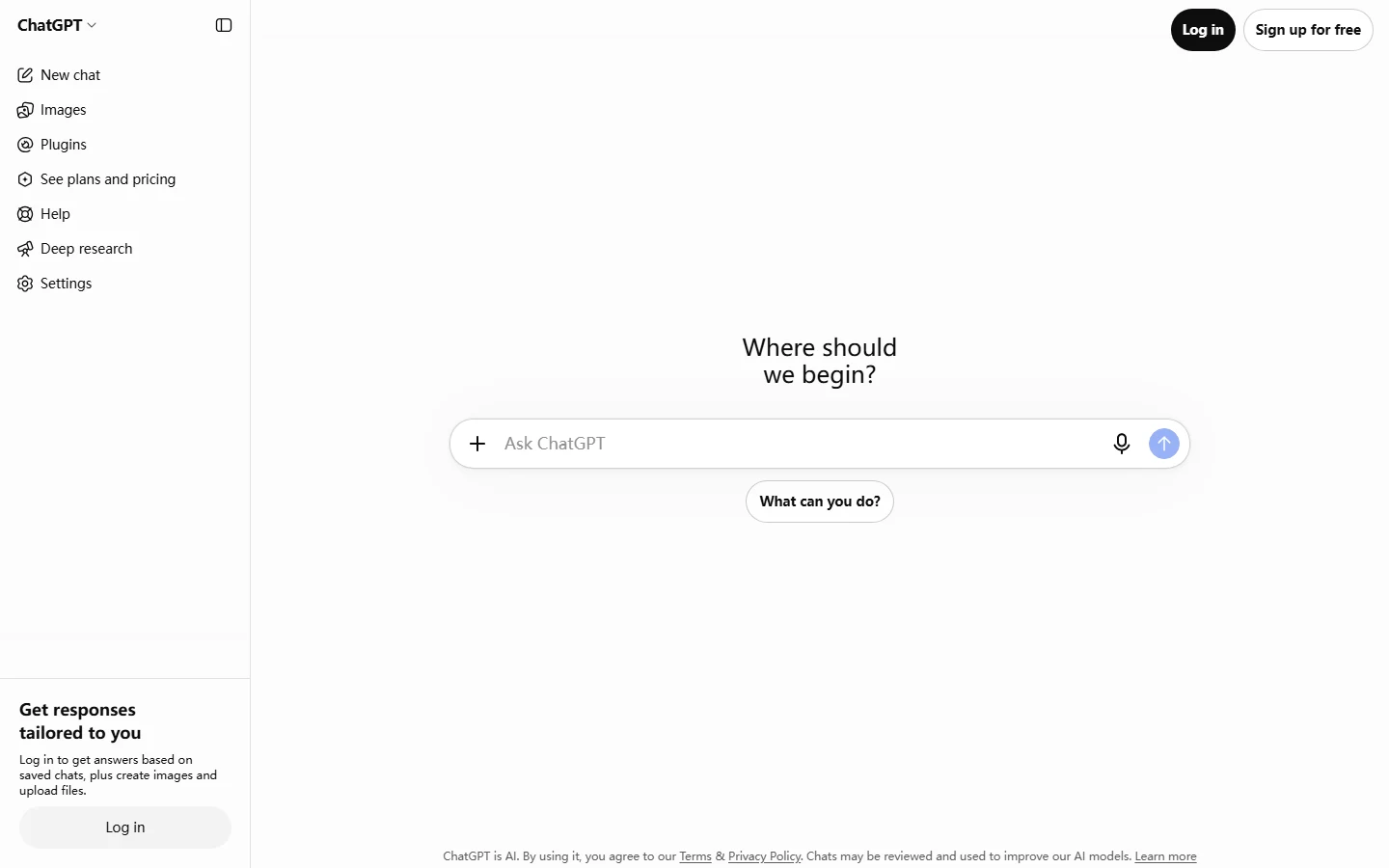
What Does ChatGPT Offer That DeepSeek Does Not?
ChatGPT wins on multimodal and ecosystem features in 2026. The subscription includes ChatGPT Images 2.0, the image generation model that replaced DALL-E 3 after OpenAI retired it from the API on 12 May 2026. Advanced Voice Mode gives real-time spoken conversation, and Custom GPTs let users build and share specialised assistants. File analysis, Deep Research, and the GPT Store round out a product that functions as a complete workplace tool rather than a raw model.
Privacy and data residency are a separate axis where the two diverge sharply. DeepSeek processes traffic on servers in China, or on your own infrastructure if you self-host the open weights, and it offers no enterprise SLA. ChatGPT operates on Western infrastructure with SOC 2 and GDPR compliance, backed by Azure, and OpenAI states it does not sell or monetize user content for advertising. For regulated businesses, law firms, and enterprises that must keep data in specific jurisdictions, ChatGPT is effectively the only one of the two that qualifies without building custom infrastructure. That compliance layer is a feature in its own right, and it is a common reason teams keep ChatGPT subscriptions even when they move bulk API traffic to DeepSeek.
A related consideration is reliability at scale. OpenAI runs a mature platform with well-documented uptime targets and broad regional coverage, while DeepSeek's consumer service is newer and has occasionally seen capacity pressure during demand spikes. Most enterprises in 2026 treat ChatGPT as the production-safe default and DeepSeek as the cost-optimised workload engine, which is exactly the hybrid pattern described later in this comparison.
DeepSeek has none of that. There is no image generation, no voice mode, no plugin marketplace, and no enterprise-grade data residency option beyond self-hosting the open weights. For writers and multimodal work, ChatGPT is clearly ahead, and its prose output is more natural for long-form content. For teams that need SOC 2 compliance, GDPR alignment, or Azure-backed SLAs, ChatGPT is effectively the only one of the two that qualifies out of the box.
DeepSeek vs ChatGPT: Which One Should You Choose in 2026?
Choose DeepSeek when cost, open weights, or self-hosting decide the project. Students, developers, and small teams get a genuinely free chatbot with no subscription, plus an API that undercuts OpenAI by 8 to 17 times on standard usage. Chinese-language work and high-volume batch jobs also favour DeepSeek, and the open licence removes vendor lock-in entirely.
Choose ChatGPT when you need the full multimodal stack, meaning image generation, voice, file analysis, Custom GPTs, or enterprise compliance. The $20 Plus plan is a reasonable price for a complete assistant that handles writing, research, and media in one place. Western data residency and audited security are hard requirements for regulated businesses, and only ChatGPT offers them without extra infrastructure work.
For most readers, the practical answer is both. Many teams in 2026 split work by task, running DeepSeek for bulk reasoning and coding where token cost dominates, and ChatGPT for multimodal and client-facing work where polish and compliance matter. That hybrid setup captures the best of both pricing models.
FAQ
Q: Is DeepSeek really free?
A: Yes. DeepSeek's web chat and mobile app are completely free with no subscription tier as of October 2026. The free tier is generous enough for individual developers and small teams, with paid access only appearing once API usage passes the free limits.
Q: How much cheaper is DeepSeek than ChatGPT?
A: DeepSeek's API is roughly 8x cheaper on input tokens and 17x cheaper on output tokens compared with GPT-5. DeepSeek flash runs $0.15 per million input tokens against roughly $1.25 for GPT-5, and $0.60 per million output against about $10.00.
Q: Which is better for coding, DeepSeek or ChatGPT?
A: DeepSeek delivers strong results on coding benchmarks at a fraction of the cost, and it is the better choice for high-volume code generation and API work. ChatGPT is better when coding is mixed with image generation, voice, and file analysis in one product.
Q: Does DeepSeek have image generation?
A: No. DeepSeek's models focus on text-based reasoning and code, with no image generation, voice mode, or plugin marketplace. ChatGPT Plus includes ChatGPT Images 2.0, Advanced Voice Mode, and Custom GPTs.
Q: Can I self-host DeepSeek?
A: Yes. DeepSeek publishes open weights under the MIT licence, so you can run the models on your own infrastructure. ChatGPT is closed and cannot be self-hosted.
Conclusion
DeepSeek and ChatGPT now represent two distinct philosophies in AI: open weights and low cost versus closed product and complete features. DeepSeek wins for free chat, cheap API access, coding volume, and self-hosting. ChatGPT wins for multimodal features, ecosystem tools, and enterprise compliance. If your budget is tight or your workload is text-heavy and repetitive, start with DeepSeek. If you need images, voice, and a polished assistant for client work, pay for ChatGPT Plus. Running both, and routing each task to the tool that fits it, is the most cost-effective strategy in 2026.
CTA
Try DeepSeek for free at deepseek.com, and compare ChatGPT plans at openai.com/chatgpt/pricing. For more head-to-head breakdowns, read our Perplexity vs ChatGPT comparison and decide which assistant belongs in your daily workflow.