Quick Answer: Zapier is the better pick for non-technical teams who value a huge app catalog, simple two-step automations, and hands-off reliability, with paid plans starting at $19.99 per month. n8n is the better pick for technical teams who want visual AI agent control, self-hosting, and dramatically lower costs at scale, with a free Community Edition that runs on your own server forever. For a team running 50,000 multi-step workflows a month, Zapier can cost $600 to $800 monthly while self-hosted n8n costs roughly the price of the hardware that runs it.
n8n is an open-source workflow automation platform that lets technical teams build AI agents and multi-step workflows visually on a canvas, then deploy them on their own infrastructure or in the n8n cloud. Zapier is a hosted automation platform that connects over 7,000 apps through triggers and actions, designed for non-technical users who want automation without touching code. Both tools solve the same core problem, connecting your tools so data moves automatically, but they approach pricing, control, and AI capabilities from opposite directions.
How Much Does Zapier Cost in 2026?
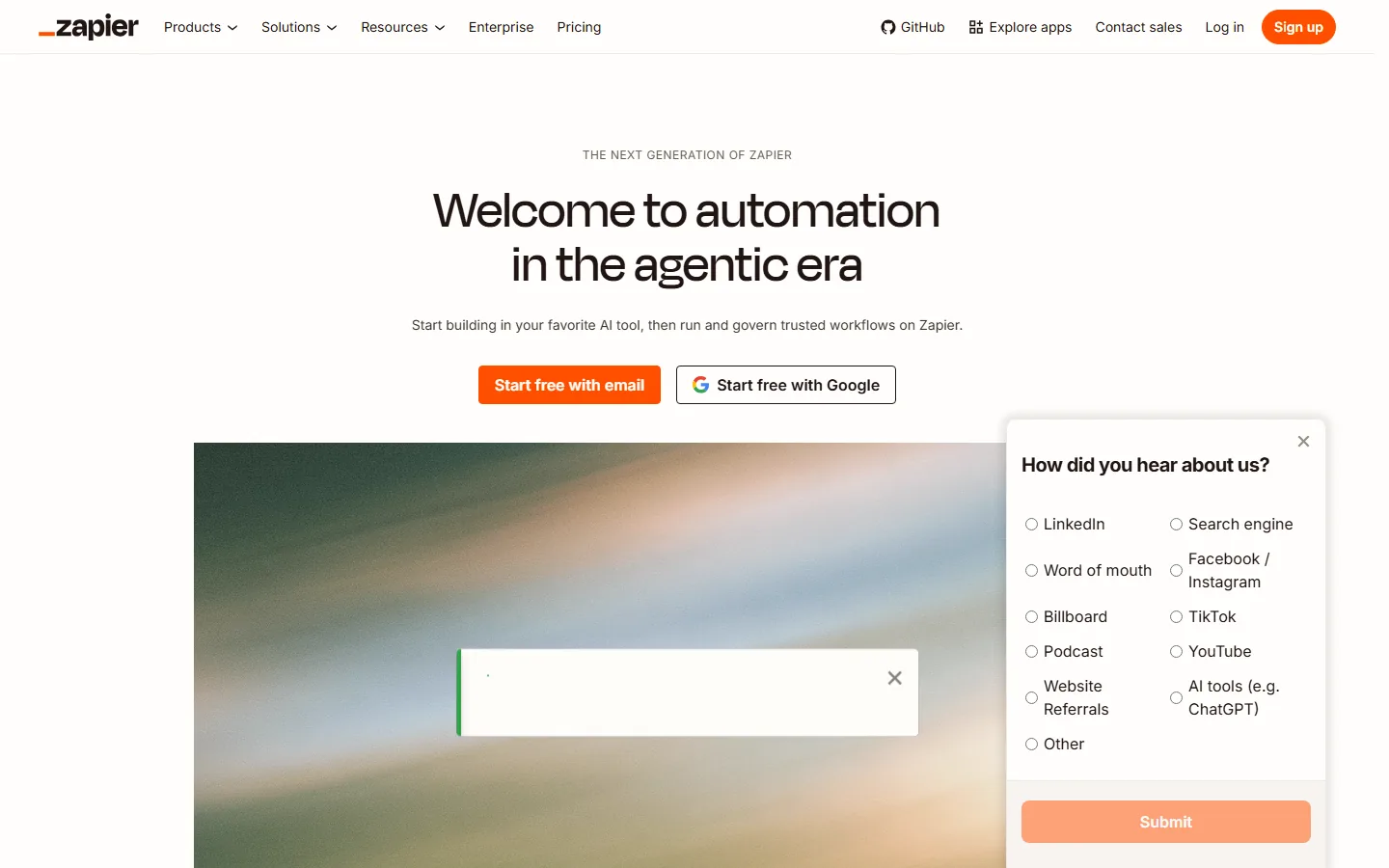
Zapier's pricing is straightforward and task-based. The Free plan gives you 100 tasks per month with two-step Zaps only, which is enough to test a couple of automations but not to run a real business on. The Professional plan starts at $19.99 per month billed annually, or $29.99 monthly, and includes 750 tasks, multi-step Zaps, and premium app access. The Team plan at $69 per month billed annually covers 2,000 base tasks and up to 25 users, and Enterprise pricing is custom. The detail most people miss is overages: Zapier charges 1.25 times your plan rate for tasks beyond your limit, so a spike month can quietly double your bill. Zapier's own comparison page, updated September 2026, frames the offer simply: get started for free, then jump to a paid plan when your task volume grows. That model is easy to understand, and it is exactly why Zapier remains the default for small teams.
How Much Does n8n Cost in 2026?
n8n's pricing model is the reason the comparison gets interesting. The Community Edition is free forever and self-hosted, with unlimited workflow executions on your own server, which makes it the cheapest option in this comparison by a wide margin. If you do not want to run infrastructure, n8n Cloud pricing starts at about €20 per month for 2,500 executions, with the Pro tier at €50 per month for 10,000 executions and the Business tier at roughly €667 per month for 40,000 executions. The critical difference is the pricing unit: n8n bills per workflow execution regardless of how many steps run inside that workflow, while Zapier bills per task and counts every step. A ten-step automation that runs 10,000 times a month costs 100,000 Zapier tasks but only 10,000 n8n executions. As workflows get longer, the gap widens fast.
How Do n8n and Zapier Compare on AI Features?
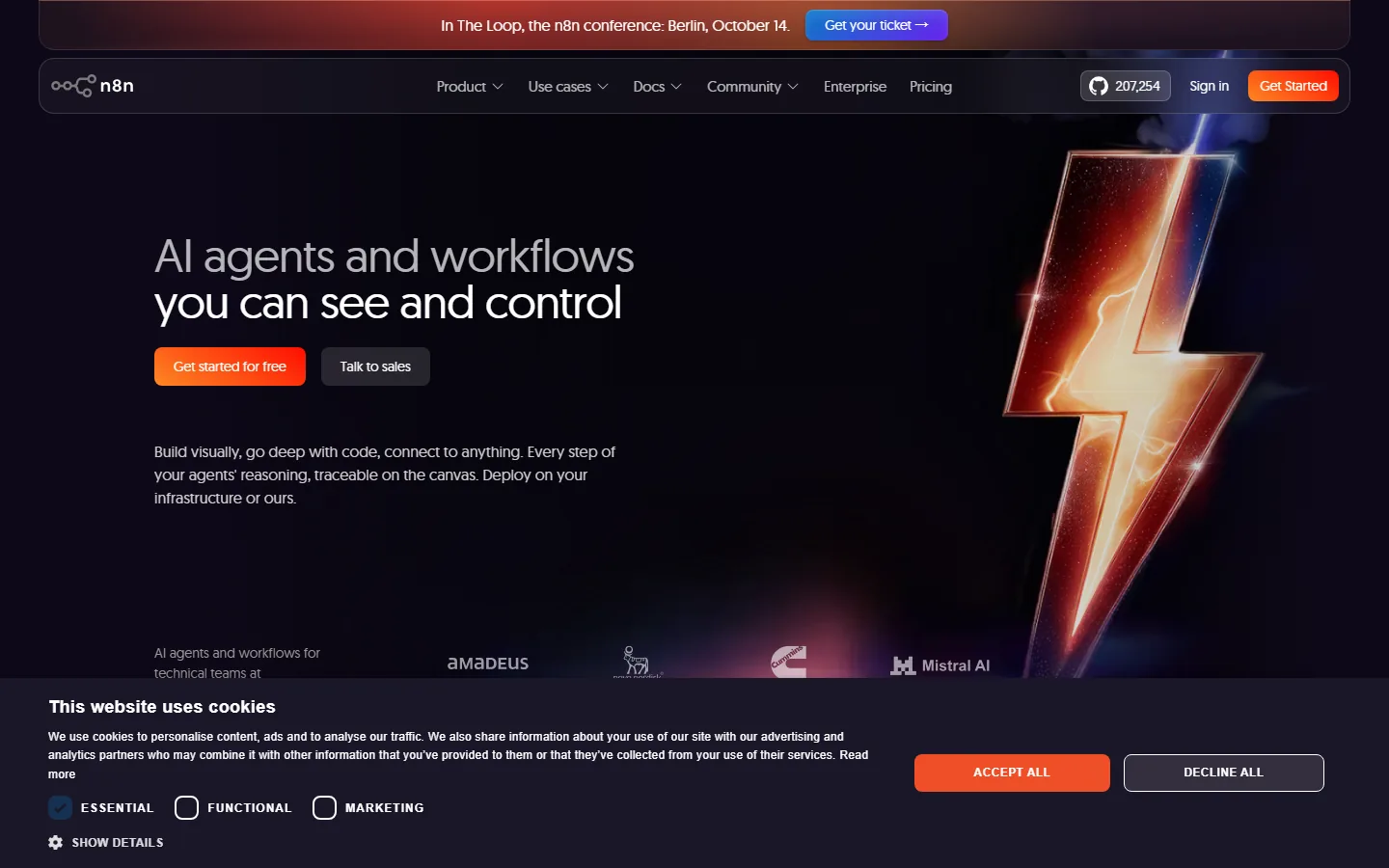
Both tools have leaned hard into AI in 2026, but with different philosophies. Zapier treats AI as a layer over its existing automation: AI steps can classify text, draft replies, and extract data inside a Zap, and the platform now pitches itself as the place to run and govern trusted workflows built in your favorite AI tool, with a homepage that reads "Welcome to automation in the agentic era." It is automation for people who already use AI assistants and want guardrails. n8n treats AI as the core product: you build an AI agent on the canvas, wire it to models, tools, and memory, and see every step of the agent's reasoning traceable visually. The official n8n homepage puts it directly: "AI agents and workflows you can see and control," with the pitch "build visually, go deep with code, connect to anything." If your automation involves an autonomous agent that decides what to do next, n8n gives you the control plane; Zapier gives you the sandbox.
What Is the Total Cost Difference at Scale?
The real numbers matter more than sticker prices. One independent comparison from April 2026 modeled a business running 50,000 operations per month with multi-step workflows: Zapier lands around $600 to $800 per month, while self-hosted n8n costs roughly the electricity and server time to run it, typically under $100 per month even with a small VPS. Another breakdown from October 2026 concluded that n8n wins on control and cost at scale because of per-execution pricing versus per-task pricing. For a solo developer or a startup on a tight budget, that difference is the whole decision. For a team that values not thinking about infrastructure at all, Zapier's premium buys exactly that: no servers, no upgrades, no maintenance.
Which Tool Is Easier for a Non-Technical User?
Zapier is clearly easier for people who do not write code. You search for your app, pick a trigger and an action, and the Zap editor guides you through the rest. The catalog of 7,000-plus apps means your tool is almost certainly already connected, and templates cover common workflows like new form submissions creating CRM records or new emails creating tasks. n8n has a steeper learning curve: the visual canvas is powerful, but you need to understand nodes, connections, and data formats, and self-hosting adds server management to the list. The tradeoff is honest: n8n's flexibility is paid for with complexity. Our guide to the best AI automation tools covers both sides in more depth, and for readers who want a broader view of no-code building, the best no-code AI tools guide compares n8n with app builders.
Can You Self-Host n8n and Why Would You?
Self-hosting is n8n's signature advantage and the feature Zapier cannot match. The Community Edition runs on your own server, Docker, or a Raspberry Pi, keeps your workflow data entirely on infrastructure you control, and has no execution limits. That matters for three reasons: cost, privacy, and compliance. Regulated teams in finance or health avoid sending data through a third-party automation cloud, and teams processing sensitive customer records often need data residency they can prove. Zapier offers enterprise compliance features like SSO and audit logs, but the data still lives on Zapier's infrastructure. If your contract or your security policy demands that workflow data never leaves your environment, n8n self-hosting is not a nice-to-have, it is the only option in this comparison. The n8n Review 2026 on this site walks through the self-hosting setup in detail.
How Does Each Tool Handle AI Agents?
This is where 2026 changed the conversation. Zapier's agentic pitch centers on building in your favorite AI tool and running governed workflows on Zapier, which appeals to teams that already work inside ChatGPT or Claude and want their automations to stay reliable. n8n's approach is a visual agent builder: you place model nodes, tool nodes, and memory nodes on the canvas, connect them, and inspect the reasoning trace at every step. For a developer who wants to see exactly why an agent took an action, n8n's transparency is a genuine differentiator, and the October 2026 community analysis on DEV confirmed that n8n wins on control. For a manager who wants automations that just work without anyone reading logs, Zapier's simplicity wins. Neither is wrong; they serve different operators.
What Are the Downsides of Each Platform?
Zapier's weaknesses are cost and rigidity. The task-based pricing punishes long workflows, overages add 1.25x rates, and the two-step limit on the free plan frustrates users who want to test a realistic automation before paying. Teams that outgrow Zapier often describe the migration as painful because Zaps are built in the proprietary editor. n8n's weaknesses are operational: you are responsible for updates, backups, and uptime when self-hosted, the learning curve is real, and the Community Edition has no official support, so you rely on community forums and documentation. The cloud tiers fix support but cost more, and even then the product assumes a technical user. There is no free lunch: Zapier charges you to avoid work, n8n gives you power in exchange for work.
Should You Use n8n or Zapier for Your Business in 2026?
The decision reduces to three questions. First, who will build the automations? Non-technical operators should choose Zapier; developers should choose n8n. Second, how long are your workflows? Multi-step pipelines make n8n dramatically cheaper; simple two-step automations make the price difference trivial. Third, can your data leave your environment? If not, n8n self-hosting is the only answer. Teams that sit between the extremes often run both: Zapier for the business users and n8n for the engineering automations. If you are still deciding on your broader automation strategy, our AI automation agents guide ranks the full field of tools, and the guide to AI tools for non-technical users helps define what your team can actually operate.
FAQ
Q: Is n8n really free?
A: Yes, the n8n Community Edition is free forever and self-hosted, with unlimited workflow executions. You pay only for your own server. Hosted cloud plans start at about €20 per month if you want n8n to run the infrastructure for you.
Q: Is Zapier free to use?
A: Zapier has a free plan with 100 tasks per month and two-step Zaps only. It works for testing basic automations, but most real use cases require the Professional plan at $19.99 per month billed annually.
Q: Which is cheaper for high-volume workflows, n8n or Zapier?
A: n8n is cheaper at scale. One April 2026 analysis found a 50,000-operation multi-step workload costs $600 to $800 per month on Zapier versus under $100 on self-hosted n8n, because n8n bills per workflow execution while Zapier bills per task and per step.
Q: Can n8n connect to the same apps as Zapier?
A: Not natively. Zapier has a catalog of 7,000-plus prebuilt app integrations. n8n relies on community nodes, HTTP requests, and custom code, so the 400-plus official nodes cover the big names, but long-tail apps may need manual work.
Q: Is n8n good for non-technical users?
A: Not as a first choice. n8n is built for technical teams who are comfortable with nodes, data formats, and occasional code. Non-technical users find Zapier's guided editor much easier to learn.
Q: Does Zapier have AI features?
A: Yes. Zapier added AI steps that classify, extract, and draft content inside automations, and its 2026 positioning centers on running trusted workflows built in AI tools. It is AI assistance layered onto the existing automation engine.
Q: Which tool is better for building AI agents?
A: n8n, for teams that want control and transparency. You build the agent on a visual canvas, connect models and tools, and trace every reasoning step. Zapier is better for governed, reliable automations built around AI assistants you already use.
Conclusion
n8n and Zapier are both excellent, and neither is objectively better. Zapier wins for non-technical teams that value a massive app catalog, instant setup, and zero maintenance, and it is the right choice when your workflows are simple and your budget tolerates task-based pricing. n8n wins for technical teams that need visual AI agent control, unlimited executions at a fixed cost, or the ability to self-host for privacy and compliance. Run the numbers on your real workflow length and volume before choosing, because the pricing models diverge more with every step you add.
CTA
Try the tool that matches your skill level: start with Zapier's free plan to test automation in minutes, or clone an n8n template on the free Community Edition to see how far visual workflows can go. Then come back and compare your actual task counts to the pricing models above, and you will know which subscription, if any, you actually need.