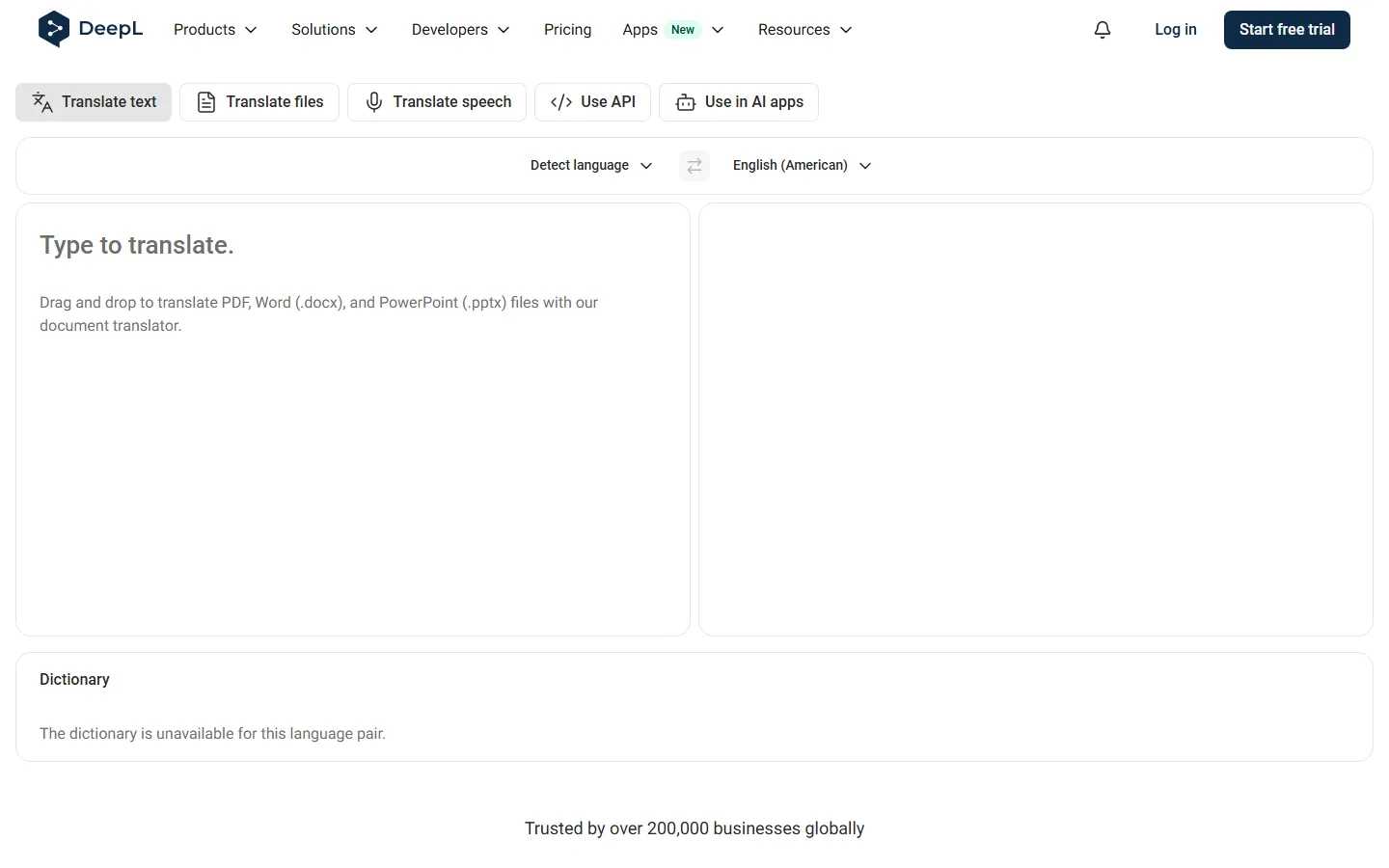
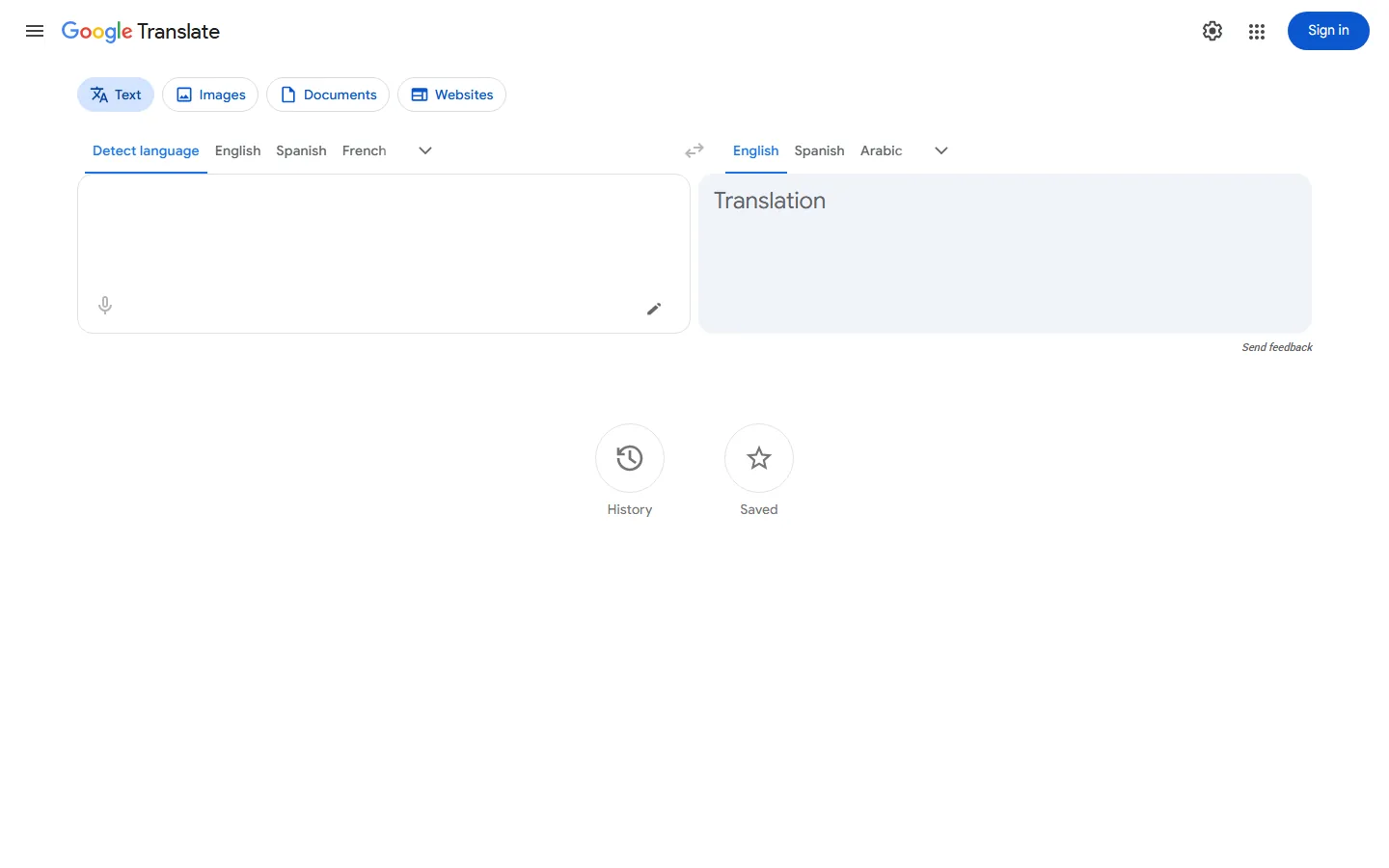
Quick Answer: DeepL is the more accurate translation engine for European language pairs and professional content, winning 100 percent of the 16 tested language pairs against Google Translate in March 2026 blind linguist tests, while Google Translate covers 249 languages, is free for consumers with no monthly cap, and wins for casual use, mobile features, offline translation, and rare languages. If you work with German, French, Spanish, Dutch, or Polish and quality matters, pick DeepL; if you need breadth, mobility, or zero cost, pick Google Translate.
DeepL is an AI translation platform built on human-translated corpora that produces natural, nuanced output for professional and business content, while Google Translate is a free neural machine translation service covering 249 languages and dialects with unmatched mobile, camera, and offline features. Both use neural machine translation as their foundation, but they are built for different jobs: DeepL for quality in supported languages, Google for reach across nearly every language on Earth.
Which Translation Tool Is Better in 2026?
The short answer from every independent benchmark is that it depends on the language pair. A 2026 guide from Verbi puts it directly: "DeepL produces more natural, human-sounding translations for European languages. Google Translate covers far more languages and just got a major AI upgrade." DeepL leads in European pairs like English to German, French, Spanish, and Dutch; Google performs as well or better for Mandarin Chinese, Korean, Arabic, and Brazilian Portuguese.
The most cited independent evidence comes from three sources. Germany's DFKI research center tested English to German across six linguistic categories and found DeepL outperformed Google in five of six, with the largest gap in verb valency, 91.5 percent accuracy for DeepL versus 57.4 percent for Google. The Intento State of Machine Translation report, the most comprehensive third-party benchmark, evaluated 46 engines across 11 language pairs and ranked DeepL as the top-performing engine in 65 percent of pairs tested, while Google won the non-European pairs. And a professional evaluation cited in the report found DeepL produced roughly 10 translation errors per test passage versus Google's 25.
How Accurate Is DeepL Compared to Google Translate?
The benchmark numbers are consistent across independent studies. BLEU scores from a January 2026 benchmark of 500 sentences across 10 language pairs show DeepL scoring 8 to 16 points higher than Google on European pairs: 64.5 versus 48.3 for English to German, 63.1 versus 51.7 for English to French, and 62.8 versus 54.2 for English to Spanish. For English to Japanese the margin narrows to 48.2 versus 43.8.
DeepL's own March 2026 blind tests, run by professional native-speaking linguists on 48,000 evaluations across 16 language pairs, report a 94 percent win rate against five competitors including Google Translate, and a 100 percent win rate (16 of 16 pairs) against Google Translate specifically. The honest caveat is that these are DeepL's own numbers, and its advantage concentrates in European pairs. The same report showed DeepL winning 88 percent against Gemini 3.1 Pro and 81 percent against Claude Opus 4.6 in reasoning mode, which suggests its core strength is direct machine translation rather than reasoning-heavy content.
Outside Europe the picture flips. The Intento benchmarks show Google outperforming DeepL for Mandarin Chinese, Korean, Arabic, and Brazilian Portuguese, and a peer-reviewed medical translation study found DeepL historically strong on Japanese to English, while recent user reports describe quality regression in the opposite direction. For Hindi, Swahili, Amharic, and dozens of indigenous languages, Google is often the only mature option.
How Much Do DeepL and Google Translate Cost?
The two tools use completely different pricing models. Google Translate is free for consumers with no monthly cap, no login required, and support for about 250 languages, with camera translation, offline packs, and conversation mode. The only limit is the text box itself, roughly 5,000 characters per translation.
DeepL also has a free tier for casual use, but paid plans add the limits that matter. The current pricing, verified against DeepL's pages in July 2026:
| Plan | Price | What you get |
|---|---|---|
| DeepL Free | $0 | Limited text translation, restricted documents and glossary |
| DeepL Pro Individual | $8.74/month (annual) | 300,000 characters/month, editable document translation |
| DeepL Pro Team | $28.74/user/month | 1 million characters per user, glossary, style rules |
| DeepL Pro Business | $57.49/user/month | Unlimited text translation under fair-use policy |
On the API side, DeepL discontinued its old free tier (500,000 characters per month) for new signups. The current entry point is a one-time allocation of 1 million characters that does not reset monthly; API Growth then costs $26 per month billed annually, including 12 million characters per year, with $27.50 per additional million. Google Cloud Translation charges $20 per million characters for standard neural translation, and its newer LLM-based translation bills at $10 per million input plus $10 per million output, which Google itself calls cost equivalent with NMT. The first 500,000 characters per month are free.
The real-world cost difference matters at volume: at 5 million characters per month, Google's API costs roughly $90 versus roughly $151 for DeepL, and at 10 million the gap grows to about $190 versus $276. DeepL's premium buys better quality and less post-editing time, which pays for itself when translation quality directly impacts business outcomes.
What Are the Real Differences Between DeepL and Google Translate?
The feature comparison shows two tools optimized for different workflows:
| Feature | DeepL | Google Translate |
|---|---|---|
| Languages supported | 100+ (about 36 on flagship model) | 249 languages and dialects |
| Best for | Professional, European language pairs | Broad coverage, casual, travel, mobile |
| Free consumer use | Limited free tier | Free, no monthly cap |
| Document translation | Preserves formatting, PDF + 30+ types | Basic document import |
| Camera translation | No | Yes, 94 languages |
| Offline translation | No | Yes, 50+ languages |
| Formality control | Yes, 9 languages | No |
| Custom glossaries | All plans (free: 10 entries) | Cloud API only |
| Desktop app | Windows and Mac | Web only |
| Privacy | SOC 2 Type II, ISO 27001, GDPR, no training on customer content | Free tier logs data; API has options |
DeepL's strongest professional features are document fidelity, glossary control, and tone control. Its document translator preserves the formatting and layout of original designs, so PDFs and more than 30 document types come back with pixel-perfect layout. Glossaries ensure consistent terminology, and formality control lets you specify formal or informal register in supported languages, which Google does not offer. That makes DeepL the pick for business documents, marketing campaigns, and academic content.
Google wins on reach and convenience. Camera translation scans menus and signs in 94 languages, offline packs cover 50+ languages for remote locations, and conversation mode handles real-time back and forth. The Google Chrome integration makes it the default translator for casual users, and the Gemini integration that landed in December 2025 is narrowing the quality gap from Google's side.
Which Should You Use for Professional Translation?
Choose DeepL if you work primarily with European language pairs, need more accurate translations for business documents or marketing campaigns, require document translation with preserved formatting, want glossary and style control for consistent terminology, or handle confidential material that demands strong privacy. Choose Google Translate if you need broad language coverage across 249 languages, want free access for casual or travel use, rely on mobile features like camera translation, offline packs, or conversation mode, work with rare or less common languages, or need to keep API costs low at high volumes.
The practical 2026 workflow is machine translation plus human review for anything that matters. Neither tool should publish brand-critical, legal, or medical content alone. Use the engine that fits your language pairs, supplement with post-editing, and build terminology control into your workflow.
How Do DeepL and Google Translate Compare for Teams?
For localization teams and businesses, the decision is about workflow integration rather than raw accuracy. DeepL's Customization Hub gives teams a management layer for brand voice, terminology, and style, with glossaries, style rules, translation memories, and style profiles. Its document translation preserves the layout of PDFs and more than 30 document types, so a translated contract or brochure comes back ready to publish instead of needing a designer. DeepL also integrates with CAT tools, which makes it the default engine for professional translation workflows.
Google Translate's strength for teams is breadth and cost. The free consumer tier covers casual requests across the whole organization with no per-user billing, and the Cloud Translation API at $20 per million characters is the cheapest path for high-volume, general translation across many languages. For companies translating a website into dozens of languages, Google's 249-language coverage often matters more than per-pair quality, and the Gemini integration that landed in December 2025 is steadily closing the quality gap on contextual and idiomatic translation.
Privacy is the other differentiator. DeepL is SOC 2 Type II certified, ISO 27001 certified, and GDPR compliant, and it does not train on customer content, which makes it the safer choice for confidential material. Google's free tier logs data, and its paid API is the privacy-conscious route. If you handle sensitive documents or regulated content, the compliance story alone can justify DeepL's higher price.
FAQ
Q: Is DeepL more accurate than Google Translate?
A: For European languages like German, French, Spanish, and Dutch, yes, consistently. Independent studies from DFKI, NRC Canada, and the Intento benchmark show DeepL producing fewer errors and more natural output for these pairs. For Chinese, Korean, Arabic, and many other languages, Google performs as well or better. The answer depends on the language pair.
Q: Is DeepL free to use?
A: Yes, DeepL has a free tier for casual use with limits on text length and document uploads. Paid DeepL Pro plans start at $8.74 per user per month, adding higher limits, the glossary, tone control, and document translation.
Q: Is Google Translate really free?
A: Yes, for consumers. Google Translate is free with no monthly cap for web and mobile use, covering about 250 languages with camera, offline, and conversation features. The Google Cloud Translation API charges $20 per million characters, with the first 500,000 characters per month free.
Q: Which has more languages, DeepL or Google Translate?
A: Google Translate supports 249 languages and dialects as of 2026. DeepL advertises more than 100 languages after a 70-language expansion in January 2026, but only about 36 of them run on its flagship model where the quality advantage lives.
Q: Does DeepL support Chinese or Arabic?
A: DeepL does not offer Arabic or Hindi at all, which is a hard limit for users of those languages. Google Translate covers both. For Mandarin Chinese, Intento benchmarks show Google performing as well or better than DeepL.
Q: Which is better for translating documents?
A: DeepL, by a wide margin. Its document translator preserves formatting and layout, handling PDFs and more than 30 document types into 100+ languages. Google Translate's document import is basic by comparison.
Q: Is DeepL worth the higher price?
A: For teams where reducing post-editing time justifies the premium, yes. DeepL Pro Individual at $8.74 per month adds 300,000 characters, editable document translation, glossaries, and tone control. For high-volume, general translation across many languages, Google's free tier and lower API costs add up quickly.
Conclusion
DeepL and Google Translate are both strong AI translation engines in 2026, but they are built for different jobs. DeepL is the more accurate engine for European language pairs and professional content, with document fidelity, glossary control, and privacy as differentiators. Google Translate wins on reach, mobility, and cost, covering 249 languages with free consumer use. Choose by language pair and use case, and use the right engine for the job rather than picking one for everything.
CTA
Test the difference yourself: run a side-by-side translation on DeepL and compare with Google Translate. For more context, read our best AI translation tools guide, the best AI translators roundup, our best free AI tools list, the AI tools for beginners starter guide, and the guide to AI tools for non-technical users.