DALL-E vs Stable Diffusion 2026: Which Image AI Wins?
Quick Answer: DALL-E 3 is the better choice for teams that want polished, prompt-obedient images with zero infrastructure, because it runs on OpenAI's cloud inside ChatGPT Plus and its API starts at $0.04 per image. Stable Diffusion 3.5 is the better choice for developers and budget-conscious creators who want full control, open weights, and near-zero marginal cost, because the open-weights models are free to self-host for commercial use under the Stability AI Community License until your company passes $1M in annual revenue. If you value speed and simplicity, pick DALL-E. If you value ownership and cost control at volume, pick Stable Diffusion.
DALL-E is OpenAI's text-to-image model family, currently at DALL-E 3, which is used for generating and editing images from natural-language prompts inside ChatGPT and through the OpenAI API. Stable Diffusion is an open-source text-to-image model family built by Stability AI, currently at version 3.5, which can be self-hosted on your own hardware or called through the Stability AI developer platform. The practical difference is not just image quality: it is who controls the model, how you pay for it, and what you are allowed to do with the output.
What Is the Real Cost Difference Between DALL-E and Stable Diffusion in 2026?
The pricing models could not be more different, and this is where most people make the wrong choice.
If you use DALL-E 3 inside ChatGPT, you pay a flat subscription. ChatGPT Plus costs $20 per month, and image generation is included as part of that plan according to the official OpenAI Help Center (September 2026). ChatGPT also offers a free tier, a Go plan at $8 per month in the US, and a Pro plan at $200 per month, announced when ChatGPT Go launched globally in January 2026. For heavy image users, that flat fee is easy to understand, but it is not metered, so a team generating hundreds of images cannot predict cost per image.
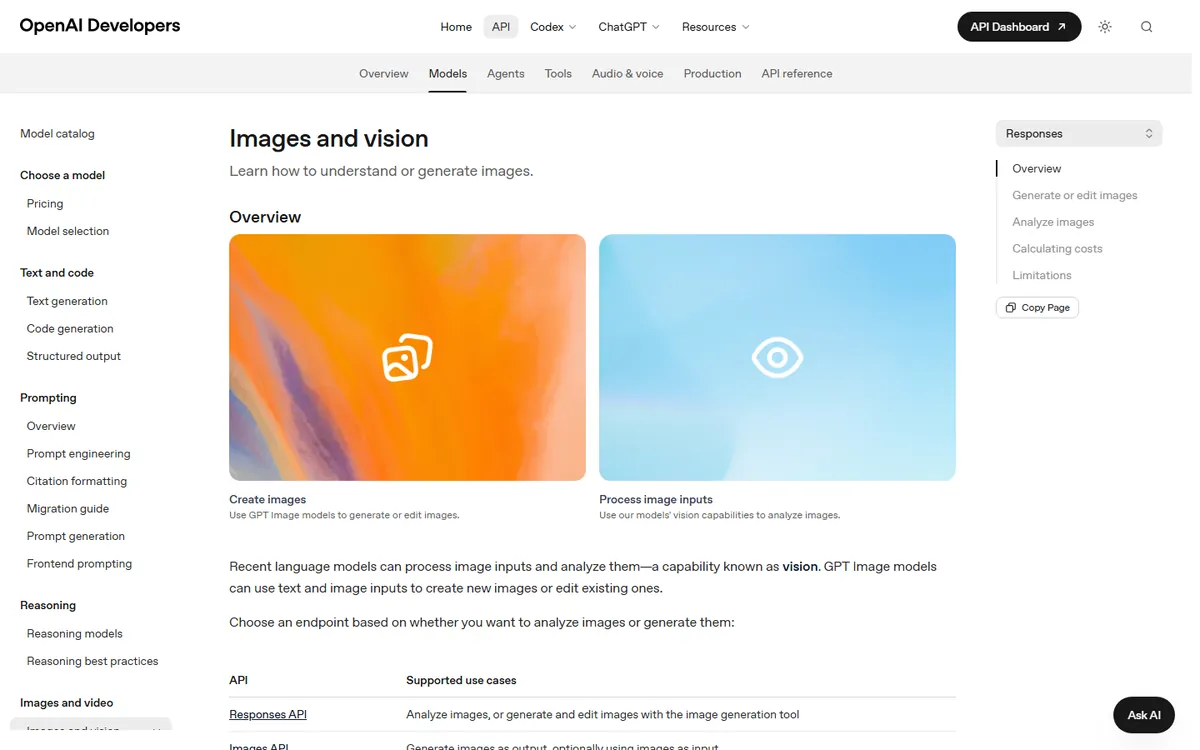
On the OpenAI API, DALL-E 3 is billed per image. The official pricing page lists a standard 1024x1024 image at $0.040, a standard 1024x1792 or 1792x1024 image at $0.080, and an HD 1792x1024 image at $0.120. An independent 2026 cost analysis from IntuitionLabs confirms the same $0.04 standard price for DALL-E 3 on platform.openai.com. Newer GPT Image models are billed differently, as OpenAI moved image pricing to a per-token model in 2026, but DALL-E 3 remains the per-image option many teams still rely on.
Stable Diffusion 3.5 flips the model. The open-weights models, including Stable Diffusion 3.5 Large, Large Turbo, and Medium, are free to download and self-host. Under the Stability AI Community License, use is free for non-commercial purposes and free for commercial use as long as your organization generates under $1M in annual revenue, regardless of the revenue source, according to the Stability AI license page (October 2026). Companies above $1M in revenue need an Enterprise License.
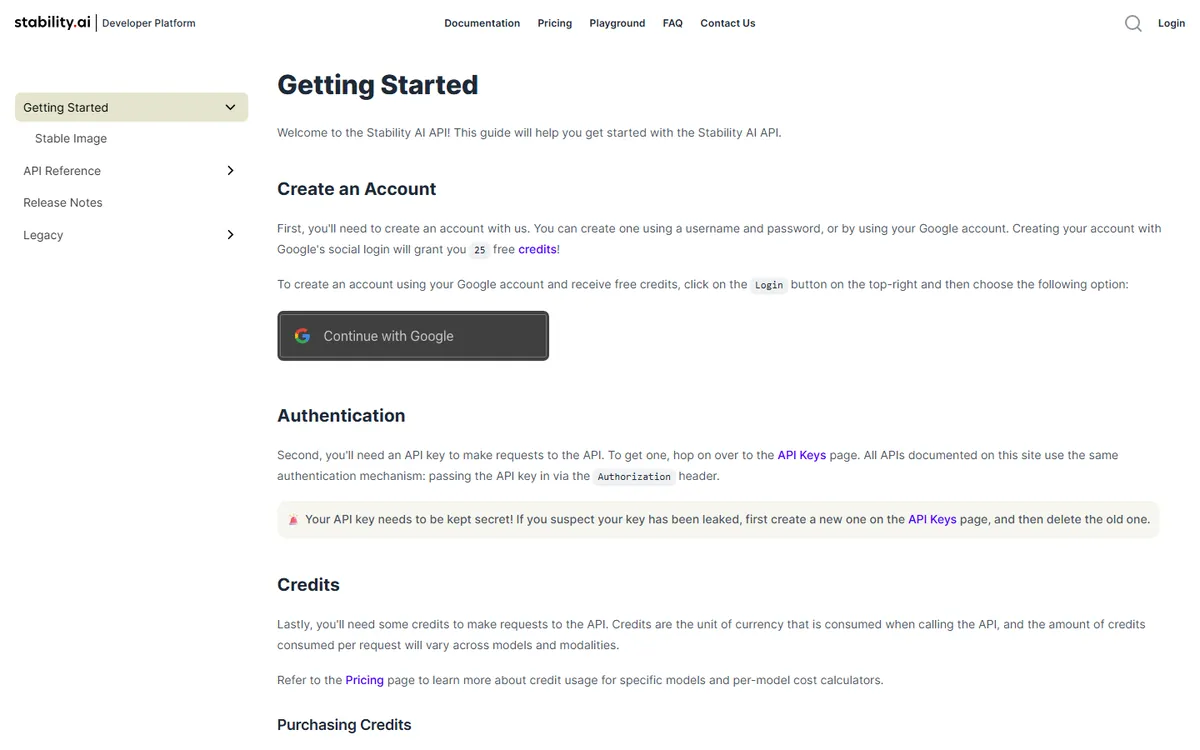
If you do not want to host your own GPU, Stability AI sells API credits. According to the Stability AI developer platform pricing page (October 2026), Stable Diffusion 3.5 Large Turbo costs 4 credits per image and Stable Diffusion 3.5 Medium costs 3.5 credits per image. Credits are sold at roughly $0.01 each, which puts Stable Image Core at about $0.03 per image and SD 3.5 Medium at about $0.03 per image, according to a September 2026 review from DigiJaws. That is roughly 25 to 40 percent cheaper than DALL-E 3's standard API price for similar resolutions.
How Do DALL-E and Stable Diffusion Compare for Commercial Projects?
Commercial rights are the deciding factor for most businesses, and the two tools answer that question very differently.
DALL-E 3 gives you full ownership of generated images when you use the paid products. Images created through the ChatGPT Plus subscription or the API belong to the user, and OpenAI does not claim ownership of your outputs. The catch is that you are locked to OpenAI's infrastructure: there is no way to run DALL-E locally, no fine-tuning in the classic sense for most users, and every image flows through OpenAI's cloud.
Stable Diffusion 3.5 gives you ownership of outputs too, and it adds two things DALL-E cannot offer. First, the model weights themselves are open, so you can fine-tune, run, and distribute the model under the Community License as long as you stay under the revenue threshold. Second, you can deploy it anywhere, including your own GPU, a VPS, or an edge device, which matters for privacy-sensitive work such as medical imaging, internal design assets, or client work under confidentiality agreements.
There is a practical nuance for freelancers and agencies. Many agencies run hundreds of product images per month for clients. At that volume, the per-image API cost difference between $0.04 (DALL-E standard) and roughly $0.03 (Stable Image Core or SD 3.5 Medium on the Stability API) adds up, and self-hosted Stable Diffusion drops the marginal cost to near zero. For a small agency generating 2,000 images per month, the API-only difference is roughly $20 to $80 per month, and self-hosting removes that line item entirely once hardware is in place. OpenAI's official images documentation is the reference for DALL-E usage and pricing, while Stability AI's license page defines exactly who can use the open weights for free.
Which Model Gives You More Control Over the Output?
Prompt control is where Stable Diffusion wins for technical users, and where DALL-E remains the easier tool for everyone else.
DALL-E 3 is known for strong natural-language understanding. You can describe a scene in plain English, include style words, lighting, and composition, and DALL-E 3 generally follows the prompt more faithfully than most competitors out of the box. It is also good at rendering legible text inside images, which is one of its standout strengths compared to older image models.
Stable Diffusion 3.5 offers structural control that DALL-E cannot match. The official Stability AI release notes for SD 3.5 introduced ControlNets for the Large model, including Blur, Canny, and Depth control, which are free under the Community License. These let you constrain composition from a sketch, an edge map, or a depth map instead of relying on prompt words. Combined with LoRA fine-tuning and checkpoint merging, SD 3.5 is effectively a platform for building your own image pipeline, while DALL-E is a product you consume.
The tradeoff is real. That same flexibility makes Stable Diffusion harder to use well: you need a GPU with enough VRAM, or a working knowledge of ComfyUI or Automatic1111, plus prompt engineering for negative prompts, sampling steps, and schedulers. DALL-E 3 hides all of that behind a simple chat interface. In practice, the question is whether you want a camera you point or a darkroom you build.
How Do the 2026 Roadmaps and Ecosystem Compare?
The ecosystems around both models are moving fast, and the 2026 updates change the comparison.
OpenAI has been shipping image upgrades through ChatGPT and its API all year. The business pricing page (October 2026) lists paid plans per user per month, and OpenAI's 2026 API documentation describes GPT Image models billed per token for generation and editing, which signals that DALL-E's successor line is already the strategic focus. Third-party trackers, such as Qantcore's October 2026 review, reference a DALL-E 4 tier at $0.06 for a 2048x2048 standard image, but that pricing is not yet on OpenAI's official pricing page, so treat it as an unconfirmed signal.
Stability AI's 2026 moves are about speed and enterprise deployment. The partnership with NVIDIA delivered the SD 3.5 NIM microservice for faster performance and simpler enterprise deployment, announced in August 2025 and still the standard deployment path for SD 3.5 in production. The three model variants, Large, Large Turbo, and Medium, give users a deliberate quality-versus-speed choice, with Turbo aimed at fast high-quality images at 4 credits per image.
For infrastructure-minded teams, the ecosystem difference is structural. DALL-E is a closed API you rent. Stable Diffusion is an open ecosystem you can fork, fine-tune, deploy on NVIDIA NIM, wrap in your own API, and keep running even if Stability AI changes its business model. That independence is the single strongest long-term argument for SD 3.5, and it is also the single biggest risk for teams that do not want to own model infrastructure.
Which One Should a Solo Creator Pick in 2026?
For a solo creator, the answer depends on whether you already pay for ChatGPT and whether you are comfortable with hardware.
If you already subscribe to ChatGPT Plus at $20 per month, DALL-E 3 is effectively included, and the marginal cost of generating images is zero. That makes DALL-E the obvious default for solo creators, social media managers, and bloggers who need reliable images quickly. The new ChatGPT Go plan at $8 per month in the US gives budget-conscious creators a lower entry point, though image limits on Go are tighter than on Plus.
If you are a developer or a creator who wants commercial-grade output at scale, Stable Diffusion 3.5 Medium is the smarter pick. The model runs on consumer GPUs with 8 to 12GB of VRAM in many configurations, the Community License covers commercial use under $1M in annual revenue, and the open weights mean you never pay per image. The cost of that freedom is setup time: installing a UI, learning sampling settings, and troubleshooting your own hardware.
A practical middle path many creators use is both. Use DALL-E 3 inside ChatGPT for quick concept exploration and for images with text, then use a self-hosted SD 3.5 for production batches and client work where margins matter. That combination keeps quality high and cost predictable. If you are weighing the broader image market, our Midjourney vs DALL-E 3 breakdown and the Midjourney vs Stable Diffusion comparison cover the other leading option, because the same pricing logic applies to every image model in 2026.
What Does Real-World Testing Show About Quality Differences?
Comparing image quality between DALL-E 3 and Stable Diffusion 3.5 is harder than it used to be, because both models are strong and quality depends heavily on prompt skill.
For photorealistic scenes with complex lighting, shadows, and reflections, SD 3.5 Medium and Large produce results that are competitive with DALL-E 3, especially when you use an appropriate sampler and step count. For stylized art, brand illustration, and text rendering, DALL-E 3 keeps an edge out of the box, because its prompt adherence is tuned for general users rather than power users.
The practical difference in testing comes down to consistency. DALL-E 3 gives you consistent quality with little effort, which is why it remains the default recommendation for non-technical teams. SD 3.5 gives you a wider quality ceiling and a wider failure floor: with good prompts and ControlNets, you can produce more specific and more reproducible results than DALL-E, but with sloppy settings you can produce worse results too.
That variability is exactly why the 2026 recommendation framework is about workflow, not a single winner. Teams that need predictable quality per image choose DALL-E. Teams that need reproducible pipelines choose SD 3.5 with ControlNets and LoRAs.
FAQ
Q: Is DALL-E free to use in 2026?
A: DALL-E is available inside ChatGPT's free tier with limited daily image generations, while full access requires ChatGPT Plus at $20 per month or the Go plan at $8 per month in the US. The API is never free and bills per image starting at $0.04 for a standard 1024x1024 image.
Q: Is Stable Diffusion really free for commercial use?
A: Yes, up to a point. Under the Stability AI Community License, SD 3.5 open weights are free for non-commercial use and free for commercial use while your organization earns under $1M in annual revenue. Above that threshold, you need an Enterprise License from Stability AI.
Q: Which is cheaper for a small business, DALL-E or Stable Diffusion?
A: Stable Diffusion is cheaper at scale. Self-hosted SD 3.5 has near-zero marginal cost per image, and the hosted Stability API runs roughly $0.03 per image versus $0.04 to $0.12 per image on the DALL-E API. If you already pay for ChatGPT Plus, DALL-E may cost nothing extra per image.
Q: Can I fine-tune DALL-E?
A: Not in the traditional sense for most users. DALL-E is a closed model you access through ChatGPT or the API, with no public weight access or classic fine-tuning. Stable Diffusion 3.5 open weights can be fine-tuned with LoRA and other methods freely under the Community License.
Q: Which model is better at rendering text in images?
A: DALL-E 3 is generally better at rendering legible, correctly spelled text inside generated images out of the box. Stable Diffusion 3.5 can produce good text with careful prompting and fine-tuning, but it requires more skill and iteration to match DALL-E's consistency.
Q: Do I need a powerful GPU for Stable Diffusion?
A: For self-hosting SD 3.5, yes. Medium and Large variants run on consumer GPUs with 8 to 12GB of VRAM in many setups, often with CPU offloading, but Turbo variants and enterprise deployments typically benefit from faster hardware. If you want no hardware at all, use the Stability AI hosted API or DALL-E.
Q: Does OpenAI own the images I create with DALL-E?
A: No. When you create images with paid DALL-E products, the outputs belong to you under OpenAI's terms, and OpenAI does not claim ownership of them. The same ownership applies to SD 3.5 outputs, with the added option of fully local processing for privacy.
Conclusion
The 2026 answer is a workflow split, not a single winner. Choose DALL-E 3 when you want reliable, prompt-obedient images with zero infrastructure and you already value the ChatGPT subscription. Choose Stable Diffusion 3.5 when you want open weights, fine-tuning, ControlNets, and a near-zero marginal cost per image at commercial volume. Most teams that generate images professionally end up using both, and the deciding factor is whether you are buying a service or building a pipeline.
CTA
Start by testing both models for free: run DALL-E 3 inside a free ChatGPT account for quick concept work, and download Stable Diffusion 3.5 open weights to test self-hosting on your own machine. If you want to see how the other heavyweights compare, read our Midjourney vs DALL-E 3 guide, check the best AI image generators roundup, and compare Stable Diffusion alternatives before you commit to a stack.