Midjourney vs Stable Diffusion 2026: Honest Verdict
Quick Answer: Midjourney is the better pick for artists, marketers, and non-technical creators because it produces the most aesthetically polished images with no setup, no GPU, and a simple $10 to $120 subscription. Stable Diffusion is the better pick for developers, studios, and privacy-sensitive teams because the open-source 3.5 models run free on your own hardware, give you full prompt and pipeline control, and carry no per-image subscription cost. If you want the best image quality with the least effort, choose Midjourney; if you want ownership, customization, and a $0 marginal cost, choose Stable Diffusion.
Midjourney is a subscription-based AI image generator built by a research lab that generates images from text prompts in a cloud environment, while Stable Diffusion is an open-source family of image models created by Stability AI that anyone can download and run locally on their own computer. In practical terms, Midjourney is a polished product you pay for monthly, and Stable Diffusion is a model you run yourself with free open weights. That single difference drives every comparison in this article: cost, quality, control, privacy, and licensing.
Which AI Image Generator Should You Choose in 2026?
The honest answer is that these two tools serve different people, and the best choice depends on whether you value convenience or control. Midjourney is famous for output that looks like finished art: composition, lighting, and color are handled by the model, so even a vague prompt can return a portfolio-quality image. Stable Diffusion is famous for the opposite: it does what you tell it, and what you get is limited by your prompt, your model choice, and your hardware.
For a solo creator who wants to make social media visuals, book covers, or concept art quickly, Midjourney is the lower-friction path because there is nothing to install and the aesthetic quality is consistently high. For a developer or studio that needs to generate thousands of images, fine-tune on a specific style, or process images inside a private pipeline, Stable Diffusion is the only option that makes economic sense, because the per-image cost is effectively zero once the hardware is in place. Teams in 2026 often run both: Midjourney for mood boards and client-facing art, and Stable Diffusion for production workloads.
How Much Does Midjourney Cost?
Midjourney pricing, verified against the official plan comparison page in October 2026, has four tiers:
| Plan | Monthly price | Annual price | What you get |
|---|---|---|---|
| Basic | $10 | $8/month billed yearly | Fast hours for personal use, commercial use for small businesses |
| Standard | $30 | $24/month billed yearly | Unlimited relaxed-mode generation, the most popular tier |
| Pro | $60 | $48/month billed yearly | 30 fast hours, Stealth mode for private output, 12 concurrent jobs |
| Mega | $120 | $96/month billed yearly | Maximum fast hours for heavy production teams |
Every plan includes a 20 percent discount when you bill annually, which brings the effective cost down to $8, $24, $48, and $96 per month respectively. Midjourney does not offer a permanent free tier, and the no-free-trial policy means you pay before you test. The Standard plan is the sweet spot for most users because unlimited relaxed-mode generation removes any worry about hitting a monthly cap, while the Pro plan is required for companies earning over $1 million in gross revenue and for anyone who needs Stealth mode to keep generations private. As of late 2026 the current model is V8.2, and the upgrade path is included in every subscription.
What Does Stable Diffusion Cost?
Stable Diffusion has a different cost model entirely: the weights are free, the software is free, and you only pay for hardware and electricity. Stable Diffusion 3.5, released by Stability AI, is distributed under the CreativeML Open RAIL++ license, and the full model weights are publicly available on Hugging Face. That means you can generate unlimited images for $0 in software cost on hardware you already own, or rent a GPU cloud instance by the hour when you need bursts of capacity.
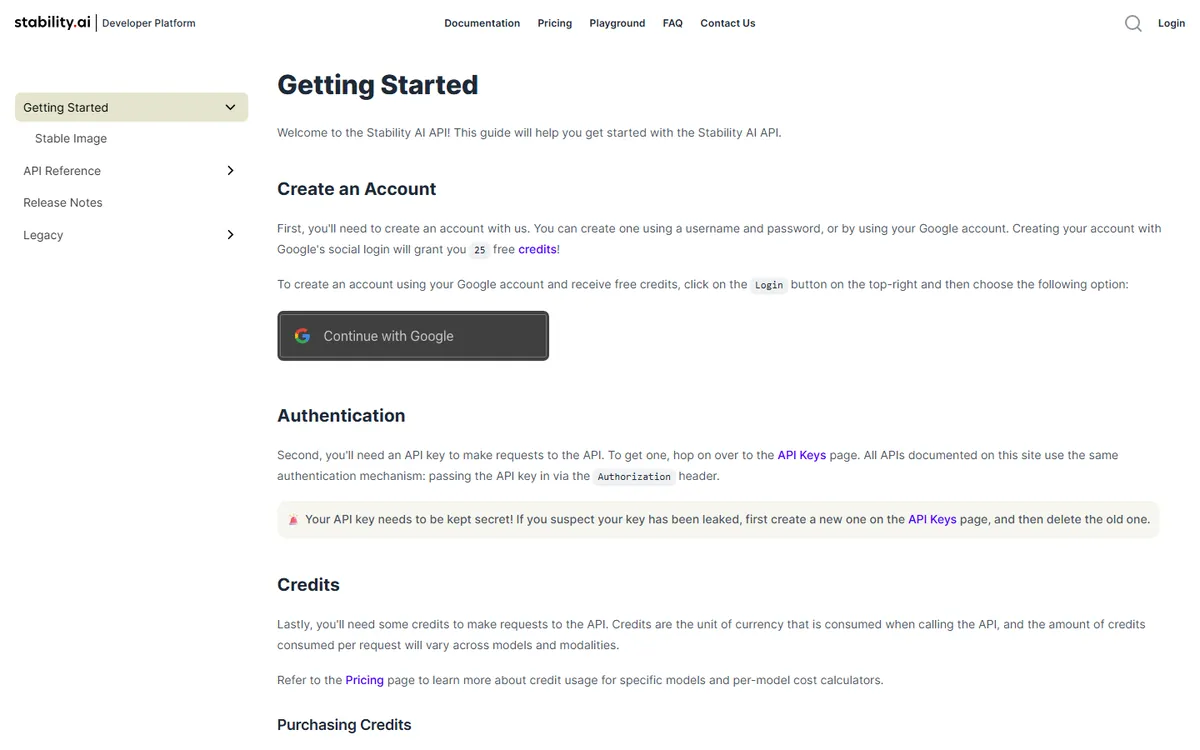
The 3.5 release comes in three variants so you can match the model to your hardware: Large for the highest quality, Large Turbo for 4-step fast inference, and Medium for consumer GPUs with modest VRAM. On a modern RTX 40 or 50 series card, TensorRT-optimized models generate up to 2.3 times faster, and users with 8 to 12 GB of VRAM can enable CPU offloading to run the full pipeline. If you do not want to run anything locally, Stability AI also sells the same models through its developer platform: creating an account with a Google login grants 25 free credits, and after that you pay per API call, with no monthly subscription required.
Midjourney vs Stable Diffusion: Image Quality Compared
Quality is where the two products diverge the most. Midjourney's design goal is aesthetic polish: the model is tuned to produce beautiful composition, pleasing color, and believable lighting from short prompts, which is why it dominates mood boards and social media. Stable Diffusion's design goal is fidelity to the prompt: it follows detailed instructions precisely, including negative prompts that tell the model what to avoid, which is why it dominates technical and production use cases.
In a direct comparison, Midjourney usually wins on out-of-the-box beauty, and Stable Diffusion usually wins on control and consistency. A user who writes "a cyberpunk city at night, neon reflections" will get a stronger image from Midjourney with no extra effort. The same user who needs "the same character, same lighting, same camera angle, but a red jacket instead of blue" will get that consistency from Stable Diffusion with the right checkpoint and seed settings, because you can lock the seed and reuse a workflow across runs. For product catalogs, game asset pipelines, and brand systems where consistency matters more than surprise, that determinism is worth more than raw beauty.
Which Tool Gives You More Control?
Control is the clearest differentiator. With Midjourney, you interact through a chat interface and choose from a handful of parameters such as aspect ratio, style, and chaos. You cannot inspect the model internals, you cannot fine-tune on your own dataset, and you cannot change the underlying inference pipeline. The product team decides what the model can do, and you work within that envelope.
With Stable Diffusion, control is nearly total. You choose the checkpoint, the sampler, the step count, the guidance scale, and the seed. You can fine-tune a model on your own images, train LoRA adapters for a specific character or style, chain multiple models in an automatic workflow, and integrate generation into your own application through the API. You can also run the model inside your own network with no external calls at all, which matters for studios handling unreleased game art, product designs, or medical imagery. If your work lives on a server that must never send prompts to a third party, Stable Diffusion is the only one of the two that can run there.
Privacy, Licensing, and Commercial Use
Privacy separates the two tools sharply. Midjourney is a cloud service: every prompt and every image passes through its servers, and Stealth mode, which hides your work from other users' feeds, is locked behind the $60 Pro plan. Stable Diffusion, when self-hosted, is fully private: prompts, images, and model weights never leave your machine.
Licensing is more subtle. Both allow commercial use, but the terms differ. Midjourney grants commercial rights on all paid plans, with the caveat that companies earning over $1 million in annual gross revenue must hold a Pro or Mega plan. Stable Diffusion's open weights carry the CreativeML Open RAIL++ license, which permits commercial use with an important restriction: you may not use the models to generate illegal or harmful content, and you may not claim the model itself as your own. Stability AI also designates certain releases, including Stable Diffusion 3.5 Medium, as Core Models available to Community and Enterprise users for commercial use under their agreement with the company. For most artists and businesses, both options are workable; the practical difference is that Midjourney's license rides on an active subscription, while Stable Diffusion's license rides with the model files themselves, which you keep forever.
Who Should Pick Midjourney, and Who Should Pick Stable Diffusion?
Choose Midjourney if you are a creator who wants the best-looking image with the least setup, if you work in a browser or a chat interface, if you value the community and style ecosystem, or if your business earns under $1 million and you want simple, all-included pricing. Choose Stable Diffusion if you are a developer or a studio that needs local or private generation, fine-tuning, deterministic pipelines, or unlimited images at a marginal cost near zero.
The two can also be combined: many teams use Midjourney to explore visual directions quickly and then use Stable Diffusion to lock down the chosen style into a production pipeline. The cost math decides which one dominates your workflow. A heavy user generating 1,000 images a month will spend $30 to $60 with Midjourney and essentially nothing in software cost with a self-hosted Stable Diffusion setup, once the GPU is available. For a light user generating 50 images a month, Midjourney's $10 plan is simpler and delivers better results per hour of effort.
FAQ
Q: Is Midjourney or Stable Diffusion better for beginners?
A: Midjourney is the better choice for beginners. There is nothing to install, you type a prompt in a chat window, and the model returns polished images. Stable Diffusion requires you to pick a model, install software, and tune sampler and step settings, which has a steep learning curve.
Q: Is Stable Diffusion really free?
A: The model weights and software are free under the CreativeML Open RAIL++ license, and you can generate unlimited images at no software cost on your own hardware. You still pay for the GPU if you rent one, and for electricity if you run it locally.
Q: Does Midjourney have a free trial?
A: No. Midjourney has no permanent free tier and no free trial as of October 2026. The cheapest entry point is the Basic plan at $10 per month, or $8 per month with annual billing.
Q: Which one is better for commercial projects?
A: Both allow commercial use. Midjourney includes commercial rights on every paid plan, but companies earning over $1 million in annual revenue must use Pro or higher. Stable Diffusion's open license permits commercial use, with restrictions against illegal or harmful content and against claiming the model as your own.
Q: Can I run Stable Diffusion on a normal laptop?
A: Yes, with caveats. Stable Diffusion 3.5 Medium is designed for consumer GPUs, and users with 8 to 12 GB of VRAM can enable CPU offloading. On a laptop with an integrated GPU, generation will be slow, so a desktop GPU or a cloud instance is recommended for real work.
Q: Which one has the better image quality in 2026?
A: For out-of-the-box aesthetics, Midjourney V8.2 produces the most polished images from short prompts. For prompt fidelity, consistency, and technical control, Stable Diffusion 3.5 is stronger. The right answer depends on whether you need beauty or control.
Q: Do I need a credit card to try Stable Diffusion?
A: No, if you self-host: the open weights are free to download from Hugging Face. If you use Stability AI's hosted API, you can start with 25 free credits from a Google login, and only add payment details when you run out.
Conclusion
Midjourney and Stable Diffusion answer different questions in 2026. Midjourney is the product for people who want great images fast: polished aesthetics, no setup, and predictable subscription pricing from $10 to $120 per month. Stable Diffusion is the platform for people who want total control: free open weights, local and private generation, fine-tuning, and near-zero marginal cost per image. Neither tool is obsolete, and most serious image teams use both, with Midjourney for creative exploration and Stable Diffusion for production pipelines.
CTA
Ready to compare them yourself? Start with Midjourney's Basic plan for the fastest path to polished images, or download Stable Diffusion 3.5 from Stability AI and run it free on your own hardware. For deeper context, read our Midjourney V7 review, the Midjourney V7 vs Flux comparison, the best AI image generators guide, our Stable Diffusion alternatives, and the full Midjourney alternatives roundup.