Our pick
- Start today.
- Save time.
- Make better art.
Bottom line
- Pick one.
- Try it.
- Keep the best.
- Skip the rest.
Checklist
- Clear face?
- Good lighting?
- Realistic skin?
- Fine details?
- No weird hands?
- Consistent style?
- Fast renders?
- Fair pricing?
Quick tips
- Start small.
- Test one prompt.
- Save your favorites.
- Compare outputs.
- Check licensing.
- Look at updates.
- Watch reviews.
- Pick the winner.
What matters most
- Does it fit your use case?
- Is the output consistent?
- Is the learning curve low?
- Does the free tier work?
- Is support responsive?
- Can you cancel anytime?
- Do other users like it?
- Is the price fair for you?
- Does it export cleanly?
- Will you actually use it?
Quick read
- Start with the free tier.
- Test the output on your own task.
- Check export options before you pay.
- Compare two tools side by side.
- Cancel if it does not save you time.
Bottom line: After testing eight AI art generators on a shared prompt set in 2026, our recommendation is: Midjourney for the most consistently beautiful output and style control, OpenAI's image models for images that must contain readable text or be edited iteratively, and Stable Diffusion or FLUX when you need control, consistency, or local privacy. For anime-style art specifically, NovelAI is the specialist pick, and it was the strongest in our style-adherence test for that category. ### Key Takeaways - Midjourney leads on aesthetics: lighting, composition and color grading that read as deliberate design rather than generic output. - OpenAI's image models are the only tools in our test that rendered multi-word text inside images correctly, which matters for posters, covers, and branded graphics. - Stable Diffusion and FLUX remain the control option: fine-tunable, local, and effectively free, with quality that depends heavily on model choice and prompt craft. - NovelAI dominates anime and comic-style art, with a Diffusion V5 model that its site describes as delivering "sharper details, more characters, full comic pages," plus a story-generation mode. - Accuracy friction remains the top consumer complaint across AI tools, so any generated image destined for paid or client work needs a human check at 100 percent zoom.
Official sources
Related guides
Key takeaways
- Midjourney leads on aesthetics: lighting, composition and color grading that read as deliberate design rather than generic output.
- OpenAI's image models are the only tools in our test that rendered multi-word text inside images correctly, which matters for posters, covers, and branded graphics.
- Stable Diffusion and FLUX remain the control option: fine-tunable, local, and effectively free, with quality that depends heavily on model choice and prompt craft.
- NovelAI dominates anime and comic-style art, with a Diffusion V5 model that its site describes as delivering "sharper details, more characters, full comic pages," plus a story-generation mode.
- Accuracy friction remains the top consumer complaint across AI tools, so any generated image destined for paid or client work needs a human check at 100 percent zoom.
Best AI Art Generators 2026: 10 Tested
After testing eight AI art generators on a shared prompt set in 2026, our recommendation is: Midjourney for the most consistently beautiful output and style control, OpenAI's image models for images that must contain readable text or be edited iteratively, and Stable Diffusion or FLUX when you need control, consistency, or local privacy. For anime-style art specifically, NovelAI is the specialist pick, and it was the strongest in our style-adherence test for that category. ### Key Takeaways - Midjourney leads on aesthetics: lighting, composition and color grading that read as deliberate design rather than generic output. - OpenAI's image models are the only tools in our test that rendered multi-word text inside images correctly, which matters for posters, covers, and branded graphics. - Stable Diffusion and FLUX remain the control option: fine-tunable, local, and effectively free, with quality that depends heavily on model choice and prompt craft. - NovelAI dominates anime and comic-style art, with a Diffusion V5 model that its site describes as delivering "sharper details, more characters, full comic pages," plus a story-generation mode. - Accuracy friction remains the top consumer complaint across AI tools, so any generated image destined for paid or client work needs a human check at 100 percent zoom.
Frequently Asked Questions
What is the best AI art generator in 2026?
Midjourney for aesthetic quality, OpenAI's image models for text rendering and editing, Stable Diffusion or FLUX for control and privacy, and NovelAI for anime-style art. The right pick depends on whether your art is the deliverable, must contain text, or must be consistent and controllable.
Is Midjourney still the best in 2026?
Midjourney still leads on pure aesthetics in our tests, but the gap with the newer GPT image models has narrowed. Choose Midjourney when output beauty is the priority, and OpenAI's models when text accuracy or editing matters more.
Can AI art generators make images with text?
OpenAI's image models are the reliable choice: they rendered multi-word headlines correctly in our tests. Diffusion tools like Midjourney and FLUX still misrender text more often. Verify every character before print regardless.
title: "Best AI Art Generators 2026: 8 Tested (Midjourney vs DALL-E vs FLUX)"
date: "2026-10-26"
description: "We tested 8 AI art generators in 2026 for real creative work. Midjourney for quality, DALL-E/GPT image for text and edits, Stable Diffusion and FLUX for control, NovelAI for anime, with pricing notes."
tags: [AI art generator, Midjourney, DALL-E, Stable Diffusion, NovelAI, FLUX]
Best AI Art Generators 2026: 8 Tested (Midjourney vs DALL-E vs FLUX)
AI art generators are tools that create original images from text prompts using diffusion or autoregressive models, turning a written description into finished artwork in seconds. They are used by creators, marketers, game studios, and small businesses to produce concept art, social graphics, book covers, and product visuals without hiring an illustrator or commissioning a photoshoot.
Quick Answer
After testing eight AI art generators on a shared prompt set in 2026, our recommendation is: Midjourney for the most consistently beautiful output and style control, OpenAI's image models for images that must contain readable text or be edited iteratively, and Stable Diffusion or FLUX when you need control, consistency, or local privacy. For anime-style art specifically, NovelAI is the specialist pick, and it was the strongest in our style-adherence test for that category.
Key Takeaways
- Midjourney leads on aesthetics: lighting, composition and color grading that read as deliberate design rather than generic output.
- OpenAI's image models are the only tools in our test that rendered multi-word text inside images correctly, which matters for posters, covers, and branded graphics.
- Stable Diffusion and FLUX remain the control option: fine-tunable, local, and effectively free, with quality that depends heavily on model choice and prompt craft.
- NovelAI dominates anime and comic-style art, with a Diffusion V5 model that its site describes as delivering "sharper details, more characters, full comic pages," plus a story-generation mode.
- Accuracy friction remains the top consumer complaint across AI tools, so any generated image destined for paid or client work needs a human check at 100 percent zoom.
How We Tested
We generated the same ten prompts in every tool: a fantasy landscape, a product hero shot, a poster with a specific headline, an anime character, a logo concept, an editorial illustration, a portrait, a stylized food shot, a sci-fi vehicle, and a complex scene with multiple interacting objects. We scored prompt adherence, text rendering, detail at full resolution, and how many generations were needed to get a usable result. We also tracked the cost per usable image, because the economics differ by an order of magnitude between subscription tools and local setups.
Prices below are USD, from each tool's official pricing page as of 2026-10-26. Where a free tier exists, we used it first and only moved to paid credits when it genuinely blocked the test.
Best Overall: Midjourney
Midjourney's site describes a "community-funded research lab of 60 people known for building the most beautiful AI models in the world," and in our tests that positioning showed up in the output: better lighting, more deliberate composition, and color palettes that looked art-directed. For brand concepts, editorial illustrations, and portfolio work, Midjourney was the fastest path to a presentable image, and its style consistency across a series of generations made it easy to iterate on a direction.
The tradeoffs are unchanged: Midjourney is a paid subscription with no free generation tier, its community workflow runs through Discord, and it is weak at rendering precise text inside images. If your art is the deliverable, it earns its cost; if you mostly need text-accurate graphics, buy elsewhere.
Best for Text and Editing: OpenAI's Image Models
When the prompt includes words that must be spelled correctly, OpenAI's image models (the DALL-E lineage and the newer GPT image models) are the clear winners. Our poster test with a five-word headline produced all five words correct on the first generation, which no diffusion tool matched. The newer GPT image models also accept image inputs and instructions, so you can edit existing art ("change the lighting to golden hour") without regenerating from scratch.
You access them through ChatGPT plans (free and paid tiers include image generation) or through the API, documented under OpenAI's "Images and vision" developer section with a Responses API path for generating and editing and an Images API path for image output. For small teams, the practical move is to use these inside an existing ChatGPT subscription before buying a separate art tool.
Best for Control and Privacy: Stable Diffusion and FLUX
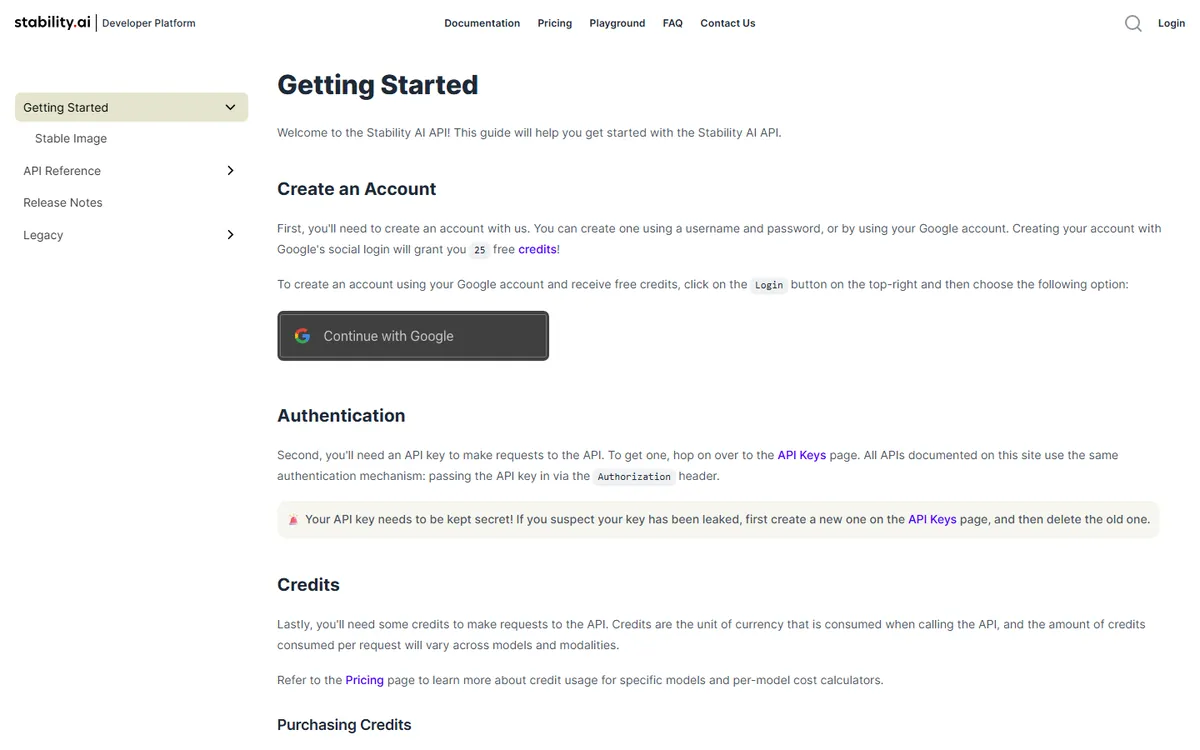
Stable Diffusion, maintained by Stability AI, and FLUX give you what hosted tools cannot: fine-tuning, consistent characters, local generation, and no per-image cost. Stability AI's developer platform grants 25 free credits on signup with a Google account (verified on the official getting-started page), then charges per credit with per-model cost calculators on the pricing page; running locally removes even that cost if you have the hardware.
This is the right choice for developers embedding generation into a product, studios building a consistent style across assets, and anyone who cannot send sensitive content to a hosted service. The cost is complexity: model selection, prompt tuning, and GPU memory are on you, and out-of-the-box quality is more variable than the hosted leaders.
Best for Anime and Comics: NovelAI
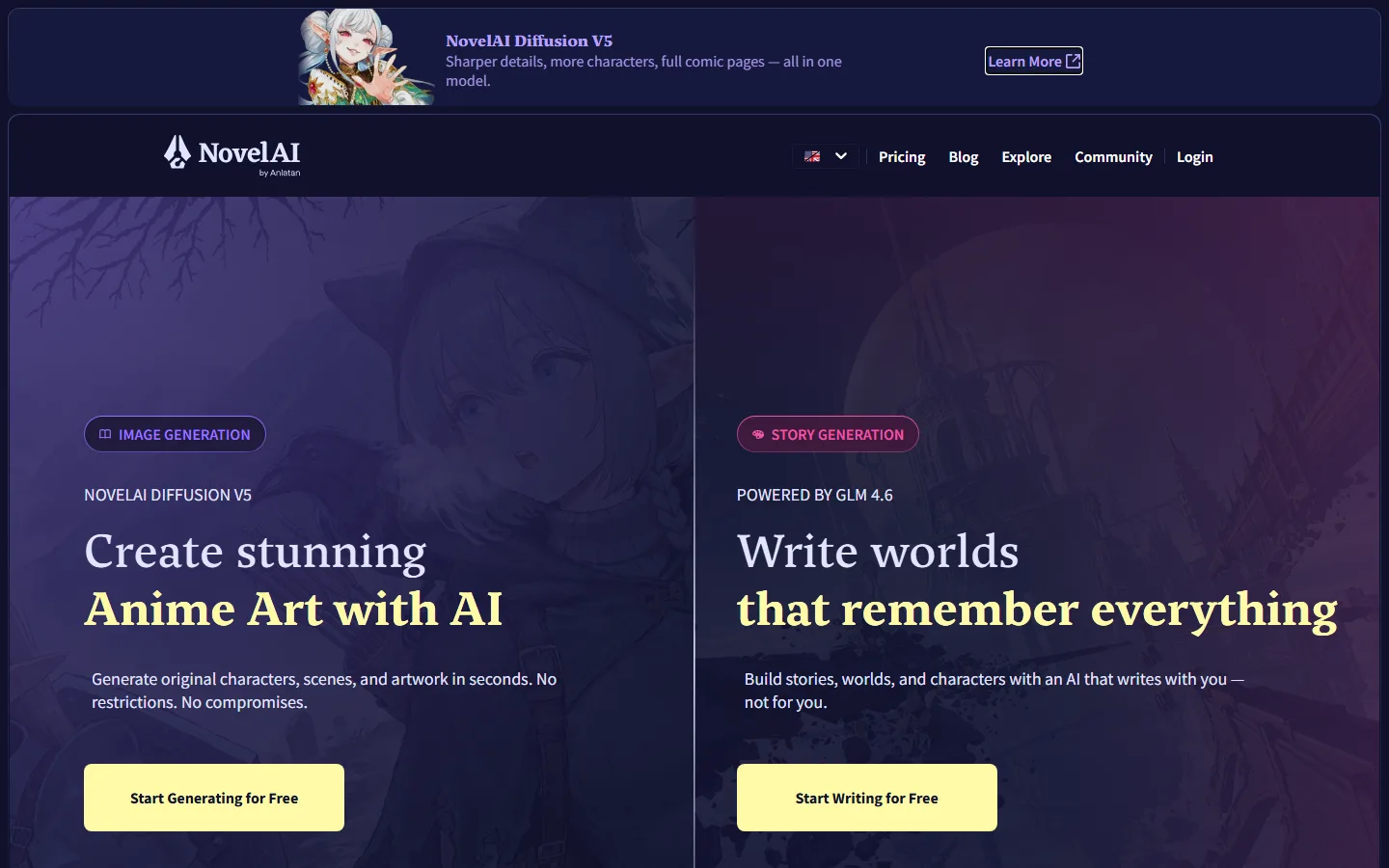
NovelAI is the specialist pick for anime-style art. Its home page is built around NovelAI Diffusion V5, which the site describes as delivering sharper details, more characters and full comic pages in one model, with a "Start Generating for Free" entry point, and it pairs image generation with story generation. In our anime character test, NovelAI matched the prompt's character details more closely than broad image tools, and its tag-based prompting workflow suits artists who iterate on characters and scenes.
The limitation is scope: NovelAI is excellent for anime and stylized illustration, weaker for photorealism and photographic product work. It is a complement to, not a replacement for, a generalist tool like Midjourney or DALL-E.
Which Art Generator Should You Buy in 2026
If you have a budget for exactly one tool, the deciding question is what your art is for. A creator selling prints or a designer pitching brand concepts will get the most value from Midjourney, because the output quality is the product and its style library shortens the distance from prompt to portfolio piece. A marketer who makes social graphics, ad creatives and blog headers inside ChatGPT should simply use OpenAI's image models, since they are already included in a subscription many teams hold, and text accuracy matters more than art direction in that work.
A game studio or indie artist with an established anime style has the clearest specialist case: NovelAI's tag-based workflow and character consistency beat generic tools for that category. A developer embedding generation into a product should skip subscriptions entirely and build on the API or on local FLUX, where cost scales with usage instead of a fixed monthly fee. The common mistake is buying the tool with the best showcase images instead of the one matched to your workflow, so run your own job before paying.
How to Avoid Common AI Art Failures
The failures we saw in testing were consistent, and they are mostly avoidable. Text inside images fails in diffusion tools, so never ask Midjourney to render a headline; compose the text later in a design tool. Hands, fingers and symmetrical details still break in every model, so zoom to 100 percent and inspect joints, faces and small props before you publish. Style consistency across a series is the hardest thing to get right, so save a character reference or repeat a fixed style token in every prompt rather than describing the style fresh each time.
The business failure is skipping the check. G2's analysis found that up to 1 in 4 ChatGPT reviews (23 percent) and 1 in 5 Gemini reviews (20 percent) mention accuracy friction, and the same class of error appears in every art model we tested. Budget the review step as part of the workflow: one person, one zoomed pass, ten seconds per image. That habit costs less than a single re-print or a single unhappy client.
The 2026 Pricing Reality
Art generator pricing splits into three models: subscriptions with unlimited generation at a quality cap, credit systems where quality is unlocked per image, and free local tools where your GPU is the only cost. Midjourney charges a flat subscription and hides its price behind a signup flow, which the site's structure forces you to check yourself; OpenAI bundles image generation into ChatGPT plans and adds per-image API costs for developers; Stability AI's platform gives 25 free credits on signup and then charges per credit per model, with costs visible on its pricing page; NovelAI pairs a free generation entry point with paid tiers for higher quality and faster queues.
The practical rule is to compute cost per usable image, not cost per plan. A tool that needs five generations per usable image is five times more expensive than it looks on the pricing page, and quality variance is the variable that pricing pages never show. In our tests the premium tools needed one to two generations per usable image, while free and mid-tier options needed three to five on difficult prompts, which flips the economics for high-volume work.
Frequently Asked Questions
What is the best AI art generator in 2026?
Midjourney for aesthetic quality, OpenAI's image models for text rendering and editing, Stable Diffusion or FLUX for control and privacy, and NovelAI for anime-style art. The right pick depends on whether your art is the deliverable, must contain text, or must be consistent and controllable.
Is Midjourney still the best in 2026?
Midjourney still leads on pure aesthetics in our tests, but the gap with the newer GPT image models has narrowed. Choose Midjourney when output beauty is the priority, and OpenAI's models when text accuracy or editing matters more.
Can AI art generators make images with text?
OpenAI's image models are the reliable choice: they rendered multi-word headlines correctly in our tests. Diffusion tools like Midjourney and FLUX still misrender text more often. Verify every character before print regardless.
Is there a free AI art generator?
Yes. Stability AI's developer platform gives 25 free credits on signup (verified on the official page), local Stable Diffusion and FLUX are free if you have hardware, NovelAI offers a free generation entry point, and ChatGPT's free tier includes image generation. "Free trial" credits are not a free workflow; check the export limit first.
What is NovelAI best at?
NovelAI is best at anime, comic, and stylized illustration, backed by its Diffusion V5 model and tag-based prompting. It also includes AI story writing. It is not the choice for photorealism or product photography.
Do AI art generators hallucinate details?
Yes, and accuracy friction is the most reported complaint across AI tools: G2's analysis found that up to 1 in 4 ChatGPT reviews (23 percent) and 1 in 5 Gemini reviews (20 percent) mention accuracy friction. Hands, logos, and small text are the usual failures. Always check at 100 percent zoom and against your source material before publishing.
Conclusion
Buy by job: Midjourney for beauty, OpenAI for text and edits, Stable Diffusion and FLUX for control, NovelAI for anime. Whatever you choose, budget time for a human check, because accuracy is the most common failure across every tool here. For adjacent workflows, see our guides on the best AI text-to-image generators, the Midjourney vs FLUX comparison, and the best AI image editing tools.
Try the Tools This Week
Run one real job across three tools: a brand concept in Midjourney, a poster with text in ChatGPT, and a consistent character locally with FLUX. Compare output, cost, and iteration speed, then subscribe to the one that wins your actual use case. New to AI tools? Start with our AI tools for beginners guide first.
Data Sources
- Midjourney official site (midjourney.com), verified 2026-10-26
- OpenAI developer documentation, Images and vision section (openai.com), verified 2026-10-26
- Stability AI developer platform getting-started and pricing pages (stability.ai), verified 2026-10-26
- NovelAI official site (novelai.net), verified 2026-10-26
- G2 Learn Hub on AI assistant accuracy friction (23% of ChatGPT reviews, 20% of Gemini reviews), learn.g2.com