V0 vs Lovable 2026: Best AI App Builder Compared
Quick Answer: Lovable is a full-stack app generator that produces the frontend UI, a Supabase-backed database, authentication, API integrations, and a deployed URL from a text prompt, and it wins for non-technical founders who want a complete, deployed product from $25/month. V0 by Vercel is an AI tool that generates React and Next.js interfaces from text prompts and images, and it wins for developers who want code they can merge as a pull request and grow inside the Vercel ecosystem, from about $20/month. Lovable builds full-stack apps end to end and keeps you inside its canvas until publish; v0 generates interface code that lands in a real repository and is designed to hand off to an engineer. For a solo founder without a technical co-founder, Lovable is the faster path to a shipped product. For a team that lives on GitHub, v0 produces code that fits the existing review pipeline.
What Is V0?
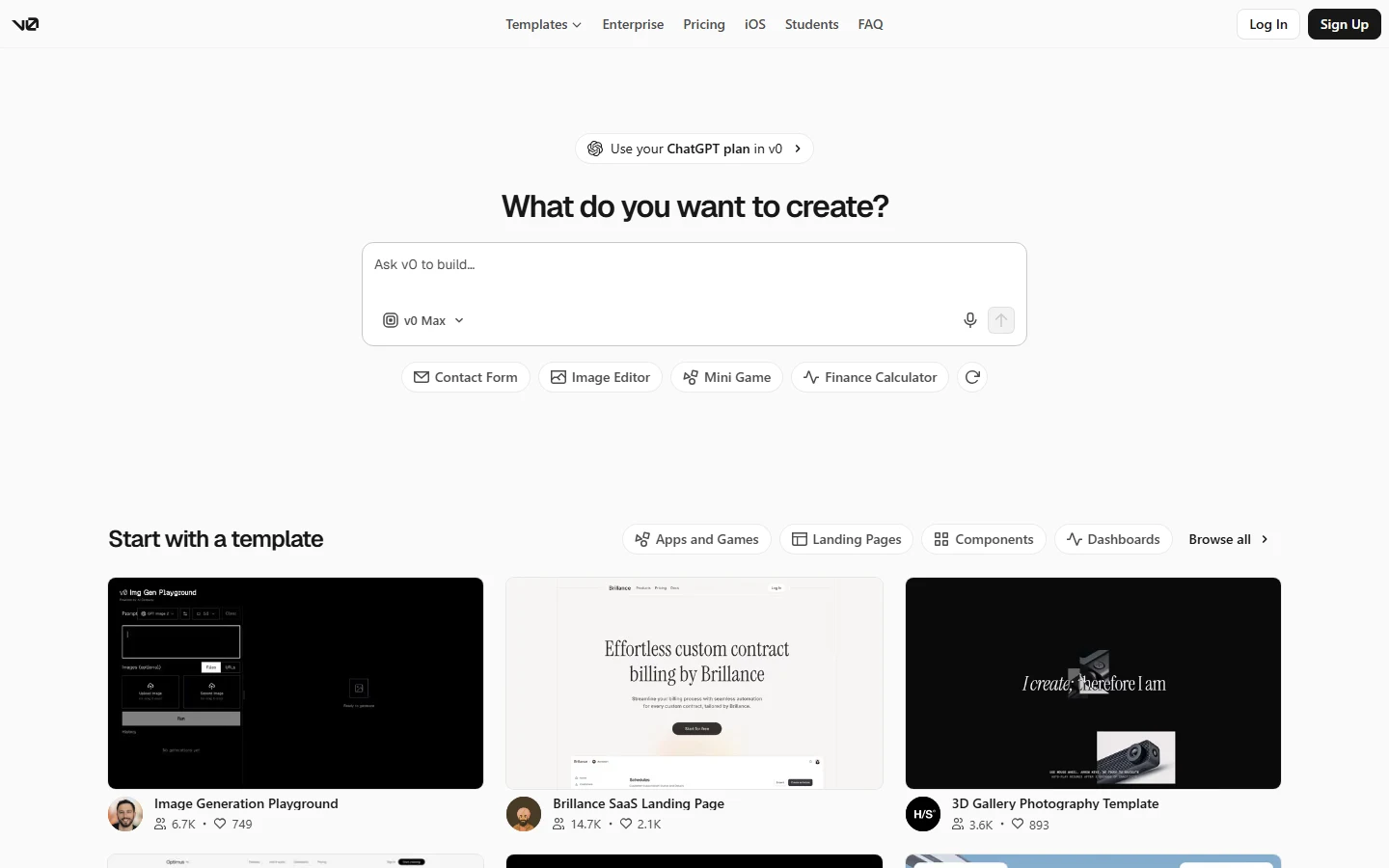
V0 by Vercel is an AI tool that generates React and Next.js interfaces from text prompts and images. You describe a landing page, dashboard, or component, and v0 produces working UI code that you can preview, iterate on, and push into a real project. Each chat sits on its own branch, and the connected repository holds the latest version, so a typical workflow ends with a pull request that an engineer reviews and merges, after which the next chat picks up from main.
V0 is built around the developer handoff. The output is actual Next.js and React code, not a locked template, so it grows naturally into a real application over time. V0 switched from fixed credits to token-based billing in February 2026, which makes per-generation costs variable depending on model and prompt complexity. The free tier is metered and meant for exploring; paid plans start around $20 per month for Premium, with Team plans around $30 per user per month. Vercel's v0 page is the reference for current plans and the token-based pricing switch.
What Is Lovable?
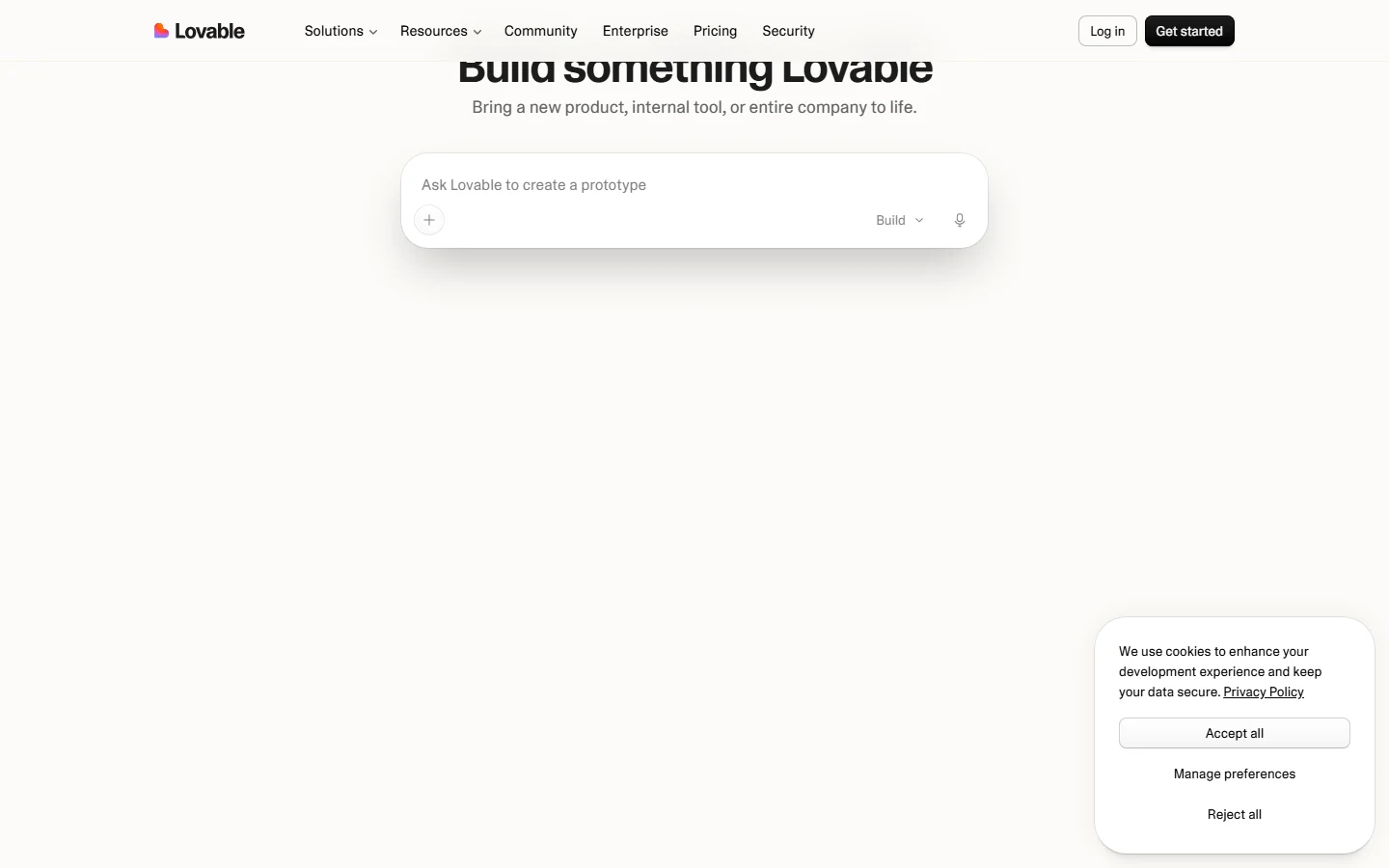
Lovable is a full-stack app generator. Describe your app, and Lovable produces the frontend UI, a Supabase-backed database, authentication (email, Google, GitHub), API integrations such as Stripe, and a deployed URL, all without touching a terminal. Inside Lovable, the default is a complete app rendered in its canvas, with Supabase or Lovable Cloud handling the backend, so one builder can stay end to end without leaving the tool.
Lovable 2.0, launched in February 2026, added real-time multiplayer editing for up to 20 users simultaneously, a Chat Mode Agent for multi-step reasoning without burning build credits, a built-in Security Scan for AI-generated code, and Visual Edits for direct click-to-modify styling. Native iOS and Android apps arrived in April 2026, letting builders submit voice or text prompts on the go while the agent runs autonomously. The company closed a $330 million Series B in December 2025 at a $6.6 billion valuation, and enterprise customers including Klarna, Uber, and Zendesk have publicly adopted the platform; Zendesk reported going from idea to working prototype in three hours instead of six weeks. Lovable's official site lists current plans, the 2.0 feature set, and enterprise terms.
V0 vs Lovable Pricing: Which Is Cheaper in 2026?
| Plan | Lovable | v0 by Vercel |
|---|---|---|
| Free tier | Yes, metered with monthly and daily credits | Yes, metered free tier |
| Entry paid | Pro from $25/month | Premium around $20/month |
| Mid tier | Business from $50/month per workspace | Team around $30/user/month |
| Top tier | Enterprise, custom | Enterprise, custom |
| Billing model | Credits per build interaction | Token-based billing since February 2026 |
| Stack included | Full-stack: UI, Supabase backend, auth, payments | Frontend: React/Next.js code into your repo |
| Hosting / backend | Included (Supabase or Lovable Cloud) | You handle via Vercel and your stack |
Both tools use the same plan shape: a free tier and three paid tiers above it. The paid plans sit in a similar range, which is why the pricing comparison rarely decides the choice alone. The bigger cost difference is downstream: a full-stack app needs hosting and backend services regardless of which tool built it. Because Lovable produces a full-stack app, running it in production means paying for backend and hosting services, and a v0-built app that grows into a real product needs the same, so real-world costs can reach $50 to $80 per month before AI credits once you add database, auth, and hosting.
The credit systems are where costs get unpredictable. Neither tool offers fully predictable costs at the pro tier. Lovable's credit system charges per build interaction, and users consistently report burning through credits faster than expected in debugging loops. V0's token-based billing makes per-generation costs variable depending on model and prompt complexity. Both tools reward concise, well-structured prompts and penalize iterative or complex debugging sessions. One review of a similar writing tool captures the broader pattern: "credits cap your output on lower tiers and do not roll over." If you are on a tight budget, expect that metered credits on either platform will cost more than the subscription sticker suggests.
Which One Produces Better Code for a Real Team?
This is where the two tools genuinely differ. V0 leans toward apps that grow into a Next.js project over time. Each chat sits on its own branch, and the connected repo holds the latest version, so the output is designed for a developer workflow: an engineer reviews the diff, merges the PR, and the next chat picks up from main. If your team lives on GitHub and reviews everything through pull requests, v0 fits that pipeline natively. There is no Python option and no native backend generator; the tool's job is the frontend, and the surrounding stack is yours.
Lovable typically stays within Lovable until the app is ready to publish, with code export coming later. The platform handles the backend through Supabase or Lovable Cloud, so a single builder can go from prompt to deployed URL without leaving the canvas. The trade-off appears when a project starts needing Next.js routing, a Python backend, or a starting point in an existing GitHub repository. Those are limits of the tool's defaults, not failures, and most teams move to v0 on Vercel from there.
The code-quality question is subtler. Independent comparisons note that both tools produce generic default output, and that the design and structure you feed the tool matters more than which generator is faster out of the box. V0 has an edge on raw speed of getting a component on screen; Lovable produces a more finished-feeling first version because the backend and auth are already wired. Neither is a substitute for a real design pass, but for an internal tool or an MVP, either default is good enough to start with.
V0 vs Lovable: Which Should You Pick?
| Capability | Lovable | v0 by Vercel |
|---|---|---|
| What it builds | Full-stack apps: UI + database + auth + payments | React/Next.js frontend code |
| Where the code lives | Lovable canvas until publish, export later | Your GitHub repo, one branch per chat |
| Backend / auth | Included (Supabase or Lovable Cloud) | Bring your own |
| Mobile apps | Native iOS and Android apps since April 2026 | Web-first; iOS app announced for builders |
| Collaboration | Real-time multiplayer, up to 20 users (2.0) | PR-based developer collaboration |
| Billing | Credits per build interaction | Token-based since February 2026 |
| Entry price | Pro from $25/month | Premium around $20/month |
| Best for | Non-technical founders, PMs, internal tools, full products | Developers shipping Next.js on Vercel |
Choose Lovable when the team is broader than just engineering and the project can run end to end on Vite and Supabase. Product managers, marketers, operations staff, and founders building internal tools or small public apps can get a long way without leaving the canvas, and the integration list, which includes Stripe, HubSpot, Linear, and more, has the connectors most non-engineering apps need. If you are a solo founder without a technical co-founder, Lovable is the faster path to a shipped product with real authentication and a database.
Choose v0 when the output needs to enter an existing engineering workflow. If the project starts needing Next.js routing, a Python backend, or a starting point in an existing GitHub repository, v0 on Vercel is the natural home. A v0 chat that builds a pricing page often ends as a PR an engineer reviews and merges, which is exactly the pattern mature teams already use.
There is also a sequence worth noting: many teams start in Lovable to get a working full-stack prototype in front of users, then rebuild or extend it in v0 and Vercel once the requirements are proven and a developer joins. The two tools are complements as often as competitors.
This is part of a bigger category. Our best AI website builders guide covers the full field, and no-code AI tools lists options for non-developers. If you are new to the space entirely, start with AI tools for beginners, then compare against the best AI coding tools and the best vibe coding tools for the broader agentic landscape.
A practical note on switching costs: the earlier you move between the two tools, the cheaper it is. Lovable apps export code, and a developer can lift the frontend into a v0-and-Vercel pipeline, but the longer an app lives inside the canvas, the more custom wiring accumulates around Supabase schema and Lovable Cloud features. V0 projects sit in your repository from the first generation, so they are trivial to hand to any Next.js developer, but if your team has no JavaScript experience at all, a repository full of v0 output still needs an engineer to review and merge. Teams that succeed with either tool plan the handoff before they start: decide who owns the code, where it must live, and which backend will run in production, then pick the tool that matches that end state rather than the one that feels fastest on day one.
FAQ
Q: Is v0 better than Lovable?
It depends on who you are. V0 is better for developers who want React and Next.js code merged into their repo through pull requests, especially teams already on Vercel. Lovable is better for non-technical founders and product teams who want a complete deployed app with a database and authentication included, without touching a terminal.
Q: Is Lovable free to use?
Yes, Lovable has a free tier with monthly and daily credits, designed for exploring rather than sustained building. Most serious projects move to a paid plan, with Pro starting at $25 per month. The free tiers on both Lovable and v0 are metered and meant for experimentation.
Q: Which is cheaper, v0 or Lovable?
The paid plans sit close: v0 Premium is around $20 per month and Lovable Pro starts around $25 per month. The real cost difference is downstream. A full-stack app needs hosting and backend services regardless of which tool built it, so real-world costs can reach $50 to $80 per month once you add database, auth, and hosting.
Q: Can Lovable build mobile apps?
Yes. Lovable launched native iOS and Android apps in April 2026, letting builders submit voice or text prompts on the go while the agent runs autonomously. V0 is web-first, though Vercel has announced iOS capabilities for builders.
Q: Does v0 use my own repository?
Yes. V0 connects to your repository, and each chat sits on its own branch, with the latest version merged into the connected repo. The typical workflow ends in a pull request that an engineer reviews and merges, after which the next chat picks up from main.
Conclusion
V0 and Lovable address the same headline problem, turning a text prompt into a working web product, but they solve it at different layers of the stack. Lovable is a full-stack generator that keeps you inside its canvas until publish, with backend, database, and auth included, and it is the clear choice for non-technical founders and small teams that need a complete deployed product. V0 generates React and Next.js code that lands in your repository as a reviewable PR, and it is the natural fit for engineering teams that live on GitHub and Vercel. Pricing is close enough that the stack decides: choose Lovable when you need the whole product fast, and choose v0 when the output must enter an existing developer workflow.
CTA
Try both free tiers with the same prompt to see the difference directly. Ask Lovable to build a full internal tool and watch it deploy with auth and a database, then ask v0 to generate the same interface and review the code in your repository. Five minutes on each will tell you which layer you actually work in.