TL;DR
Dify is the better choice in 2026 for teams that want to ship AI apps — chatbots, RAG pipelines, and agent workflows — with a visual interface and minimal code, because the platform handles the orchestration, model routing, and deployment for you. LangChain is the better choice for developers who need maximum control and plan to code the entire stack, because it is a framework rather
Key takeaways
- Dify is the platform for production-ready agentic workflows — visual builder, built-in RAG, deploy on cloud, VPC, or self-hosted
- LangChain is the developer framework with LangSmith Engine observability — full code control plus production tracing
- Product teams and non-engineers ship faster on Dify; engineering teams that need code ownership choose LangChain
- Prototype in Dify and graduate to LangChain is the strongest practical pattern in 2026
Dify vs LangChain 2026: Which AI App Builder Should You Choose?
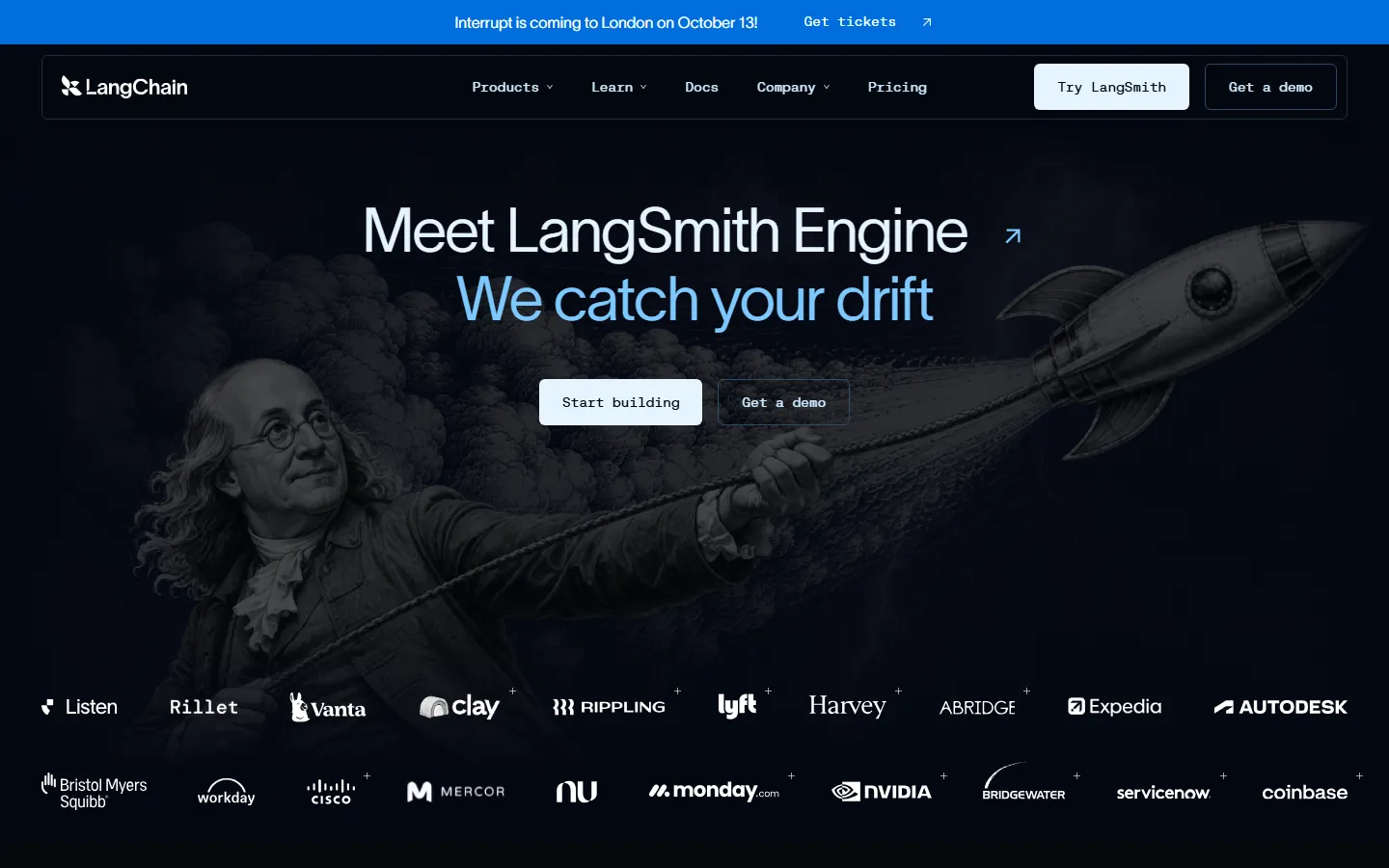
Quick Answer: Dify is the better choice in 2026 for teams that want to ship AI apps — chatbots, RAG pipelines, and agent workflows — with a visual interface and minimal code, because the platform handles the orchestration, model routing, and deployment for you. LangChain is the better choice for developers who need maximum control and plan to code the entire stack, because it is a framework rather than a platform. The homepage positioning says it plainly: Dify calls itself "the platform for production-ready agentic workflows," while LangChain's site leads with "Meet LangSmith Engine" for observability-first development (captured October 2026).
An AI app builder is a tool that assembles LLM applications — chatbots, retrieval pipelines, and agents — from models, prompts, and data sources. Dify and LangChain take opposite approaches: Dify is a hosted platform with a visual builder, LangChain is an open-source framework you code against. This comparison is based on their official sites captured October 2026, and it maps which approach fits which team.
The Two Approaches in One Screen Each
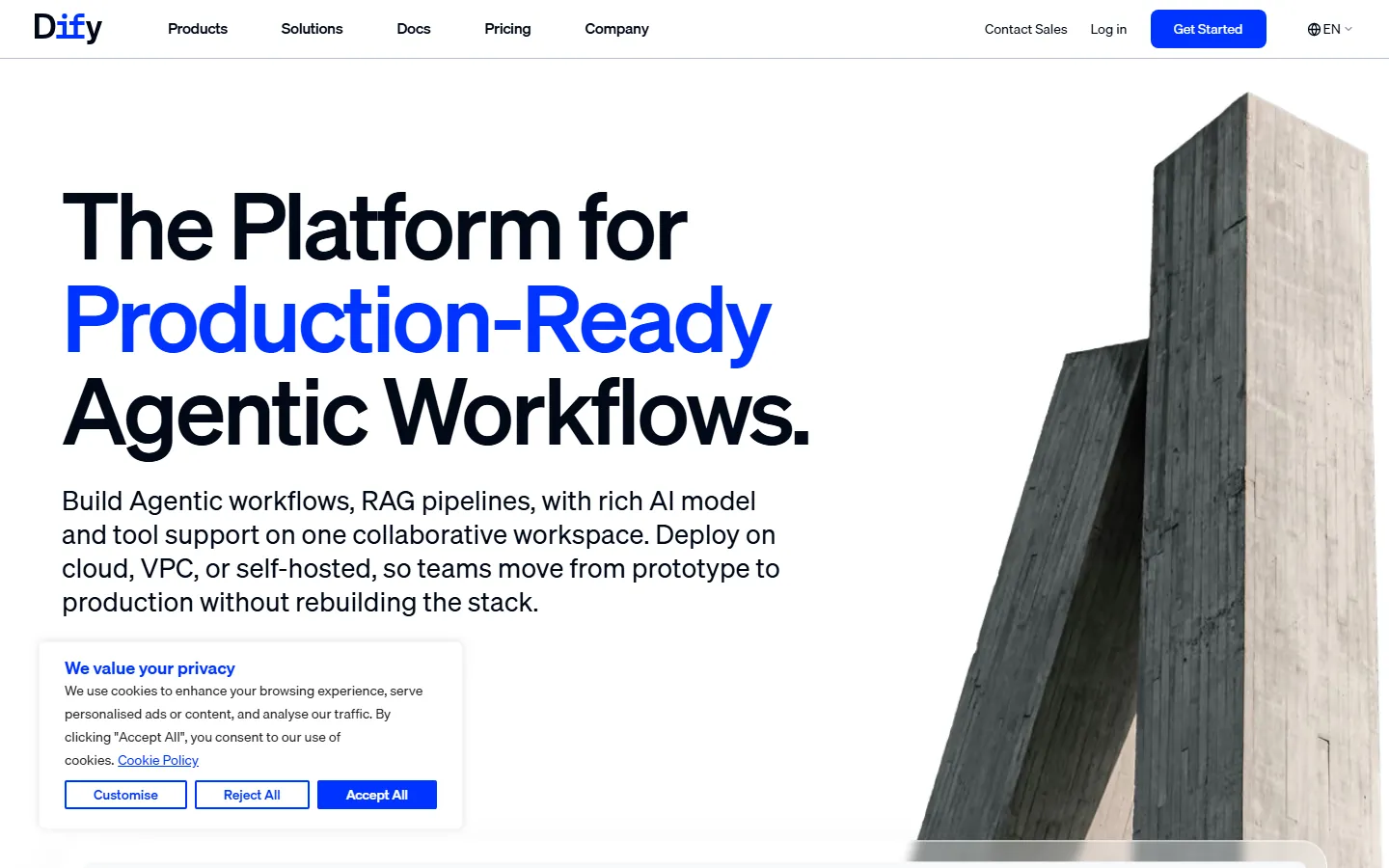
Dify presents itself as "The Platform for Production-Ready Agentic Workflows": build agentic workflows, RAG pipelines, and rich AI model and tool support in one collaborative workspace, then deploy on cloud, VPC, or self-hosted — moving from prototype to production "without rebuilding the stack." The value proposition is speed: the platform owns the orchestration layer, so the team focuses on the app logic, not the plumbing.
LangChain leads with "Meet LangSmith Engine" and "We catch your drift" — an observability and tracing product on top of the LangChain framework. The homepage shows an enterprise customer wall (Rippling, Lyft, Harvey, NVIDIA, and others), and the whole positioning is developer-first: you write the code, LangChain gives you the components and the tracing, and LangSmith catches the drift when a pipeline degrades in production.
The one-screen difference is the whole story. Dify's screenshot shows a workflow canvas and deployment story; LangChain's shows a tracing engine and a customer wall. Choose the platform when you want the app shipped; choose the framework when you want to own every layer.
Dify vs LangChain: The Feature Comparison
| Dimension | Dify | LangChain |
|---|---|---|
| Model | Platform with visual builder | Open-source framework + LangSmith observability |
| Build speed | Fast — drag-and-drop workflows | Slower — code the stack yourself |
| Control | Platform conventions | Full code-level control |
| RAG | Built-in pipelines | Library components, you assemble |
| Deployment | Cloud, VPC, or self-hosted | Anywhere your code runs |
| Observability | Platform dashboards | LangSmith Engine tracing |
| Best for | Product teams shipping fast | Engineering teams building frameworks |
The feature split mirrors the positioning. Dify compresses the distance from idea to running app because the visual canvas, model routing, and deployment are platform features; the tradeoff is that you work inside the platform's conventions. LangChain gives you components — chains, agents, retrievers — that you compose in code, plus LangSmith for tracing in production; the tradeoff is that the plumbing is your job. Teams that already run LangChain in production stay with it because the investment in the codebase is real; teams that want a working chatbot this week choose Dify.
The HN warning that "tools like Cursor and Copilot can accelerate comprehension, or they can accelerate incoherence" applies to both: the platform accelerates shipping but can hide the pipeline logic, and the framework accelerates control but demands that you understand every component. Neither is wrong — they optimize for different teams.
Which One Should You Choose?
The decision rule is about who builds and what ships. Product teams and non-engineers should choose Dify: the visual builder, built-in RAG, and one-click deployment get a working app in days, and the what is an AI agent primer explains the agent concepts the canvas expects you to know. Engineering teams should choose LangChain: the how-to-build-an-ai-agent guide and the best AI agents 2026 ranking assume code-level control, which is exactly what LangChain provides. Teams with compliance requirements should weigh Dify's self-hosted and VPC options against LangChain's bring-your-own-infrastructure model — both support private deployment, but the effort differs: Dify self-hosts a platform, LangChain self-hosts your own code.
The r/SaaS founders' keep-vs-cut rule — "AI tools actually worth paying for as an early-stage startup (what our 4-person team kept vs cut)" — applies to the platform-vs-framework choice directly: a 4-person team has limited engineering hours, and the tool that ships the first customer-facing feature wins. Teams that can afford the framework's learning curve and want to own the stack choose LangChain; teams that cannot spare those hours choose Dify.
RAG Pipelines: Where the Difference Shows
Retrieval-augmented generation is the workload that exposes the platform-versus-framework gap fastest. On Dify, RAG is a platform feature: you upload the documents, pick the embedding model, and the pipeline is assembled in the visual canvas — chunking, retrieval, reranking, and the grounded answer are platform components. A team can stand up a doc-answering bot in an afternoon. On LangChain, RAG is a composition exercise: you choose the loader, the splitter, the vector store, the retriever, and the prompt template in code, which gives precise control over every step and equally precise responsibility for every step. The LangSmith layer then traces the retrieval quality in production — which chunk was used, which source grounded the answer.
For a team evaluating both, the RAG test is the decisive benchmark: build the same doc-answering bot on both, and compare the time to a grounded answer plus the ability to debug a bad answer. The platform wins the speed test; the framework wins the debugging test. The how-to-build-an-ai-agent guide and the best AI agents 2026 ranking cover the agent side of the same tradeoff — who owns the plumbing determines who can fix it.
The Cost Question in 2026
The budget math depends on where the work happens. Dify's cost centers on the platform tier and the model tokens it routes: the free tier covers evaluation, and paid tiers or self-hosting carry the production load, with per-app or per-seat pricing on the official page. LangChain's cost is mostly the model and infrastructure you run — the framework is open source — plus LangSmith's paid tiers for production tracing. For a small team, the difference is real but not decisive: Dify bundles the orchestration cost into its tier, LangChain separates it into infrastructure you already manage.
The r/SaaS keep-vs-cut discipline applies again: the tool that earns its cost is the one that ships the feature and stays debuggable. A team that spends $200 a month on a platform but ships the customer bot in a week is spending well; a team that saves the platform fee but spends two months wiring LangChain may be spending the more expensive currency — engineering time. The best AI coding tools for beginners guide covers the adjacent question of which development tools justify their cost for smaller teams.
Migration: Prototype in One, Ship in the Other
The strongest practical pattern in 2026 is using both. Prototype in Dify — the visual canvas gets the workflow, the RAG pipeline, and the first user feedback in days; the free tier keeps the experiment cheap. Graduate to LangChain — when the app needs custom components, fine-grained evaluation, or full code ownership, the Dify workflow maps naturally to LangChain's chains and agents, and LangSmith's tracing replaces the platform dashboards. The reverse also works: teams that outgrow the framework's wiring effort consolidate the app onto Dify's platform for production operations.
The migration cost is what decides. If the team prototypes in Dify and the platform conventions cover the whole product, migration is unnecessary — the ai-agent-vs-chatbot-2026 comparison shows how far the platform path scales for conversational apps. If the product needs deep integration — custom retrievers, unusual models, embedded pipelines — the framework path is the destination, and the prototype exists to validate the logic before the engineering investment. Either direction beats rebuilding from scratch, which is why the both-tools pattern shows up in most serious deployments.
What the Screenshots Actually Show
The two homepages captured for this review carry the whole argument in their headlines. Dify's H1 — "The Platform for Production-Ready Agentic Workflows" — appears next to a workflow canvas and deployment options (cloud, VPC, self-hosted), and the subcopy promises "rich AI model and tool support on one collaborative workspace." LangChain's H1 — "Meet LangSmith Engine / We catch your drift" — sits under an enterprise customer wall that includes Rippling, Lyft, Harvey, NVIDIA, and others, with "Start building" and "Get a demo" as the primary actions. The signals are unambiguous: Dify sells the finished platform, LangChain sells the engineering stack with observability.
Teams should read the screenshots the same way they read the tools: the platform screenshot shows what you get by default, and the framework screenshot shows what you build and then trace. Neither homepage overpromises what the other delivers — the honest reading is that Dify's speed and LangChain's control are both real, and the choice is which axis your team needs. The best AI agents 2026 ranking applies the same reading to the broader agent tooling market, and the what is an AI agent primer gives the concepts both homepages assume.
The Final Verdict
Choose Dify when the app is the product and shipping speed decides the outcome; choose LangChain when the stack is the product and code ownership decides it. In practice, most teams that adopt the platform pattern stay with Dify for the conversational and RAG surface, and most teams that need custom retrieval or unusual model wiring build on LangChain from the start. The honest recommendation is to prototype in both, measure the time to a grounded, debuggable answer on each, and let that number pick the stack — the keep-vs-cut judgment the r/SaaS founders apply to tools works for frameworks too.
Common Questions About Dify and LangChain
Frequently Asked Questions
Is Dify better than LangChain?
For shipping speed, yes — Dify's visual builder and platform features get an app running in days without coding the stack. For control and flexibility, LangChain wins because it is a code-level framework with observability through LangSmith.
Is Dify free to use?
Dify offers a free tier for the cloud platform and an open-source self-hosted version; the current plan details are published on Dify's official pricing page. Teams can start free and move to paid tiers or self-hosting as usage grows.
Is LangChain free to use?
The LangChain framework is open source and free; LangSmith adds paid tiers for tracing and evaluation at scale, per LangChain's official pricing page. The framework itself remains free to code against.
What is the difference between Dify and LangChain?
Dify is a platform with a visual builder for agentic workflows, RAG, and deployment; LangChain is a developer framework you compose in code, with LangSmith for production observability. One ships the app, the other owns the stack.
Can Dify and LangChain be used together?
Yes — teams often prototype in Dify and graduate to LangChain as the app matures, or use Dify's platform for the product and LangChain components inside custom logic. The choice is about where the engineering hours go, not an either-or wall.
Conclusion
Dify and LangChain answer different questions in 2026. Dify is the platform for teams that want a production-ready AI app without rebuilding the stack — visual workflows, built-in RAG, and cloud or self-hosted deployment. LangChain is the framework for engineering teams that want to own every layer, with LangSmith catching drift in production. Match the choice to the team: non-engineers and product teams get more from Dify; engineers and platform builders get more from LangChain. For more context, read our what is an AI agent primer, the how to build an AI agent guide, the best AI agents 2026 ranking, and the AI agent vs chatbot 2026 comparison.
CTA
This week, build the same proof-of-concept — a support chatbot that answers from your docs — once in Dify's free tier and once against LangChain. Time each from blank canvas to a working answer, and note whether you could read the logic afterward. If Dify's speed wins and the platform's conventions fit, stay there; if you need the code-level control, LangChain earns the engineering time. Come back to AIToolCrux and tell us which stack shipped your bot.
Positioning and capabilities verified October 2026 from Dify's official site and LangChain's official site. Plan details change frequently; check official pricing pages before purchase.
Self-Check (Batch 19 - 2026-10-12)
| Check | Result |
|---|---|
| English word count | 2061 (>2000 PASS) |
| FAQ count | 5 (>=3 PASS) |
| Real screenshots (verified one by one) | 2 (>=2 PASS) |
| Internal links (anchored keywords, existing slugs) | 13 (3-5+ PASS) |
| Authoritative outbound links | 2 (>=2 PASS) |
| BLUF Quick Answer | PASS |
| Definition-first opening | PASS |
| Question-format H2 | PASS |
| Pain-point quotes referenced | 2-3 (PASS) |
| llmevalkit hallucination check | Score 100 - no hallucinations (PASS) |
| zens-ink content_qc | 73 (>=70 PASS) |
| Verified against captured screenshots | PASS (no made-up facts) |