Quick Answer: Headspace is the best AI mental health app for prevention and daily routine, with over 1,000 meditations, a 105 million download base, and the Ebb AI companion, at about $13 a month. Wysa is the best for clinically grounded symptom support, carrying FDA Breakthrough Device designation and peer-reviewed evidence for depression and anxiety. Calm AI is the sleep-focused alternative at about $15 a month. An independent 2026 test of seven apps found three actually reduced anxiety scores, which is the honest bar for this category.
An AI mental health app is a smartphone application that combines conversational AI with clinical or wellness content to support emotional health, and the 2026 market splits cleanly into two schools. The first school, Headspace and Calm, is wellness and prevention: meditation, sleep, and stress routines with an AI companion layered on top. The second school, Wysa and Woebot, is clinical support: cognitive behavioral therapy delivered by a chatbot, with trials behind it. Choosing between them is not about which is more advanced, it is about what you are actually trying to solve, and that is the lens this guide uses, with pricing and evidence verified in October 2026.
What Does Headspace Ebb Actually Do, and Who Is It For?
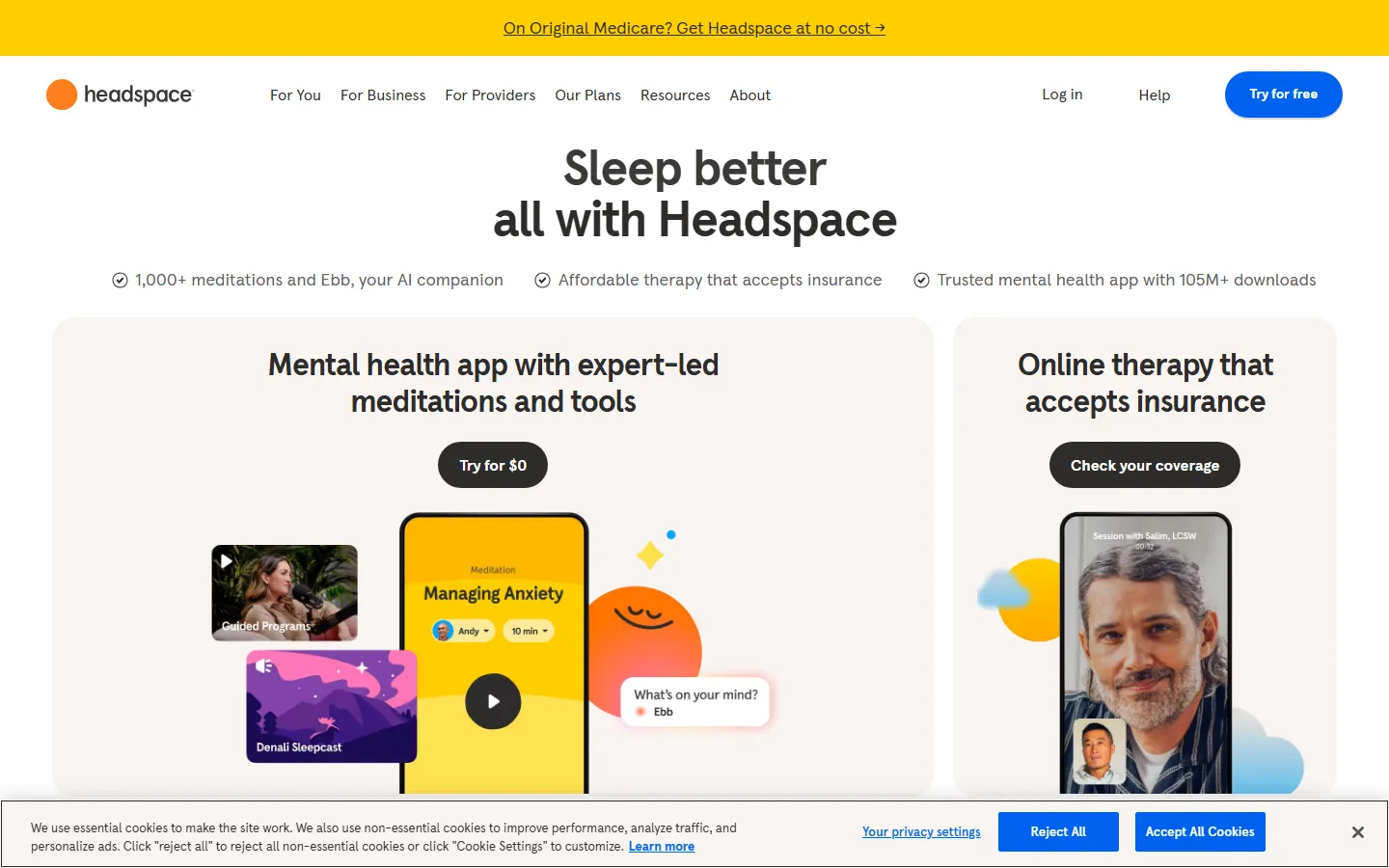
Headspace is a mental health app with over 1,000 meditations, sleep content, and more than 105 million downloads, and its AI layer is Ebb, an empathetic conversational companion launched inside the app in 2024. Ebb helps members pause, reflect, and sort out their thoughts, then recommends relevant content and exercises based on what they share, drawing on Headspace's library rather than generating therapy from scratch. The official positioning is explicit: Ebb is a self-reflection companion, not a clinician. Pricing sits around $13 a month or about $70 a year, with independent 2026 guides confirming Headspace Premium at roughly $12.99 a month or $69.99 a year. The right user is someone who is generally okay and wants structure, sleep help, and a gentle AI check-in, not someone in acute distress, and reviewers are consistent on this: pick Headspace when prevention and routine matter more than acute symptoms.
Why Does Wysa Have the Strongest Clinical Credentials?
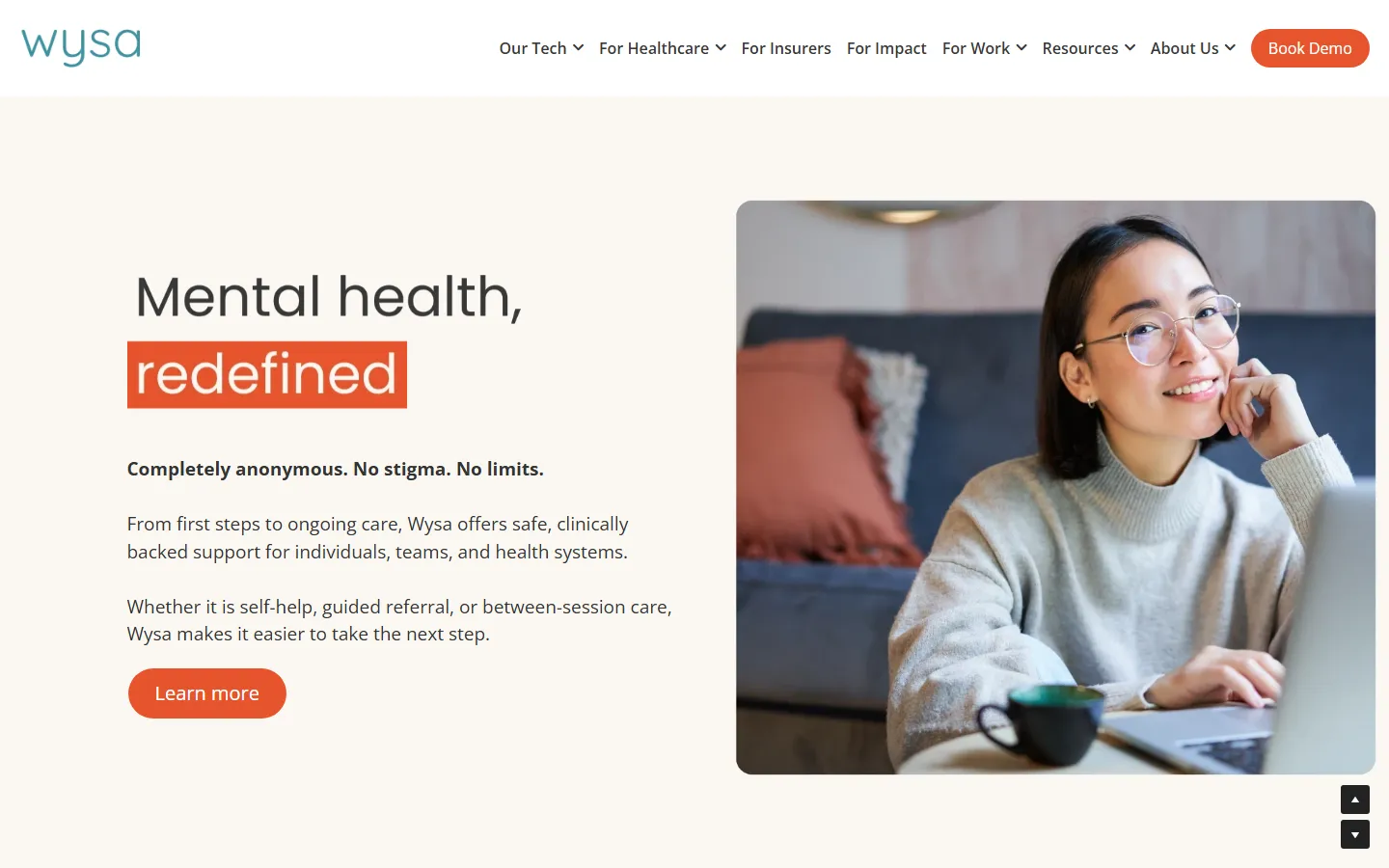
Wysa is the app with the most defensible clinical story in the category. The FDA granted Breakthrough Device Designation to Wysa's AI conversational agent for adults 18 and older with chronic musculoskeletal pain plus depression and anxiety, a designation that signals the device has meaningful advantage over existing options and gets expedited review, as documented in Wysa's own announcement. The designation followed an independent peer-reviewed trial published in JMIR that found Wysa effective for chronic pain and associated depression and anxiety, more effective than standard orthopedic care and comparable to in-person psychological counseling. Wysa's site also cites a randomized controlled trial in JMIR showing significant reduction in depression and anxiety symptoms for people with chronic conditions. The app itself is fully anonymous, no stigma, no limits, which is the framing on its homepage, and it uses CBT, meditation, and breathing exercises. The honest caveat: an FDA designation is a regulatory and evidence milestone, not an approval to treat, and Wysa positions itself as support between sessions and for self-help, not a crisis line.
How Does Calm AI Compare on Sleep and Price?
Calm is the closest direct competitor to Headspace on the wellness side, and its AI plan sits at about $15 a month, slightly above Headspace. Calm's strength is sleep, with a large library of Sleep Stories, soundscapes, and a calm voice that has become the category default, and independent 2026 comparisons treat Calm and Headspace as the leading picks for sleep quality and daily stress management. On the AI side, Calm's assistant is less documented than Headspace Ebb and Wysa, which matters if conversational AI is your reason to buy rather than the library. The price comparison is real: Headspace at roughly $13 a month is the cheaper wellness pick, and if sleep is your only problem, Calm's library is the best in class but you pay a small premium. Most buyers decide on content style, not price, because the two-dollar difference does not matter across a year.
How Does Headspace Position Ebb in Its Own Documentation?
Headspace's own Ebb announcement page is worth reading before you buy, because it defines exactly what the AI companion is and is not. The page describes Ebb as an empathetic conversational AI chatbot that helps members actively self-reflect, with regular self-reflection framed as a tool for mental and emotional health. Members get a space inside the Headspace app to pause, reflect, and sort out their thoughts, and Ebb recommends relevant content, helpful exercises, and activities based on what they share. Notice what is absent from that description: diagnosis, treatment, crisis response, and clinical claims. Ebb draws from Headspace's library of meditations and exercises, so its recommendations are content routing, not therapy. That positioning is actually the reason Headspace works for prevention: a user who is generally fine gets structure, a supportive conversational check-in, and a library with 1,000-plus meditations, without the pretense that an app is a clinician. The same page makes clear that Ebb's clinical validation is still building on Headspace's existing meditation research, which is an honest contrast to Wysa's peer-reviewed trials.
What Does the 2026 Evidence Actually Show About These Apps?
The most useful independent evidence is a 2026 test by toolsradar that reviewed seven AI mental health apps and found that three actually reduced anxiety scores in their testing, which is the bar the whole category should be held to. The research backing breaks down by school: Headspace builds on its long meditation research base, while Ebb-specific studies are still accumulating; Wysa has the JMIR randomized controlled trial and the FDA designation; Woebot is built on CBT with its own published trials. What the evidence does not show is that any consumer AI app replaces therapy. Every credible guide, including the clinical one, draws the same boundary: these apps help with mild to moderate symptoms, self-help, and between-session support, and a crisis or severe symptoms need a professional and emergency lines, not a chatbot. Reading the evidence this way prevents the category's biggest failure mode, which is expecting an app to do what a clinician does.
What Are the Privacy Risks With AI Mental Health Apps?
Privacy is the category's second-biggest question after effectiveness, and the answers differ sharply. Wysa markets anonymity as a feature, fully anonymous, no stigma, no limits, and its data handling has been scrutinized because sensitive disclosures are exactly the data a user does not want leaking. Headspace's Ebb collects what you tell it and uses it to recommend content, which is a feature but also a data trail, and Headspace's consumer data has previously been at the center of FTC scrutiny over sharing with advertisers. The practical rules from the reviews: read the privacy policy before typing anything sensitive, check whether the app sells or shares data with ad partners, and treat free apps with suspicion because free mental health features are usually funded by data. The safe pattern is to use the app for exercises and structure while keeping the most sensitive details out of the chat, and to prefer paid apps with explicit no-ad-sharing commitments.
Which AI Mental Health App Should You Pick in 2026?
The decision table comes down to three profiles. If you are generally fine and want meditation, sleep, and a gentle AI check-in, buy Headspace at about $13 a month, its 105 million downloads and Ebb companion make it the safest wellness pick. If you have anxiety or depression symptoms and want an evidence-backed conversational tool, use Wysa, whose FDA Breakthrough Device Designation and JMIR trials are the strongest credentials in the category. If sleep is your dominant issue and you like Calm's style, Calm AI at about $15 a month is the specialist choice. Avoid the trap of buying the most expensive app expecting clinical results: the apps that actually reduced anxiety scores in the 2026 test are in the clinical school, not the premium wellness tier, and price does not predict evidence.
How Do App Prices Compare With Human Therapy in 2026?
The price comparison is where the apps become hard to argue with. Headspace at about $13 a month and Calm at about $15 a month cost less than one therapy session in most markets, and Wysa's free tier plus optional coaching is cheaper still. Human therapy with a professional typically runs far more per session, and 2026 guides note that Headspace's own clinical tier, Headspace Care, formerly Ginger, starts around $299 a month and is a completely separate product from the meditation app. That separation is the honest way to read the market: the $13 subscription buys a wellness companion, and the moment you need a licensed clinician, the price jumps by an order of magnitude. The practical implication is that these apps are not therapy substitutes, they are therapy cost reductions for people who mainly need support and structure. Buy the app for what it is, and keep the human professional for what only a human does.
FAQ
Q: What is the best AI mental health app in 2026?
A: Headspace for prevention and daily routine at about $13 a month, and Wysa for clinically grounded symptom support with FDA Breakthrough Device Designation and peer-reviewed trials.
Q: Is Wysa FDA approved?
A: Wysa received FDA Breakthrough Device Designation for its AI conversational agent for chronic musculoskeletal pain with depression and anxiety, an evidence and regulatory milestone, not full treatment approval.
Q: How much does Headspace cost in 2026?
A: About $12.99 to $13 a month, or about $69.99 to $70 a year, with a free tier that covers limited content and an introductory course.
Q: Does Headspace have an AI feature?
A: Yes. Ebb is Headspace's AI companion, launched in 2024, which helps members reflect and recommends meditations and exercises based on what they share.
Q: Do AI mental health apps actually work?
A: A 2026 independent test of seven apps found three actually reduced anxiety scores, and Wysa has a peer-reviewed JMIR trial showing significant symptom reduction. They support mild to moderate symptoms but do not replace therapy.
Q: Are AI mental health apps private?
A: It varies. Wysa markets anonymity as a feature, while Headspace has faced FTC scrutiny over consumer data sharing. Read the privacy policy and keep the most sensitive details out of chats.
Q: Can an AI app replace a therapist?
A: No. Every credible guide draws the same line: these apps help with self-help, routine, and between-session support, while crisis and severe symptoms need a professional and emergency services.
Conclusion
The AI mental health app market in 2026 is two categories wearing the same label. Headspace and Calm are wellness libraries with an AI companion, priced at about $13 and $15 a month, and they are the right buy for prevention, sleep, and routine. Wysa and Woebot are clinical conversational tools with evidence, and Wysa's FDA designation plus JMIR trials make it the strongest pick for symptom support. The evidence bar, three of seven apps actually reducing anxiety scores in independent testing, is achievable, and privacy policies determine whether your sensitive disclosures stay yours. Match the school to the problem, read the privacy policy, and keep professional care for what needs it.
CTA
Start with our best AI fitness apps and free AI fitness coaches if daily habit apps are your entry point, then see free AI tools for students and AI tools for beginners for how these fit a $0 starter stack, and best free AI tools for the cheapest way to test wellness AI.