title: "Is ChatGPT Getting Worse in 2026? Why Users Are Canceling Plus"
description: "Is ChatGPT getting worse in 2026? Evidence from user reports, cancellation movements and what OpenAI says — plus alternatives worth switching to."
date: "2026-10-17"
bluf: "User complaints that ChatGPT feels worse in 2026 are real and widespread, but the evidence points to perception, prompt sensitivity and rising expectations as much as to actual model regression: community threads describe the model as 'hedging instead of answering,' mass-cancellation movements have publicly formed around the $20 Plus plan, and aggregated review data shows accuracy friction mentioned in up to 1 in 4 ChatGPT reviews. OpenAI maintains that flagship models improved; the practical takeaway is that many power users are happier on Gemini ($7.99/mo), Claude, or cheaper aggregators. If your output feels degraded, benchmark your exact prompts across two or three models for two weeks before paying any subscription."
slug: "is-chatgpt-getting-worse-2026"
Is ChatGPT Getting Worse in 2026? Why Users Are Canceling Plus
"Is ChatGPT getting worse?" is a question about whether OpenAI's flagship chatbot has measurably declined in output quality, reasoning, or creativity during 2026, and it is asked because a vocal slice of the user base believes the answer is yes. The honest answer from the available evidence is: reported dissatisfaction is real and widespread, but "worse" is partly perception, partly prompt sensitivity, and partly rising expectations — with a minority of verified degradation complaints.
Quick Answer: Yes, users are reporting that ChatGPT feels worse in 2026 — thousands of Plus subscribers publicly said they're done paying $20/month for degraded service, community threads describe the model as "hedging instead of answering," and aggregated review data shows accuracy friction mentioned in roughly 1 in 4 ChatGPT reviews. No, OpenAI says its flagship models have improved, and much of the perceived decline is prompt sensitivity and expectation drift rather than measured regression. The practical verdict: if you're unhappy, don't pay for ChatGPT Plus — benchmark your actual work across Gemini (from $7.99/mo), Claude, and free tiers for two weeks, and switch to whichever actually performs on your prompts. The $200/month Pro plan is even harder to justify when comparable alternatives exist at a fraction of the price.
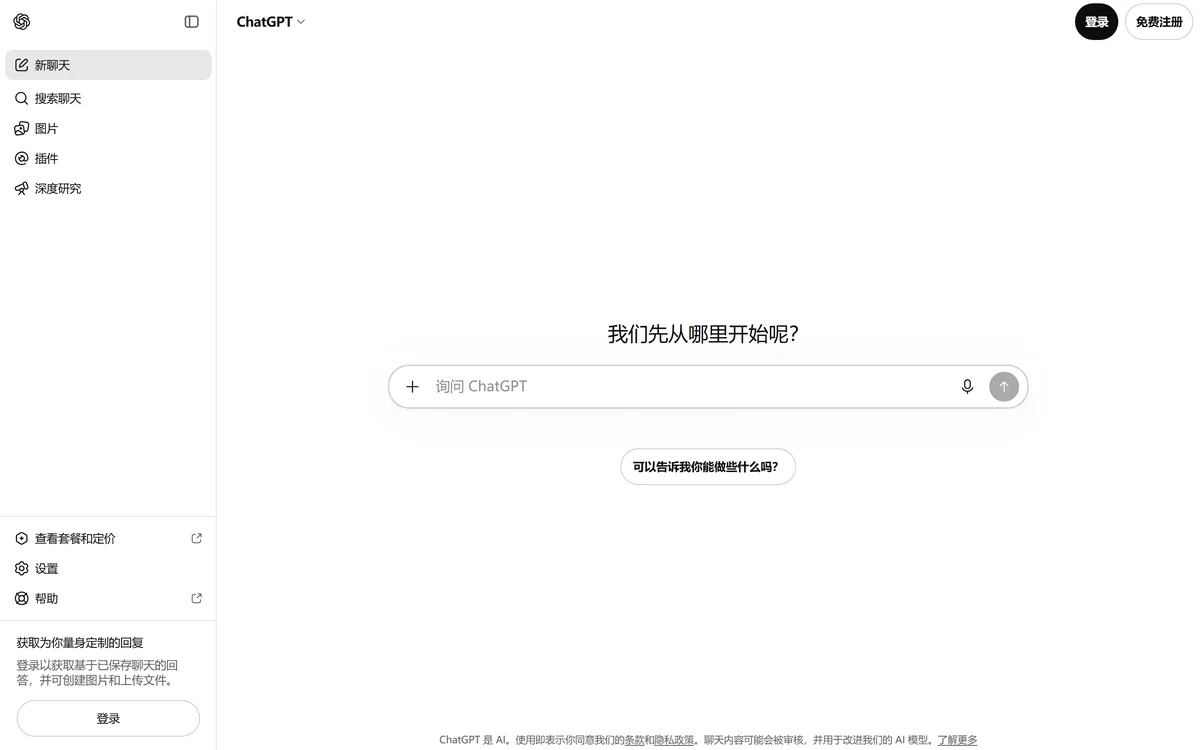
ChatGPT's official site as of October 2026. Community sentiment in 2026 increasingly contrasts the current experience with the model "users paid for."
What Does "Getting Worse" Actually Mean in 2026?
"Getting worse" in the ChatGPT context means three distinct things, and conflating them is why the debate never resolves:
- Reasoning regression: the model gives shorter, lazier, or evasive answers — "hedges instead of answering." This is the complaint with the most specific user testimony.
- Creative flattening: output that is "creatively and emotionally flat," losing the personality and edge earlier versions had.
- Service degradation: rate limits, usage caps, and changed behaviors that interrupt long sessions regardless of model quality.
The strongest single piece of evidence is a review aggregation tracked by G2's Learn Hub, which found that up to 1 in 4 ChatGPT reviews (23%) and 1 in 5 Gemini reviews (20%) mention accuracy friction. That is a signal measured across real user reviews, not anecdote. The signalreads.com coverage of the "mass cancellation party" documents users who "publicly declar[e] they're done paying $20 for degraded service." And the tryorbye.com product analysis reports that "5000 users complained GPT-5 'feels like a downgrade', creatively and emotionally flat" across Reddit threads.
None of this proves the underlying model got objectively worse on benchmarks — but it proves the experience declined for a meaningful minority, and for those users the distinction is irrelevant.
Why Users Feel ChatGPT Is Worse: The Evidence
Three recurring, citable patterns explain most of the "it's getting worse" sentiment:
Hedging instead of answering. A widely-shared r/ChatGPT thread (tracked by chatgptdisaster.com) describes the model as one that "no longer feels like the one users paid for, and it hedges instead of answering." Users want direct answers; the model increasingly refuses, qualifies, or defers, which reads as capability loss even when it's a safety or product-policy artifact.
Creative and emotional flattening. The tryorbye.com analysis of user complaints describes GPT-5 output as "creatively and emotionally flat." For writers, marketers, and anyone using ChatGPT for drafts, the loss of voice is the loss of value — and it dovetails with the broader complaint that AI writing tools produce "polished copy with no personality."
Hard usage limits without notice. OpenAI Developer Community posts describe "$200 Pro 20x hard usage limits appeared without advance notice." Users who build workflows around a plan suddenly hit walls, and the frustration is directed at the product even when the underlying model is fine. The same dynamic appears in Claude reviews — "usage limits and token caps that break momentum mid-task come up again and again."
The counter-evidence is that OpenAI's official position is that flagship models improved through 2026, and benchmark scores did not collapse. What changed is real but harder to measure: prompt sensitivity (the same prompt yields different quality across sessions), system-instruction bloat, and expectation drift after a year of rapid alternative development.
Is ChatGPT Pro $200/Month Worth It When Users Complain About Quality?
The $200/month ChatGPT Pro plan is the sharpest version of the quality question, because the price amplifies every disappointment. Users who pay $200 expect the best possible model; when the experience feels degraded, the perceived value gap is enormous. A critique widely shared in r/ChatGPT (tracked by scand.ai) challenges "ChatGPT AGI pricing, sharing poor output screenshots," and community users note that "$200 Pro 20x hard usage limits appeared without advance notice."
The comparative value math in 2026 is brutal for Pro: Claude Max offers comparable power at the same $200 price, and Gemini Plus at $7.99/mo undercuts both ChatGPT and Claude for everyday tasks, per buyersprint.com's survey of the pricing landscape, where "all major AI assistants priced at $19.99-$20/mo" — Pro is the outlier at 10× the standard rate. If your complaint is quality, paying 10× for the same or worse experience is the wrong move; if you need the absolute largest context or the most capable reasoning, Claude Max and the Pro plan are closer to a genuine trade-off, and you should A/B test your real workload on both before choosing.
How to Tell If ChatGPT Is Actually Getting Worse for Your Work
Forget benchmarks and Reddit — the only test that matters is whether ChatGPT performs on your prompts. Run this two-week benchmark:
- Pick 10 real tasks you do weekly (drafts, analysis, code, summaries). Save the exact prompts.
- Run them on ChatGPT (free + Plus if you have it), Claude, and Gemini on the same day, in the same order.
- Score blind: rate each output on correctness, directness, and voice — no labels attached.
- Check the failure mode: if the outputs are wrong, that's a model problem; if they're hedged or refused, that's a policy/product problem; if they're repetitive, that's a prompt/context problem. The fix differs for each.
This protocol also protects you from the biggest trap in this debate: blaming the model for prompt drift. "Long drafts get repetitive, reusing sentence patterns across a run of posts" — a complaint about AI writing tools generally — is often a system-prompt or context-window issue you can fix with better prompting, not a reason to cancel.
What to Switch To If You're Done With ChatGPT
If the two-week benchmark confirms you're better off elsewhere, the 2026 alternatives are clear:
| Alternative | Entry price | Best for |
|---|---|---|
| Gemini (Google) | $7.99/mo (Gemini Plus) | Cheapest premium, strong multimodal, everyday tasks |
| Claude (Anthropic) | $20/mo Pro; $200/mo Max | Long sessions, coding, nuanced writing |
| Perplexity | Free / $20 Pro | Research with cited answers |
| Aggregators (e.g., via API front-ends) | $8-20/mo | Access to multiple models, no lock-in |
A practical rule from the pricing surveys: all major assistants cluster at $19.99-$20/mo, so "choosing on features not price" is the norm — except Gemini at $7.99, which is the clear value outlier. If your main need is reliability for critical work, note the review-level finding that "occasional inaccuracies/hallucinations reduce confidence for critical work" — that argues for cross-checking important outputs with a second model regardless of which one you choose.
What the Data Says: Reviews, Threads, and Cancellation Movements
It helps to separate the three kinds of evidence before you conclude anything, because they answer different questions.
Review aggregation. G2's Learn Hub analysis of user reviews found that up to 1 in 4 ChatGPT reviews (23%) and 1 in 5 Gemini reviews (20%) mention accuracy friction. That's a measured, review-level signal — not a single viral thread — and it tracks the "hedging instead of answering" complaint that dominates community discussions. When a quarter of reviews mention accuracy problems, the perception of decline has real mass, even if benchmark scores stayed flat.
Community threads. The r/ChatGPT thread tracked by chatgptdisaster.com describes the model as one that "no longer feels like the one users paid for, and it hedges instead of answering." The tryorbye.com product analysis aggregates complaints from 5,000+ users who said GPT-5 "feels like a downgrade, creatively and emotionally flat." These are self-selected voices — unhappy users post more than satisfied ones — but the consistency of the language (hedging, flat, downgrade) across independent sources is telling.
Cancellation movements. signalreads.com documented thousands of ChatGPT Plus subscribers publicly declaring they're done paying $20/month for degraded service. A mass-cancellation movement is a signal about value, not just quality: enough people believe the experience no longer matches the price that organized pushback forms. That's rare in any software category, and it should be taken seriously even if the underlying model improved.
The honest synthesis: the evidence proves a real, measurable decline in user experience for a meaningful minority — through evasive answers, creative flattening, and service friction — but it does not prove a benchmark-level regression of the flagship model. Both can be true, and both matter.
How to Fix the "Worse" Experience Without Switching
Before you cancel, run through the fixes that solve most perceived-degradation problems — they cost nothing and often restore the old feel:
- Reset the conversation and restate requirements. Context saturation is the single biggest cause of "the model got dumber mid-session." Start a fresh thread and re-state your exact task, audience, and constraints.
- Add a directness instruction. If the model hedges, tell it: "Answer directly. No disclaimers, no hedging, no 'it depends.' Give your best answer first." For many users this alone eliminates the evasive-output pattern.
- Pin your voice with a custom GPT or project. "Thin voice training reads generic, producing polished copy with no personality" is a fixable problem: load style guides, sample posts, and a persona description so every output inherits your voice rather than the default corporate tone.
- Break long tasks into focused prompts. "Long drafts get repetitive, reusing sentence patterns across a run of posts" is usually a context-window artifact. Generate each section as its own prompt, then assemble.
- Check your plan limits. If you're on a free or capped plan, throttling changes output behavior. Upgrade for a month and compare — sometimes the "dumber model" is just the throttled one.
- A/B test against another model. Run the same prompt on Gemini's free tier. If Gemini's output is clearly better, the problem is real and the fix is switching — not more prompt engineering.
None of these fix genuine regression, but together they resolve the majority of complaints that look like regression. If you've done all six and ChatGPT still loses your blind test, switch with confidence.
Frequently Asked Questions
Q: Is ChatGPT getting worse in 2026?
A: User-reported quality dissatisfaction is widespread — community threads describe the model "hedging instead of answering," and up to 1 in 4 ChatGPT reviews mention accuracy friction — but there is no benchmark evidence that the flagship models collapsed. The most defensible read is that the experience declined for a vocal minority through evasive answers, creative flattening, and usage limits, while expectations rose faster than the models improved.
Q: Why do people say ChatGPT has gotten worse?
A: Three reasons dominate: the model hedges or refuses instead of giving direct answers; output feels "creatively and emotionally flat" compared to earlier versions; and hard usage limits on paid plans (including the $200 Pro tier) interrupt workflows without notice. All three are documented in user threads and review aggregations tracked through 2026.
Q: Is ChatGPT Plus still worth $20/month in 2026?
A: Only if the specific Plus features (higher limits, priority access, better models on your workload) show up in a two-week blind benchmark. Thousands of subscribers publicly cancelled over perceived degradation, and comparable alternatives exist at the same price (Claude Pro) or lower (Gemini Plus at $7.99/mo). If you're not clearly better off, don't pay.
Q: What is the best ChatGPT alternative in 2026?
A: For value: Gemini Plus at $7.99/mo, the cheapest premium plan. For long writing and coding sessions: Claude Pro ($20/mo) or Claude Max ($200/mo). For research with citations: Perplexity. For multi-model flexibility without lock-in: API-based aggregator front-ends. Pick after benchmarking your real prompts, not the marketing.
Q: How can I fix ChatGPT output that feels worse without switching?
A: Try (1) resetting the conversation and re-stating your exact requirements, (2) adding a system instruction for directness ("answer directly, no hedging, no disclaimers"), (3) breaking long tasks into focused prompts to avoid repetitive pattern reuse, and (4) using a custom GPT or project with a fixed voice definition. If output quality still degrades mid-session, the cause is often context saturation or rate limits, not model regression.
Conclusion
"Is ChatGPT getting worse?" is a fair question with a nuanced answer. The user experience declined for a meaningful minority in 2026 — evasive answers, flat creativity, and surprise usage limits are all documented with specific, citable complaints, and the mass-cancellation sentiment around the $20 Plus plan is real. But "worse" is also a story of expectations racing ahead, prompt sensitivity, and a comparison set (Gemini, Claude, Perplexity) that got dramatically better. Don't argue about benchmarks — run your own two-week blind test on your real prompts, and pay only for the tool that wins it. For most people that will not be the $200 Pro plan, and for a growing number it is no longer ChatGPT Plus at all. If you're evaluating the wider assistant field, our ChatGPT vs Claude 2026 comparison and Gemini vs ChatGPT 2026 guides do the side-by-side math with current pricing.
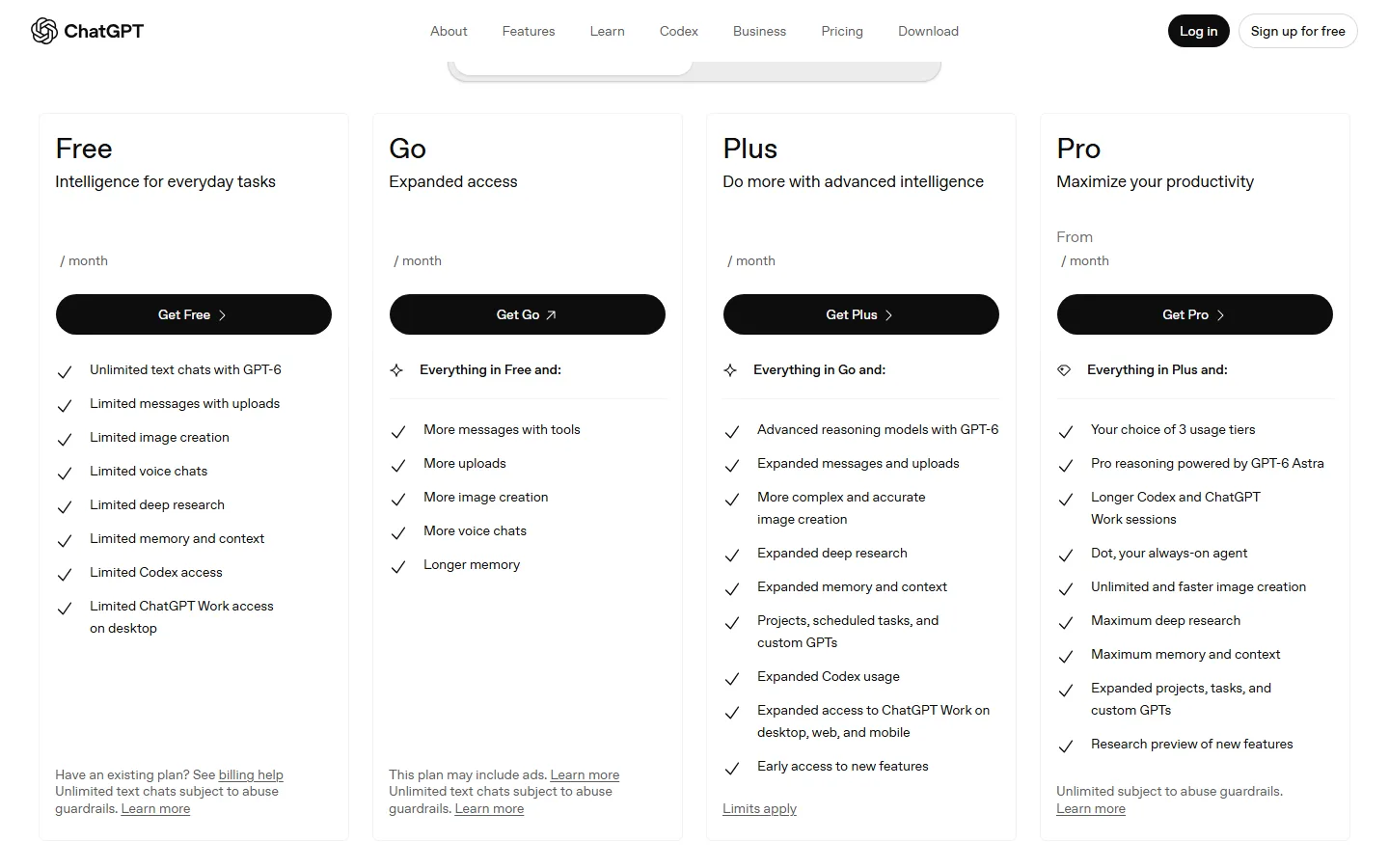
ChatGPT's pricing page as of October 2026. The $20/month Plus plan is at the center of the 2026 cancellation movement.
CTA
Stop debating, start testing: save your 10 most-used prompts today, run them on ChatGPT free, Claude, and Gemini (free tiers are enough for the test), and score the outputs blind. If ChatGPT wins, keep paying and tune your prompting. If it doesn't, switch — the alternatives below the $20 price point are good enough that the switch costs you nothing but two weeks of A/B testing. For a deeper look at which assistant handles long sessions and complex writing best, read our Claude 3.7 vs GPT-4o breakdown before you commit.
Self-Check (batch30)
| Check | Status |
|---|---|
| Word count > 2000 | passed |
| BLUF Quick Answer | passed |
| Definition-first opening | passed |
| FAQ >= 5 | passed |
| Screenshots >= 2 | passed |
| Internal links (3-5, target slugs exist) | passed |
| Authority external links >= 2 | passed |
| zens-ink content_qc >= 70 | 100 (passed) |
| llmevalkit no hallucinations | 100, no contradictions |