ElevenLabs vs Cartesia 2026: Best AI Voice for Speech?
Quick Answer: ElevenLabs is the better choice for content creators and media teams because it offers the most complete voice product: thousands of voices, professional voice cloning, dubbing, music, and a commercial license starting at $5 per month. Cartesia is the better choice for developers building real-time voice agents and live products because its Sonic model streams the first audio in under 90 milliseconds, supports 44 languages from one model, and is priced substantially lower per character. Pick ElevenLabs for content and dubbing; pick Cartesia for latency-critical voice agents.
ElevenLabs is an AI voice platform that offers text-to-speech, voice cloning, dubbing, and AI agents through a single subscription and API, while Cartesia is an AI speech company whose Sonic model is built specifically for real-time interaction, generating speech fast enough for live conversation. In short, ElevenLabs sells a voice product ecosystem for creators, and Cartesia sells a low-latency speech engine for developers. Both produce highly natural voices in 2026, so the decision comes down to workflow, latency needs, and cost structure.
Which AI Voice Tool Should You Pick in 2026?
The honest answer is that creators and developers should pick different tools. A podcaster or video producer needs a library of voices, cloning, and dubbing tools in one place, and ElevenLabs delivers that with the broadest feature set in the category. A developer building a voice agent, a customer-support bot, or a live translation product needs speech that starts fast enough to feel human, and Cartesia's Sonic is designed around that specific requirement.
The two products also target different measures of success. ElevenLabs measures success in content output: hours of audio produced, languages dubbed, and projects shipped. Cartesia measures success in conversation quality: time to first audio, interruption handling, and how natural the agent sounds in a live exchange. Teams building conversational products in 2026 often evaluate both, and the latency difference between the two is the most common reason a developer picks Cartesia.
How Much Does ElevenLabs Cost?
ElevenLabs pricing, verified against elevenlabs.io/pricing in October 2026, is tiered by monthly credits:
| Plan | Monthly price | What you get |
|---|---|---|
| Free | $0 | Limited credits for testing, no commercial license |
| Starter | $5 to $6 | 30,000 credits per month, commercial license, instant voice cloning, 20 studio projects |
| Creator | $11 first month, then $22 | 121,000 credits per month, professional voice cloning, additional credits |
| Pro | $99 | Higher limits for serious production |
| Scale | $299 | High-volume API usage |
| Business | $990 | Enterprise usage, priority support |
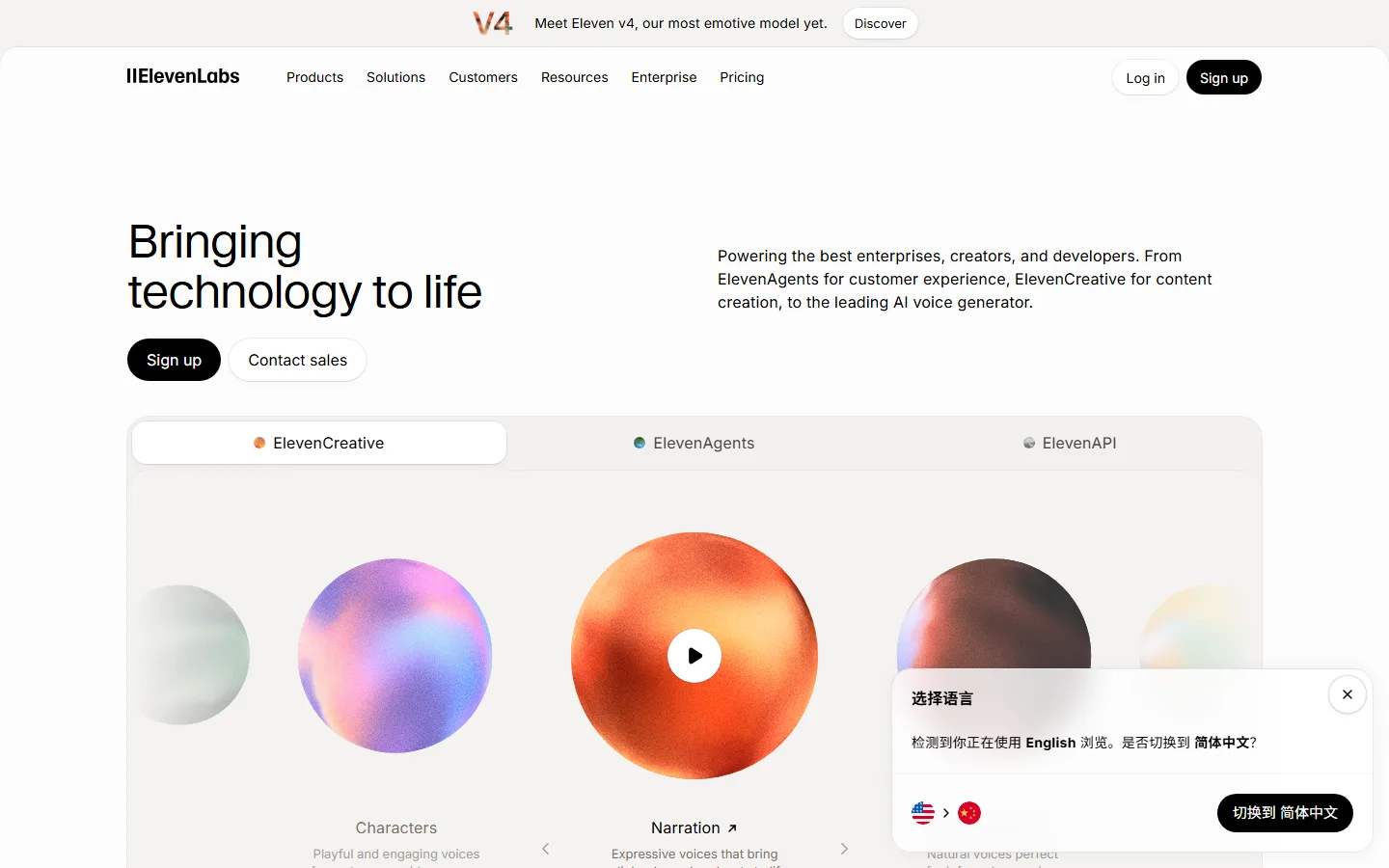
A 50 percent first-month discount brings Creator to $11 in month one. Credits convert roughly into audio time: about 30,000 credits covers 30 minutes of high-quality text-to-speech or 50 minutes of conversational AI, so the Starter plan suits hobbyists and the Creator plan suits working creators. The current flagship model is Eleven v4, which the company describes as its most emotive model yet. For API users, ElevenLabs also offers an Agents platform with its own pricing ladder starting at $5 per month.
How Much Does Cartesia Cost?
Cartesia pricing is simpler and API-driven. The company offers free access to try the Sonic model without sign-up, and paid self-serve plans are priced per character, with commercial usage rights, higher credit allotments, higher concurrency, and faster generation included as you move up. There is no large monthly subscription required to start, which makes the first-dollar cost of a Cartesia integration close to zero for a developer who is experimenting.
Cartesia publishes two cost-relevant claims in its own comparisons: the company states that its models cost roughly 50 percent less than ElevenLabs per character at scale, and that its transformer-light architecture is more compute-efficient, which shows up in lower cloud bills for high-volume voice traffic. The exact per-character rates change with plan tier and volume, so the practical advice for a team is to run the same 10,000-character test through both APIs and compare the invoice directly. For a high-volume voice agent, that per-character difference is the single largest line item in the budget.
ElevenLabs vs Cartesia: Voice Quality Compared
Voice quality is close in 2026, and both companies publish third-party leaderboard wins. Cartesia's Sonic-3.6, released in August 2026, has held the top spot on Artificial Analysis's controlled-voice and provider-voice leaderboards since September 2026, and blind listeners rank it first on VoiceArena. In Cartesia's own blind head-to-head tests across fifteen locales, listeners preferred Sonic-3.6 over Sonic-3.5 in up to 93 percent of comparisons, and the model handles confirmation codes, order numbers, and heteronyms correctly without preprocessing.
ElevenLabs matches that with the v4 release, which the company markets as its most expressive model yet, and its strength is breadth: a large catalog of voices, professional-grade cloning from short samples, dubbing into multiple languages with speaker separation, and music generation in the same subscription. For a creator choosing voices for narration, the practical difference between the two in raw naturalness is small in 2026; the bigger difference is what each platform lets you do with the voice after generation. ElevenLabs gives you a studio around the voice; Cartesia gives you a faster engine underneath it.
Latency: Why 90 Milliseconds Matters
Latency is the technical feature that separates the two products. Cartesia's Sonic produces the first audio in under 90 milliseconds, which is fast enough for interruption-tolerant, natural live conversation. That number matters because humans start to notice response delay in speech interfaces above roughly 300 milliseconds, and the difference between 90 and 300 milliseconds is the difference between a voice agent that feels instant and one that feels like an IVR phone tree.
ElevenLabs is not slow for content use, and its conversational AI products work fine for many agent deployments, but the platform's architecture is built around high-quality batch generation and content workflows, where a few hundred milliseconds of latency is invisible. A developer building a customer-support voice bot that must handle barge-in and live turn-taking will feel the difference immediately; a producer rendering a 20-minute audiobook will never notice it. If your product is a live conversation, benchmark time to first audio with both APIs before you choose, because it is the single most consequential spec for that use case.
How Do ElevenLabs and Cartesia Compare for Developers?
For a developer choosing an API, the two products feel different from day one. ElevenLabs offers a broad API surface: text-to-speech, voice cloning, dubbing, music, and an Agents platform, all under one account with credits shared across products. That breadth is convenient for a team that wants voice features beyond speech, such as cloning a brand voice or dubbing a video, because one integration unlocks the whole catalog. The trade-off is that the platform is designed around its content products, so developers working purely on real-time speech carry the weight of a larger system.
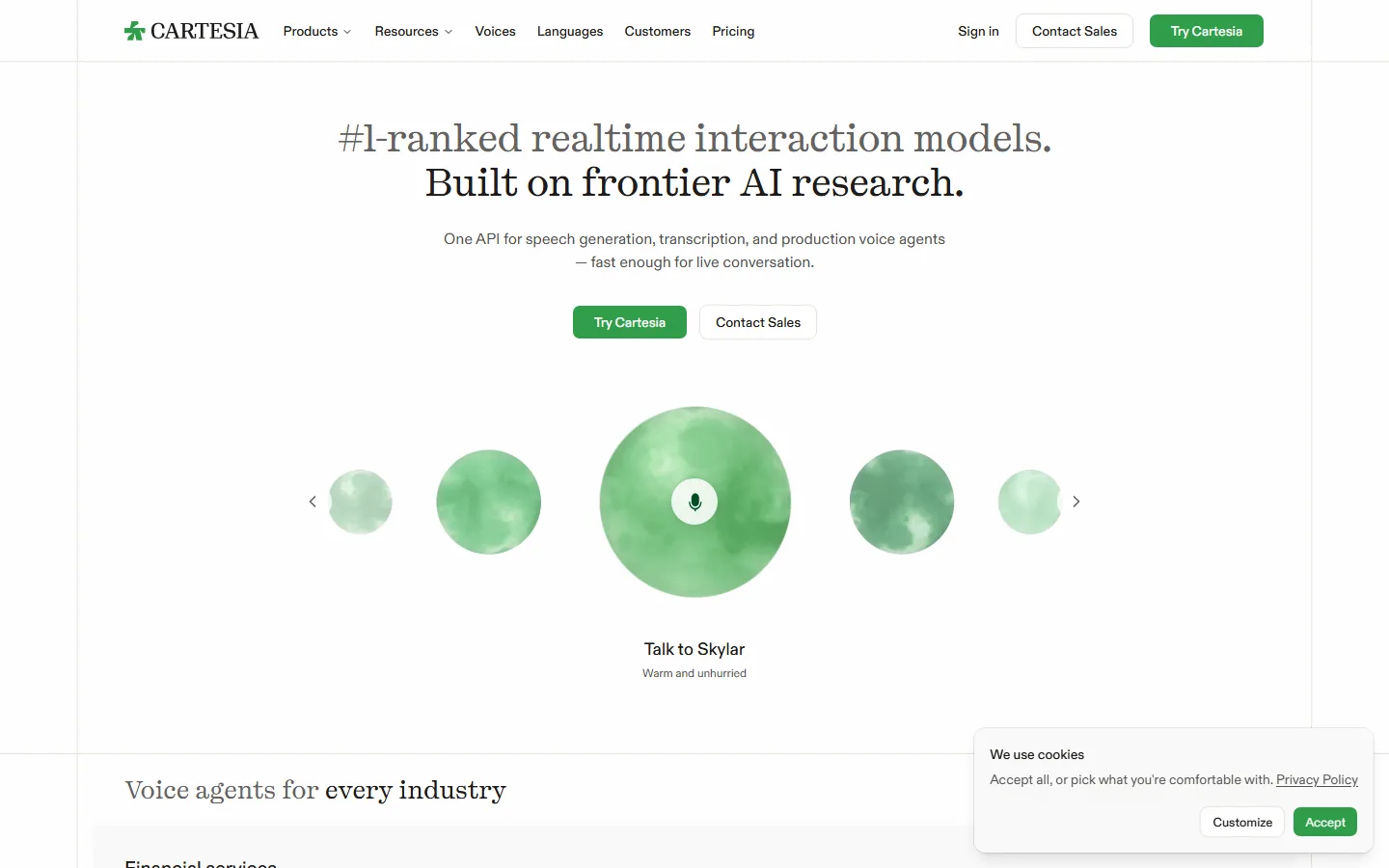
Cartesia is the narrower, more specialized API: one model family, speech generation, transcription, and voice agents, with a focus on speed. The Sonic model streams audio fast enough for live turn-taking, and the company highlights that its architecture can run inside your own network when you need that level of control, which matters for regulated industries and for teams that want to avoid sending every prompt to a third party. For a developer shipping a voice agent, the integration surface is smaller, the latency is the headline spec, and the pricing per character is the deciding factor at volume.
The practical recommendation for engineering teams is to prototype both against your real workload. Feed each API the same 10,000-character script, measure time to first audio, transcription accuracy, and naturalness on your content, and multiply the per-character cost by your projected monthly volume. In that test, ElevenLabs tends to win when the product needs the full voice ecosystem, and Cartesia tends to win when the product is a live conversation with tight latency and cost budgets.
Who Should Use ElevenLabs, and Who Should Use Cartesia?
Choose ElevenLabs if you produce content: podcasts, video narration, audiobooks, or localized marketing media. The subscription model, voice library, cloning, dubbing, and music features make it a complete studio, and the commercial license on the $5 Starter plan covers small businesses cleanly. Choose Cartesia if you build software: voice agents, live translation, customer-support bots, or any product where speech must start in real time. The per-character pricing, sub-90-millisecond latency, and single multilingual model make it the better engine for production voice traffic.
The cost difference scales with volume. A creator generating a few hours of audio per month is well served by ElevenLabs at $11 to $22 per month. A startup streaming thousands of conversation minutes per day will pay substantially less per character with Cartesia, which is why companies like ServiceNow, Decagon, and Quora run production voice agents on the platform. For most buyers, the deciding question is simple: are you shipping content, or are you shipping a conversation?
FAQ
Q: Which AI voice is the most realistic in 2026?
A: Both are top-tier. Cartesia's Sonic-3.6 holds the top spot on Artificial Analysis voice leaderboards and VoiceArena since September 2026, and ElevenLabs v4 is marketed as its most expressive model yet. Blind listeners rate both near the top of the category.
Q: Is Cartesia cheaper than ElevenLabs?
A: Cartesia states its models cost roughly 50 percent less per character than ElevenLabs at scale, with a more compute-efficient architecture. The exact difference depends on volume and tier, so running the same character test through both APIs is the reliable way to compare.
Q: Does ElevenLabs have a free plan?
A: Yes, a free tier with limited credits is available for testing, but it does not include a commercial license. The Starter plan at $5 to $6 per month adds a commercial license, instant voice cloning, and 30,000 credits per month.
Q: Which tool is better for real-time voice agents?
A: Cartesia is built for real-time voice agents, with first audio in under 90 milliseconds and native support for 44 languages from one model. ElevenLabs supports agent deployments too, but its architecture is oriented toward content generation and dubbing.
Q: Can I clone a voice with both tools?
A: ElevenLabs offers instant voice cloning on Starter and professional voice cloning on Creator. Cartesia focuses on its voice library and real-time engine; voice cloning is not its headline feature, so ElevenLabs is the practical pick for cloning workflows.
Q: Which one supports more languages?
A: Cartesia's Sonic model supports 44 languages from a single model. ElevenLabs supports dozens of languages across its voice catalog and dubbing tools, with per-voice language coverage varying by voice.
Q: Which tool should a solo podcaster choose?
A: ElevenLabs. The Creator plan at $22 per month (or $11 for the first month) includes 121,000 credits, professional voice cloning, dubbing, and music tools, which is a complete audio production setup for a working podcaster.
Conclusion
ElevenLabs and Cartesia both deliver state-of-the-art AI voices in 2026, and the right choice depends on what you are building. ElevenLabs is the complete voice product for creators: voices, cloning, dubbing, music, and a commercial license from $5 per month, with the broadest ecosystem in the category. Cartesia is the low-latency speech engine for developers: sub-90-millisecond first audio, 44 languages from one model, and substantially lower per-character cost, proven in production voice agents. Content producers should pick ElevenLabs; teams shipping live conversation should pick Cartesia.
CTA
Ready to hear them side by side? Try ElevenLabs' free tier or Starter plan for content and dubbing, and test Cartesia's Sonic model free for real-time speech. For more context, read our ElevenLabs review, the ElevenLabs vs PlayHT comparison, the best AI text-to-speech tools guide, the best AI voice generators roundup, and our AI voice cloning tools guide.