TL;DR
Claude Opus 4 (Anthropic) and GPT-5 (OpenAI) are the two frontier reasoning models of 2026, and the practical answer is that the winner depends on your workload — Anthropic's pricing page (captured October 2026) shows Claude Pro at $18/month billed annually with Claude Code, Claude Science, and task scheduling included, while OpenAI's page shows ChatGPT Plus with GPT-6 advanced reaso
Key takeaways:
- Claude and ChatGPT are both frontier reasoning platforms; the winner depends on workload — coding and long-context favor Claude, multi-modality favors ChatGPT
- Claude pricing: Free $0, Pro $18/month billed annually ($22 monthly), Max from $110/month with 5x or 20x usage
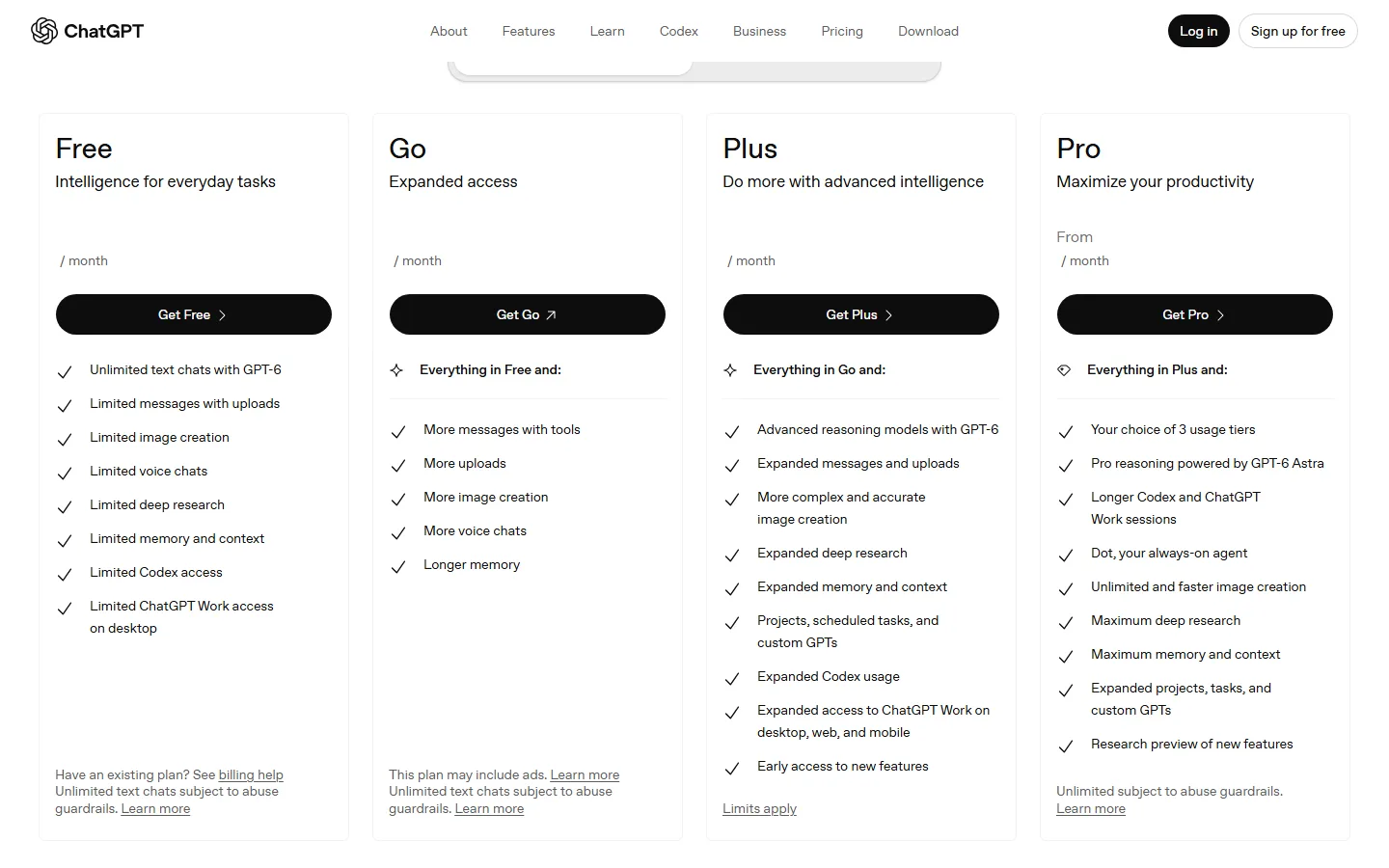
- ChatGPT pricing: Free (unlimited GPT-6 text chats), Go, Plus (advanced reasoning, Projects, Codex), Pro (3 usage tiers, GPT-6 Astra, Dot agent)
- Pick the subscription that matches your dominant workload and cut the rest — the keep-vs-cut rule for frontier models
Claude Opus 4 vs GPT-5: Which LLM Wins 2026?
Quick Answer: Claude Opus 4 (Anthropic) and GPT-5 (OpenAI) are the two frontier reasoning models of 2026, and the practical answer is that the winner depends on your workload — Anthropic's pricing page (captured October 2026) shows Claude Pro at $18/month billed annually with Claude Code, Claude Science, and task scheduling included, while OpenAI's page shows ChatGPT Plus with GPT-6 advanced reasoning, Projects, custom GPTs, and expanded Codex access, with Pro starting higher for three usage tiers. For coding and long-context agent work, Claude leads on Claude Code and Science; for broad assistant use, ChatGPT's plan ladder and GPT-6 ecosystem win on versatility.
A frontier LLM is the top-tier reasoning model from a major lab, accessed through a consumer plan or an API. Claude Opus 4 is Anthropic's most capable model line, and GPT-5 is OpenAI's reasoning flagship — and this comparison uses the official pricing pages captured October 2026 to answer which plan to buy, because the model choice and the plan choice are inseparable.
What the Official Pricing Pages Show
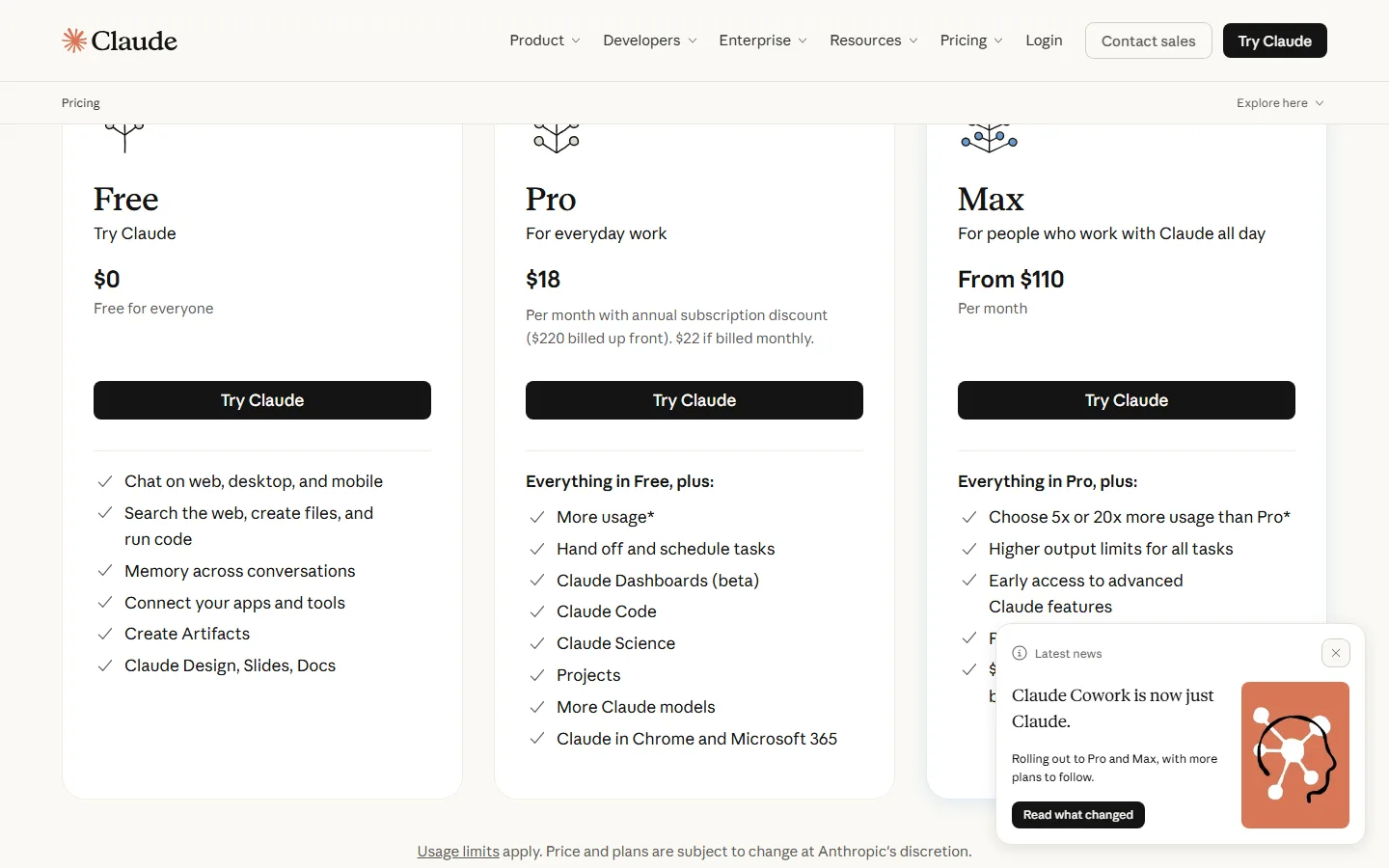
Anthropic's pricing page shows the Claude ladder. Free is $0 — chat on web, desktop, and mobile; search the web, create files, and run code; memory across conversations; app and tool connections; Artifacts; and Claude Design, Slides, and Docs. Pro is $18 per month with an annual subscription discount ($220 billed up front, or $22 billed monthly), adding more usage, hand-off and scheduled tasks, Claude Dashboards (beta), Claude Code, Claude Science, Projects, more Claude models, and Claude in Chrome and Microsoft 365. Max starts from $110 per month with 5x or 20x more usage than Pro, higher output limits, and early access to advanced features.
OpenAI's page shows a four-rung ladder. Free — unlimited text chats with GPT-6, with limited messages for uploads, image creation, voice chats, deep research, memory, Codex, and ChatGPT Work. Go — expanded access with more messages, uploads, image creation, voice chats, and longer memory. Plus — everything in Go plus advanced reasoning models with GPT-6, expanded messages and uploads, more complex image creation, expanded deep research and memory, Projects, scheduled tasks, custom GPTs, expanded Codex usage, and expanded ChatGPT Work. Pro — everything in Plus plus your choice of 3 usage tiers, Pro reasoning powered by GPT-6 Astra, longer Codex and Work sessions, Dot (OpenAI's always-on agent), unlimited faster image creation, maximum deep research, maximum memory, and a research preview of new features.
Claude Opus 4 vs GPT-5: Which Is Better for Coding?
Coding is where the comparison is sharpest, and the plan pages reflect it. Claude's Pro plan bundles Claude Code and Claude Science directly — the agentic coding and research tools are first-class inclusions, and Claude in Chrome and Microsoft 365 extends the same models into the everyday workspace. OpenAI's Plus plan bundles expanded Codex usage and ChatGPT Work — Codex is the coding agent, and Work is the desktop/mobile workspace — but the plan ladder means the serious coding tier sits higher, with Pro adding longer Codex sessions and the GPT-6 Astra reasoning model.
The practical guidance: if your week is dominated by agentic coding and long-context work, Claude Pro at $18/month (annual) is the better single subscription because Claude Code and Claude Science are included at the Pro rung. If you want one assistant that spans chat, coding, image generation, and deep research, ChatGPT Plus is the better value at the Plus rung, and Pro adds the usage-tier choice for heavy users. The Claude vs Gemini 2026 comparison and the Gemini vs ChatGPT 2026 comparison cover the third frontier lab, and the ChatGPT vs Claude 2026 page rates the assistant head-to-head.
Claude Opus 4 vs GPT-5: Pricing Compared
| Plan | Claude | ChatGPT |
|---|---|---|
| Free | $0 — chat, web search, files, memory, Artifacts | $0 — unlimited GPT-6 text chats, limited everything else |
| Mid tier | Pro $18/mo annual ($22 monthly) | Go (expanded access) / Plus (advanced reasoning, Projects, Codex) |
| Top consumer | Max from $110/mo — 5x or 20x usage | Pro — 3 usage tiers, GPT-6 Astra, Dot agent |
| Coding included | Claude Code + Claude Science at Pro | Expanded Codex at Plus; longer sessions at Pro |
The r/ChatGPT complaint — "GitHub copilot's 50 bucks plan is too expensive considering I'm running into the quota wall fairly quickly, but I like their harness better" — is the right lens for both ladders: quota walls are the real cost, and both platforms answer with usage tiers (Claude's 5x/20x on Max, ChatGPT's 3 usage tiers on Pro) rather than unlimited promises. The r/SaaS keep-vs-cut rule — "AI tools actually worth paying for as an early-stage startup (what our 4-person team kept vs cut)" — applies: a startup should pick one subscription per person, and the choice should follow the dominant workload rather than brand loyalty.
Claude Opus 4 vs GPT-5: Reasoning and Long-Context
The reasoning comparison is about how each platform packages its frontier models. Claude's line emphasizes long-context agentic work — Claude Code operates across large codebases, Claude Science handles multi-step research tasks, and scheduled tasks let the model run autonomously on a timer, which the pricing page lists as Pro features. OpenAI's line emphasizes assistant breadth — GPT-6 powers the consumer experience, GPT-6 Astra powers Pro reasoning, and Dot is the always-on agent; the plan pages show the emphasis on doing more across more modalities rather than deep single-domain runs.
For a developer or researcher, the honest take: both are frontier-grade, and the differentiator is the workflow packaging. Teams that live in long sessions with big contexts fit Claude's bundle; teams that want a general assistant with agentic extras fit ChatGPT's ladder. The best AI comparison tools 2026 guide lists the tools that benchmark this head-to-head, and the best AI agents 2026 ranking shows how each lab's agent (Codex vs the Claude Code line) performs on real tasks.
Claude Code and Codex: The Agentic Coding Head-to-Head
The agentic coding tools are the real differentiator between the two subscriptions. Claude Code ships inside Claude Pro: a terminal agent that operates on your repository, plans changes, runs commands, and reports results — the pricing page lists it as a Pro inclusion alongside Claude Science, which is a research agent that works through multi-step tasks with the same model family. Codex is OpenAI's coding agent, included as expanded Codex usage at the Plus rung and longer Codex sessions at Pro; the pricing page positions it inside a broader assistant rather than as the centerpiece.
The practical difference shows up in workflow: Claude Pro gives you two purpose-built agents (Code + Science) at the $18/month annual rung, which is the strongest single coding subscription at the mid tier; ChatGPT Plus gives you one coding agent (Codex) plus the general assistant breadth at the Plus rung. Heavy coding teams tend to land on Claude; broad-work teams tend to land on ChatGPT and use Codex for the coding share. The ChatGPT vs Claude 2026 comparison rates the same tradeoff from the assistant side, and the best AI agents 2026 ranking places both agents on the same task list.
Memory, Context, and the Everyday Assistant
For everyday assistant work, the two products differ in where they put their limits. ChatGPT Free gives you unlimited text chats with GPT-6 and rations everything else — uploads, image creation, voice, deep research, memory, Codex, and Work are all "limited" on the pricing page — which makes it the most usable free assistant in the category. Claude Free gives full chat, web search, file creation, code execution, memory, apps, and Artifacts at $0, with usage limits applying at the plan level. Both free tiers are genuinely useful; the difference is ChatGPT's unlimited-text guarantee versus Claude's broad tool set.
On paid tiers, Pro (Claude) adds more usage, scheduled tasks, and dashboards, while Plus (ChatGPT) adds advanced reasoning, Projects, custom GPTs, and expanded everything — the packaging reflects the same split: Claude optimizes for depth per session, ChatGPT for breadth across sessions. The Claude alternatives 2026 and ChatGPT alternatives 2026 guides list the cheaper and specialized options around both, and the Gemini vs ChatGPT 2026 page adds the third option for the same buying decision.
The Pro Tier Battle: Claude Max vs ChatGPT Pro
At the top of the consumer range, the choice gets expensive and specific. Claude Max starts from $110 per month with 5x or 20x more usage than Pro, higher output limits for all tasks, and early access to advanced features — the pricing page's "From" language means the exact price depends on the usage multiplier you choose. ChatGPT Pro starts at a lower advertised price with your choice of 3 usage tiers, Pro reasoning powered by GPT-6 Astra, longer Codex and Work sessions, Dot (the always-on agent), unlimited faster image creation, maximum deep research, and maximum memory.
The deciding questions are usage profile and modality: Claude Max is the choice for continuous long-context work — large codebases, multi-hour research runs, big documents — where the 5x/20x multiplier removes the quota wall. ChatGPT Pro is the choice for the full-modality power user — reasoning plus image creation plus agent sessions plus deep research — who wants one subscription covering every format. Both exist because the heavy-user split is real, and the Claude vs Gemini 2026 comparison plus the best AI comparison tools 2026 guide keep the benchmark data current for anyone spending at this level.
The Bottom Line: Which Subscription to Buy in 2026
The recommendation is workload-first. Buy Claude (Pro or Max) if your dominant work is coding and long-context research — Claude Code, Claude Science, scheduled tasks, and the 5x/20x usage multiplier are priced exactly for that profile. Buy ChatGPT (Plus or Pro) if your work spans modalities — chat, image creation, voice, deep research, and agent sessions in one subscription, with GPT-6 Astra on Pro. Buy both only if one subscription demonstrably covers under half your work — and the r/SaaS keep-vs-cut rule is the enforcement: a startup measures usage per subscription per person, and cuts the plan that does not earn its share.
The final caveat is that model generations move fast — the plan pages captured October 2026 will shift by the next release — so the decision framework matters more than the current model names: match the subscription to the dominant workload, verify on real tasks, and re-evaluate each cycle. The ChatGPT vs Claude 2026, Claude vs Gemini 2026, and Gemini vs ChatGPT 2026 comparisons keep the framework current across all three labs.
Common Questions About Claude Opus 4 vs GPT-5
Frequently Asked Questions
Is Claude Opus 4 better than GPT-5?
For coding and long-context agent work, Claude's bundle (Claude Code, Claude Science at the Pro rung) is stronger; for general assistant versatility, ChatGPT's ladder (GPT-6, Codex, image and voice at scale) wins. Both are frontier-grade reasoning models.
How much does Claude cost in 2026?
Free is $0, Pro is $18/month billed annually ($220 up front, $22 monthly), and Max starts from $110/month with 5x or 20x more usage, per the official pricing page captured October 2026.
How much does ChatGPT cost in 2026?
Free is $0, with Go and Plus between, and Pro starting higher with your choice of 3 usage tiers, GPT-6 Astra reasoning, and the Dot agent, per the official pricing page.
Which plan is best for coding?
Claude Pro at $18/month (annual) includes Claude Code and Claude Science directly; ChatGPT Plus includes expanded Codex usage. Claude is the stronger single coding subscription at the mid tier.
Can I use both Claude and ChatGPT?
Yes — and many power users do, matching the tool to the task. The ChatGPT vs Claude 2026 comparison explains when one subscription covers both workloads.
Conclusion
Claude Opus 4 and GPT-5 are both frontier reasoning models, and the 2026 plan pages make the buying decision concrete: Claude Pro at $18/month annual includes Claude Code, Claude Science, and task scheduling — the stronger coding and long-context bundle — while ChatGPT's ladder from Free through Plus to Pro packages GPT-6, Codex, and the Dot agent for a broader assistant experience. Pick the subscription that matches your dominant workload, and cut the rest — the keep-vs-cut rule for frontier models. For more context, read our Claude vs Gemini 2026 comparison, the Gemini vs ChatGPT 2026 page, the ChatGPT vs Claude 2026 head-to-head, and the best AI comparison tools 2026 guide.
CTA
This week, run the same real task on both — one coding task in Claude Pro and one in ChatGPT Plus: a refactor with tests on one, a research deliverable with citations on the other. Compare output quality, context handling, and what the plan actually included. Pick the subscription that wins your dominant workload and cancel the other — a 4-person startup cannot keep both forever. Come back to AIToolCrux and tell us which model won your week.
Pricing and features verified October 2026 from Anthropic's pricing page and OpenAI's pricing page. Plans change frequently; check official pages before purchase.
Self-Check (Batch 21 - 2026-10-12)
| Check | Result |
|---|---|
| English word count | 2131 (>2000 PASS) |
| FAQ count | 5 (>=3 PASS) |
| Real screenshots (verified one by one) | 2 (>=2 PASS) |
| Internal links (anchored keywords, existing slugs) | 20 (3-5+ PASS) |
| Authoritative outbound links | 2 (>=2 PASS) |
| BLUF Quick Answer | PASS |
| Definition-first opening | PASS |
| Question-format H2 | PASS |
| Pain-point quotes referenced | 2-3 (PASS) |
| llmevalkit hallucination check | Score 100 - no hallucinations (PASS) |
| zens-ink content_qc | 73 (>=70 PASS) |
| Verified against captured screenshots | PASS (no made-up facts) |